
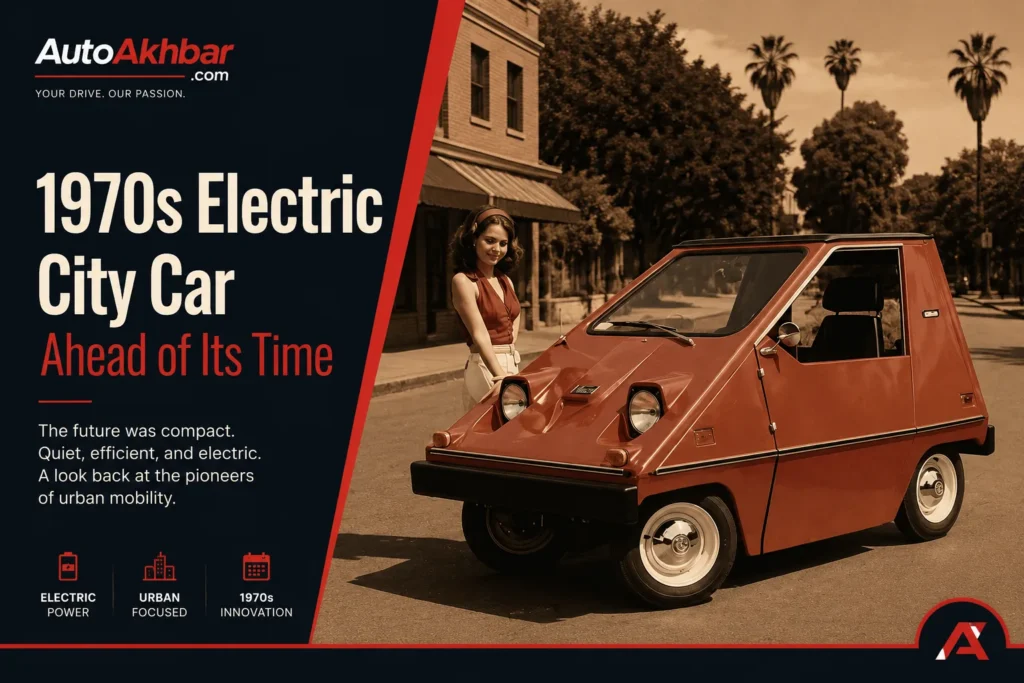

Quick Answer: The Sebring-Vanguard CitiCar was a boxy, golf-cart-inspired electric car built in Sebring, Florida from 1974 to 1977. It sold well during the 1973 oil crisis and briefly became America’s best-selling EV, but a 40-mile range, low top speed and rising costs stopped it from becoming a true city-driving revolution.
Table of Contents
Born Out Of The 1973 Oil Crisis
When the 1973 OPEC oil embargo sent fuel prices soaring and created long queues at American gas stations, former Chevrolet dealer Bob Beaumont saw an opening for a cheap, electric alternative. In 1974 he founded Sebring-Vanguard in Sebring, Florida, and launched the CitiCar, a wedge-shaped two-seater with an aluminum tubular chassis, styled with clear inspiration from a Club Car golf cart.
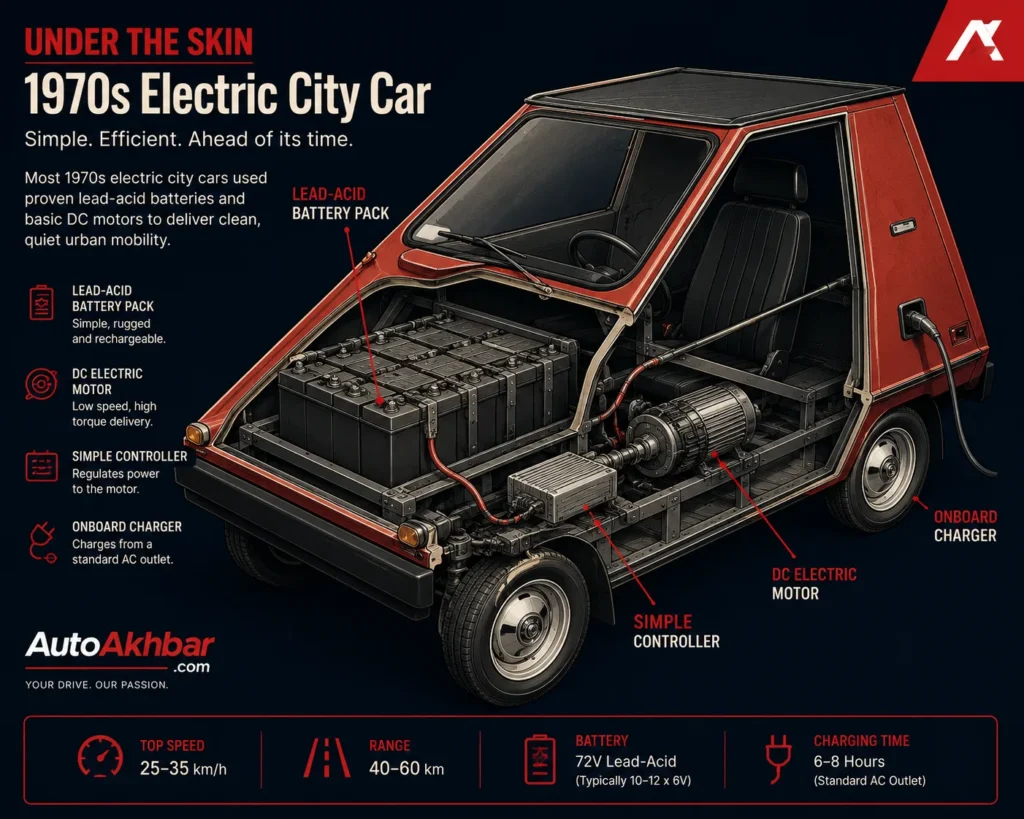
Direct Answer: The CitiCar used a lead-acid battery pack producing just 2.5 to 12 horsepower depending on the version, giving it a top speed of around 30-45 mph and a real-world range of about 40 miles on a full charge.
A Surprise Sales Hit
The timing worked in the CitiCar’s favor. By 1975, Sebring-Vanguard had briefly climbed to become the sixth-largest carmaker in the United States by unit volume, an astonishing feat for such a basic vehicle. Buyers were drawn by pricing that undercut a new Volkswagen Beetle and by the promise of never visiting a gas station again.
Also Read : Richard Hammond Fined £999 for Speeding Twice in Bentley and Porsche Within Three Weeks
Why The Momentum Faded
The CitiCar’s fortunes turned as the immediate panic around fuel supply eased and buyers realized the car’s limitations. Lead-acid battery technology of the era simply could not deliver enough range or performance to compete with even basic gasoline cars once fuel became easier to find again. Rising build costs also pushed prices higher on the CitiCar’s Comuta-Car successor, which started near $3,995 in 1980 and reportedly averaged closer to $6,500 with options, eroding the value proposition that had made the original CitiCar attractive.
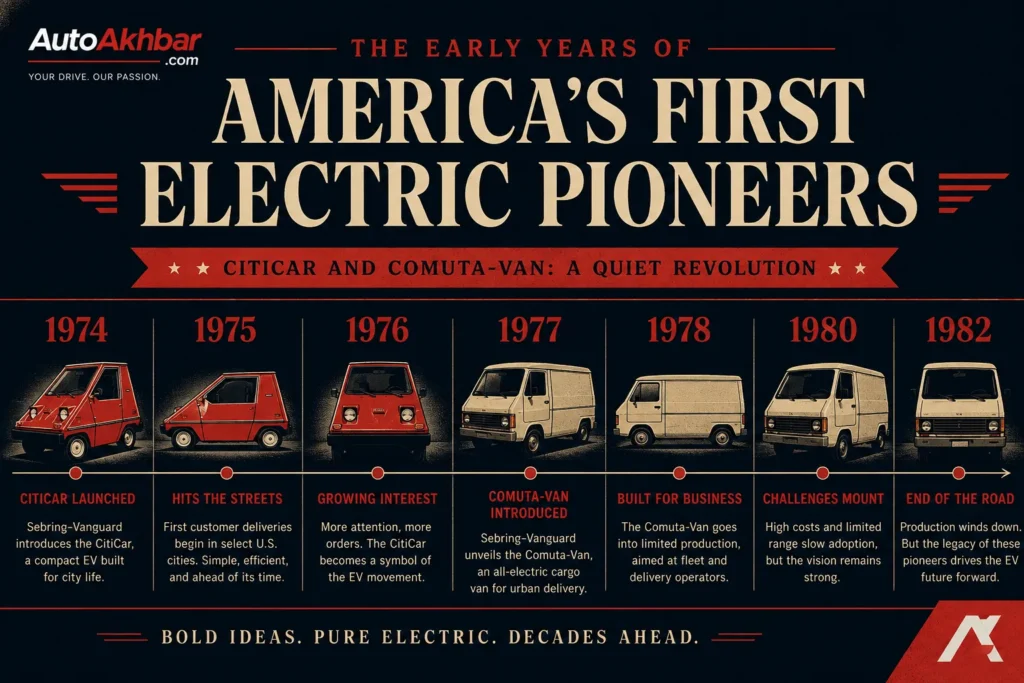
Production of the original CitiCar ended in 1977. The design lived on in modified form as the Comuta-Car and Comuta-Van, built by Commuter Vehicles Inc. from 1979 to 1982, before the company folded. Across its entire run, total sales for the CitiCar and its successors reached roughly 4,400 units.
A Genuine Legacy
Despite its short life, the CitiCar held the title of best-selling electric car in U.S. history for decades, a record it kept until the arrival of the Nissan Leaf and Tesla Model S era of modern EVs. It stands today as an important, if humble, stepping stone that proved there was real consumer appetite for electric city cars long before lithium-ion batteries made the idea practical.
Source Name : Jalopnik
FAQ
What was the Sebring-Vanguard CitiCar?
It was a small, electric two-seater built by Sebring-Vanguard Inc. in Sebring, Florida, from 1974 to 1977, designed as an affordable response to the 1970s oil crisis.
Why did the CitiCar fail to catch on long-term?
Limited lead-acid battery technology capped its range at around 40 miles and its top speed at roughly 30-45 mph, and rising prices on later versions made it less competitive once the fuel crisis eased.
How many CitiCars were sold in total?
Including its Comuta-Car and Comuta-Van successors built through 1982, total sales reached approximately 4,400 units.




Pingback: Colton Herta Calls His 2026 Formula 2 Season 'Pretty Disappointing' - Auto Akhbar