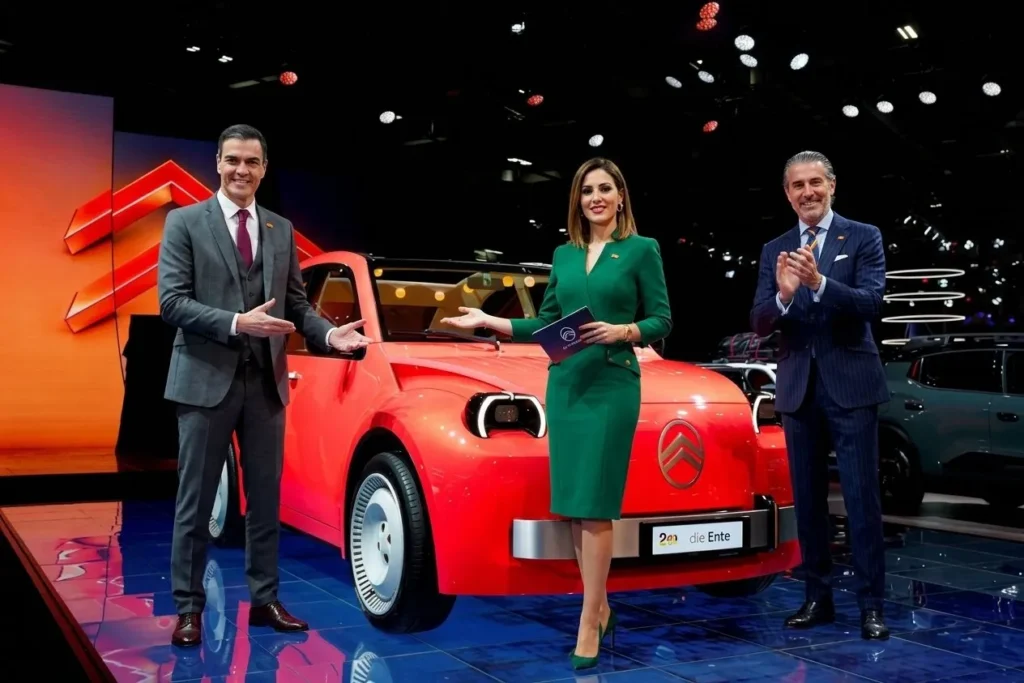

Quick answer: Citroën revealed the 2CV Concept at the 2026 Paris Motor Show on October 11. It is a 3.76-metre electric city car with a weight target of about one tonne and a target price of around €15,000. A production version is promised within two years and is expected by 2028. Battery size, range and power have not been announced.
The Duck is coming back, and this time it plugs in. Citroën has finally shown the electric 2CV it teased all year, and the headline is simple: a tiny, light, cheap EV for about €15,000 (roughly $17,000) at a time when every new car seems to get bigger and pricier. Cute? Absolutely. But let’s separate what Citroën confirmed from what the internet is guessing.
Table of Contents
What Citroën Actually Revealed
According to Citroën’s official press release from Poissy dated October 11, 2026, here are the confirmed facts:
| Parameter | Confirmed by Citroën |
|---|---|
| Length | 3.76 metres, shorter than the original 2CV |
| Weight target | Around one tonne |
| Target price | Around €15,000 |
| Powertrain | Electric (battery, range and power not disclosed) |
| Production | Europe |
| Timeline | Production model to be unveiled within two years; joins the range by 2028 |
| Positioning | Between the Ami and the C3 |
The comeback itself was not a total surprise. A report from Go Electra says Citroën confirmed the 2CV’s return on May 21, 2026, as part of Stellantis’s FaSTLAne 2030 plan.
Why the Size and Price Matter: The E-Car Rules
This is the part most headlines skip. Citroën says the production car is designed to follow future European “E-Car” rules. InsideEVs explains that the European Commission has proposed an M1E category for electric cars up to 4.2 metres long, aiming to freeze regulatory requirements for ten years. Paultan adds that these cars must be electric and assembled in the EU, and each one counts as 1.3 vehicles in a maker’s fleet CO2 maths.
In plain words: Europe is building a kei-car style class, and the 2CV is Citroën’s ticket into it. Note that CarBuzz says the rules are expected to be finalised next year, so they are still a proposal.
Design: Old Shape, New Attitude
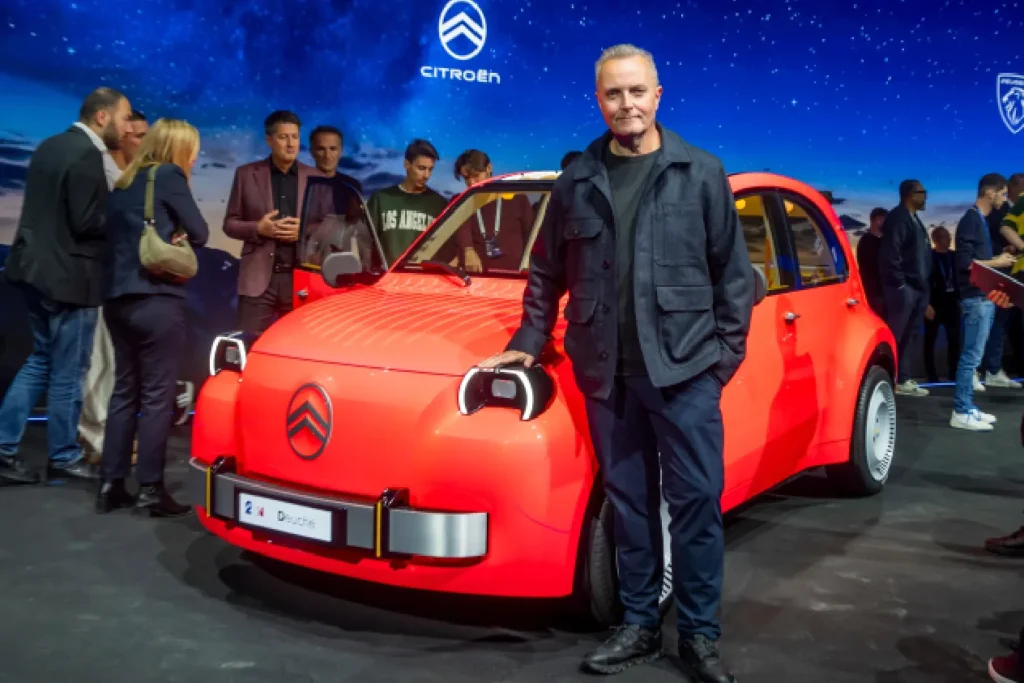
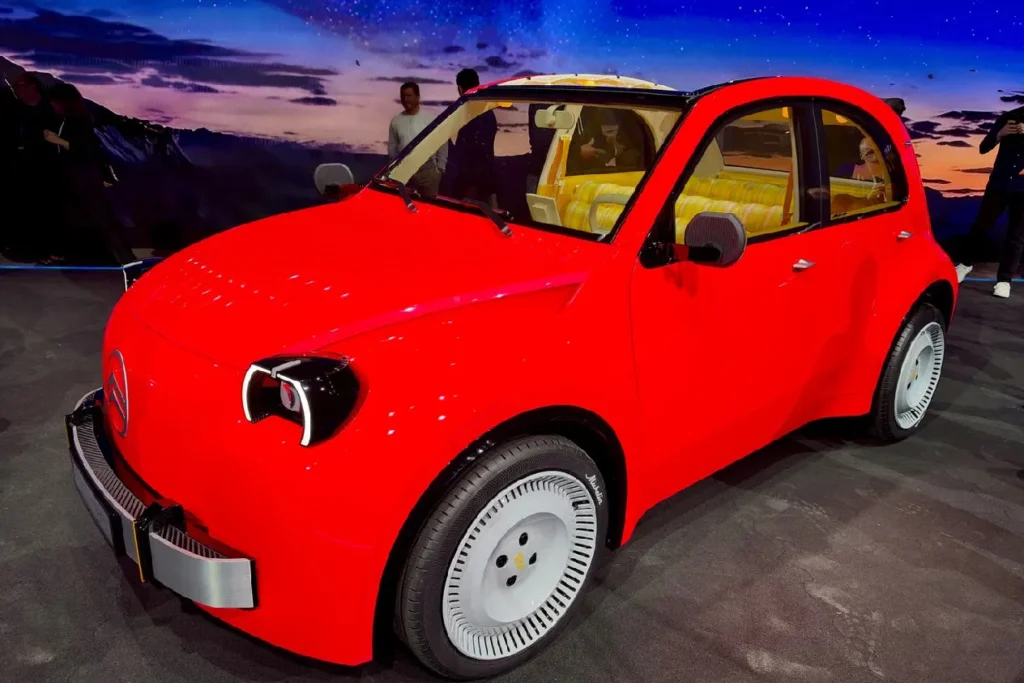
Citroën says it did not want a copy of the past. Per the press release, the car keeps the 2CV’s silhouette but with tauter lines:
- Front: round headlamps set apart from the bodywork, LED signature, sculpted bonnet and exposed windscreen wipers.
- Sides: upright windscreen, curved roof, 18-inch steel wheels inspired by the original and Michelin tyres with Citroën chevrons.
- Rear: a black tailgate that runs down to the bumper like on the first-generation car.
- Colour: a bright orange-based shade called Infra Red, with a tartan-inspired seat pattern inside.
There is also a fabric sunroof, a nod to the original’s roll-back roof. Citroën also says it chose design details with repair in mind, including bumpers separated from the bodywork so they can be replaced independently.
Inside: No Dashboard, Egg Holders and a Detachable Radio
The cabin is where Citroën had the most fun. The press release lists:
- No traditional dashboard; a cylinder holds a single-spoke steering wheel, one control lever, a paddle-shift gear selector and a driver display.
- An 8-inch square touchscreen with comic-book style graphics.
- “Radioën”, a detachable radio that doubles as a speaker you can carry outside.
- A removable storage basket instead of a centre console, and door handles made from soft straps.
- A pull-out front seat for taking a break.
- Pedal icons showing a tortoise for the brake and a rabbit for the accelerator.
- Door pockets designed to hold eggs, a tribute to the original brief.
The windscreen also carries the numbers 48, 90 and 26: the year of launch, the year production ended and the year of this concept.
Original 2CV vs 2CV Concept
| Parameter | Original 2CV | 2CV Concept (2026) |
|---|---|---|
| Years | 1948 to 1990 | Concept 2026, production model by 2028 |
| Power | 375 cc air-cooled twin, 9 hp at launch, later up to 602 cc | Electric; output not announced |
| Length | Slightly longer than the concept | 3.76 m |
| Built | 5,114,969 including 1,246,335 vans | Not yet in production |
| Final car | Mangualde, Portugal, July 27, 1990 | Made in Europe (plant not confirmed) |
History figures come from Zwischengas and Wikipedia. The original’s 50 km/h top speed at the start of production, per Zwischengas, shows how far the idea has travelled.
What Citroën Has Not Told Us Yet
Be careful with the numbers floating around. Digital Trends and InsideEVs both note that battery capacity, range, charging speed and power have not been announced.
Some outlets are guessing. Electrifying estimates a roughly 20 kWh LFP battery and 100 to 130 miles of WLTP range, but that is their estimate, not Citroën’s. For context, CarBuzz points to Citroën’s own e-C3 Urban Range, which has a 30 kWh LFP battery for about 130 miles, and the Renault Twingo with a 28 kWh LFP pack.
Also remember that the €15,000 figure is a target for a production car, not a price list, and the concept itself will not be sold.
AutoAkhbar Take
We love the idea: small, light, fixable and cheap. If Citroën can actually hit around €15,000 without gutting quality, it solves something the market has ignored for years. The same back-to-basics mood is behind the $21,500 REO Runabout truck in the US.
But concepts are easy. The hard part is the 2028 production car: will the price survive, will the range be useful and will it keep this charm once safety and cost cuts arrive? We will update this story when Citroën shares real specs.
FAQ
Is the new Citroën 2CV electric?
Yes. The 2CV Concept is fully electric, and Citroën says the production version will join its range by 2028.
How much will the new Citroën 2CV cost?
Citroën is targeting a starting price of around €15,000, which is close to $17,000. It is a target, not a confirmed price.
When will the new Citroën 2CV go on sale?
Citroën says it will unveil the production model within two years, with the car joining the range by 2028. An exact on-sale date has not been given.
How long is the new 2CV?
The concept is 3.76 metres long, which Citroën says is shorter than the original 2CV.
What is the range of the electric 2CV?
Not announced. Citroën has not shared battery size, range, power or charging speed. Any numbers you see are estimates.
Will the new 2CV look like the old one?
The concept follows the original’s silhouette and details like the black tailgate and fabric roof, but Citroën says it is not a copy. The production car’s final design is not confirmed.
How many Citroën 2CVs were made?
A total of 5,114,969 including 1,246,335 vans between 1948 and 1990, according to Zwischengas.
Will the Citroën 2CV come to India?
Nothing has been announced. Citroën has only confirmed European production and says the car is designed around Europe’s E-Car rules.
Sources: Citroën / Stellantis Media, Electrek, InsideEVs, Paultan, CarBuzz, Electrifying, Zwischengas.