


Honda has priced its first Australian EV, the retro-styled Super-One, from $36,900 drive-away — cheaper than the Hyundai Inster and well below the Mini Cooper SE and Fiat 500e. With just 130 units arriving in 2026 and pre-orders already outpacing the Civic Type R, Honda’s tiny electric hatch has generated outsized buzz for a car…
New Delhi: Honda has finally put a number on its first-ever Australian EV, and it’s a lower number than most people expected. The Honda Super-One will start from $36,900 drive-away, undercutting key rivals like the Hyundai Inster, as pre-orders opened this week ahead of showroom arrival in October 2026.
Table of Contents
What’s New: Honda’s First EV Lands With a Retro Twist
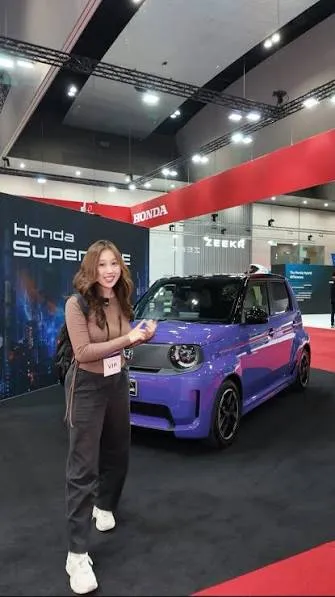
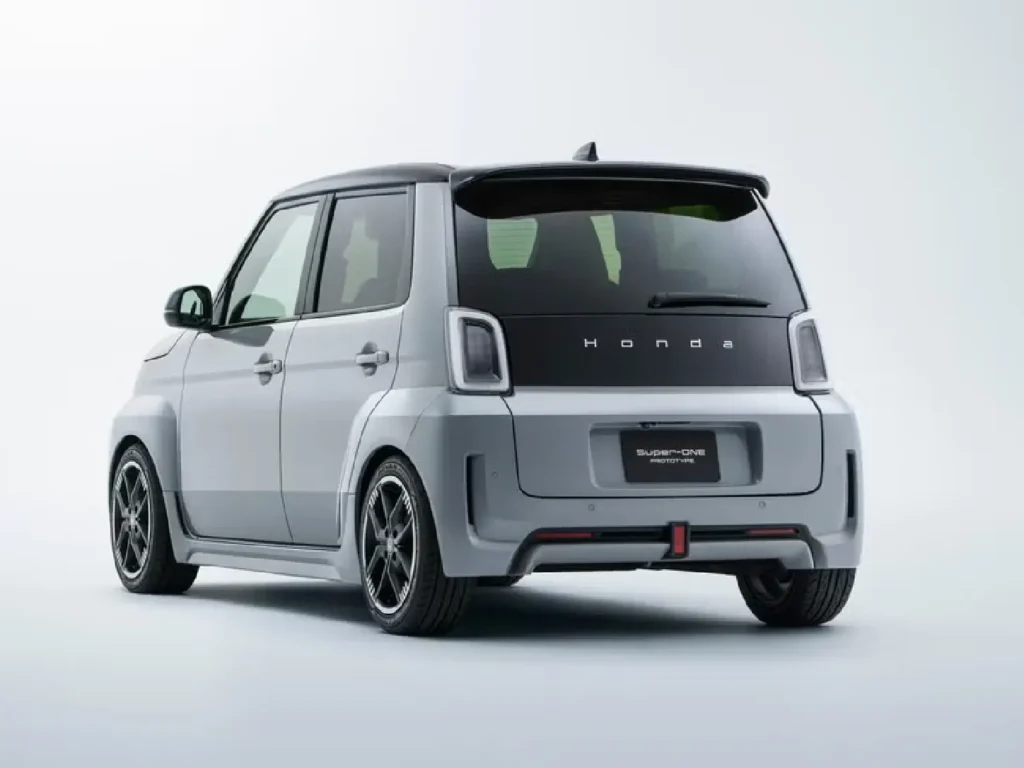
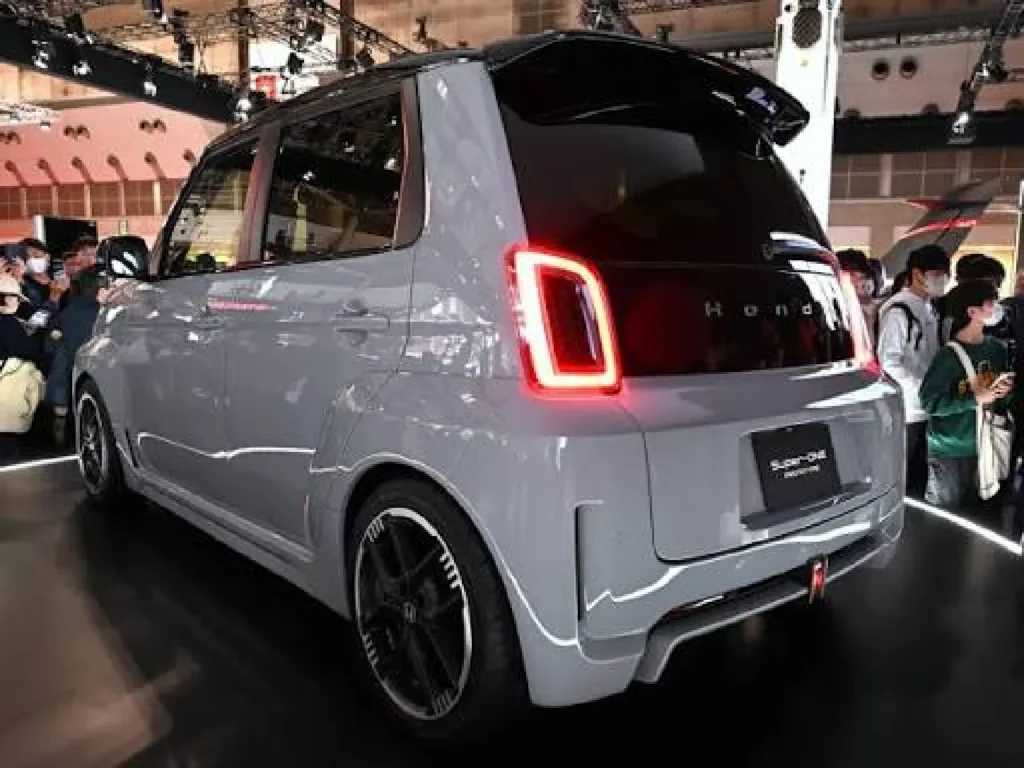
The Super-One isn’t just Honda’s cheapest way into an EV showroom — it’s also its most nostalgic. Styled after the 1980s Honda City II, the compact hatch is built on the same platform as Honda’s Japan-market N-One Kei car, then stretched wider, longer, and taller to meet Australian Design Rules. Two grades are on offer: the Standard at $36,900 drive-away, and a Two-Tone variant at $37,400 that adds a black roof over Boost Violet paint — a nod to the popular Super-N Kei hatch the car is based on.
Honda Australia says it has already banked more than 6,500 expressions of interest ahead of official pre-orders, a number that has outpaced even the Civic Type R hot hatch’s sign-up numbers. That’s a striking result for what is essentially a city runabout, and it points to how starved the sub-$40,000 EV segment in Australia has been for something with genuine brand pull and design character rather than just a low sticker price.
The catch: supply is tight. Only 130 units will be available in Australia through 2026, with Honda promising higher volumes from 2027 onward. Deliveries are scheduled to begin October 1, 2026.
Real-World Performance & Technical Deep-Dive
Under the retro sheet metal, the Super-One runs a front-mounted electric motor producing 47kW and 162Nm in normal driving. Flick it into “Boost” mode and output climbs to 70kW — Honda’s way of giving a city car a hot-hatch party trick without the range penalty of a permanently larger motor.
The battery is a lithium-ion pack sized at roughly 29.6–30kWh, though Honda’s own regional communications have been inconsistent on the resulting WLTP range — figures of 206km and up to 253km have both appeared in official-adjacent reporting, so treat the higher number as expected/संभावित until Honda Australia locks in a final homologated figure closer to launch. DC fast-charging is rated to take the battery from a low state of charge to 80 percent in around 30 minutes, though again, exact start-percentage figures have varied slightly between sources (15–80% vs 30–80%).
Where the Super-One tries to earn its retro billing is in the driving experience: Honda has fitted a simulated seven-speed transmission that mimics gearshifts under acceleration, paired with an Active Sound Control system that pipes in an engine-like soundtrack. It’s a gimmick borrowed straight from the Kei-car playbook in Japan, where manufacturers have leaned hard into “engagement” features for EVs that would otherwise feel identical to drive. Suspension is conventional and cost-conscious — MacPherson struts up front, a torsion-beam axle at the rear — which should keep ride quality predictable on urban Australian roads, though long-travel comfort over rougher regional tarmac remains untested pending full reviews.
Inside, confirmed equipment includes a 9.0-inch central touchscreen, a 7.0-inch digital driver display, and an 8-speaker Bose sound system — a genuinely premium-feeling spec sheet for a car in this price bracket. Honda’s flexible “Magic Seats” also carry over, and a leaked configurator additionally pointed to sports seats on the range-topping grade. Full Australian equipment lists are still pending official confirmation.
Specifications & Trim Comparison
| Variant / Feature | Motor / Power | Key Features | Price (Drive-Away) |
|---|---|---|---|
| Super-One Standard | 47kW/162Nm (70kW in Boost mode) | 9.0-in touchscreen, 7.0-in driver display, 8-speaker Bose audio, Magic Seats | $36,900 |
| Super-One Two-Tone | 47kW/162Nm (70kW in Boost mode) | Boost Violet paint with black roof, expected sports seats | $37,400 |
The Competition & Market Reality
Pricing puts the Super-One in an interesting spot. It comfortably undercuts the entry-level Hyundai Inster, which lists from $39,000 before on-road costs — though Hyundai’s current promotional drive-away price of $35,990 (running until September 30, 2026) briefly claws that gap back. Against the Fiat 500e La Prima ($52,500 before on-roads) and the Mini Cooper SE Favoured ($58,990 before on-roads), the Honda is in an entirely different league on price, despite competing on the same “characterful small EV” turf.
It’s not the outright value leader, though — the BYD Atto 1 still undercuts everyone at $23,990 before on-road costs, a gap of roughly $13,000 that the Super-One will have to justify purely on badge strength, retro design, and Honda’s after-sales reputation. Speaking of which, Honda has capped scheduled servicing at no more than $199 per visit for the first five years, a running-cost argument aimed squarely at buyers cross-shopping cheaper Chinese EVs.
Also Read: Jaguar Land Rover Jobs Axed: 300 UK Roles Cut After £1.9bn Cyber Attack Fallout
The Super-One’s arrival also comes against a backdrop of retreat for Honda’s broader EV ambitions in Australia. Two 0 Series electric models once earmarked for local showrooms were cancelled at the eleventh hour, leaving the Indian-market 0 Series Alpha small SUV as the only remaining candidate under consideration. For now, Honda Australia’s real volume focus stays on hybrids — the CR-V picked up extra grades earlier in 2026, and the Prelude coupe returned after more than two decades, both hybrid-only.
Official Safety Context: Full ANCAP crash-test results for the Super-One have not yet been published; buyers should check the ANCAP safety ratings database closer to the October 2026 launch.
AutoAkhbar Verdict – Who Should Buy It?
The Super-One makes the most sense for buyers who want an EV that doesn’t look or feel like every other EV — someone cross-shopping a Mini Cooper SE on style but unwilling to pay Mini money. At $36,900 drive-away with Honda’s dealer network and a genuinely low service cap behind it, it’s a compelling city-second-car proposition. Just don’t expect to actually get one easily in 2026: with only 130 units allocated and pre-order interest already outstripping the Civic Type R, this is shaping up to be Honda’s most oversubscribed launch of the year, and most buyers will likely be looking at 2027 delivery slots instead.
Honda Super-One, Honda EV Australia, Honda Super-One price, electric city car Australia
FAQ Honda Super-One
How much does the Honda Super-One cost in Australia?
The Honda Super-One starts from $36,900 drive-away for the Standard grade, with the Two-Tone variant priced at $37,400 drive-away. Pre-orders opened on August 4, 2026, with deliveries beginning October 1, 2026.
What is the range of the Honda Super-One?
The Super-One uses a roughly 30kWh lithium-ion battery with a WLTP-rated range reported between 206km and up to 253km depending on the source, so buyers should treat the higher figure as expected/संभावित until Honda confirms a final homologated number.
Is the Honda Super-One cheaper than the Hyundai Inster?
Yes, at its standard list price the Super-One’s $36,900 drive-away undercuts the Hyundai Inster’s $39,000 before on-road costs, though Hyundai’s limited-time $35,990 drive-away promotion (until September 30, 2026) currently narrows that gap.
How many Honda Super-One units are available in 2026?
Only 130 units of the Honda Super-One will be available in Australia during 2026, with Honda planning higher volumes from 2027 onward.




Pingback: 2027 Ram 1500 Drops Hybrid Hemi V8 & Auto Stop-Start
Pingback: MG Hector Hawk लॉन्च 26 अगस्त: फीचर्स, रेंज, कीमत