
You turn the key or press the start button, expecting the engine to come to life, but instead you hear a slow crank, a series of clicks, or nothing at all. A weak or discharged battery can interrupt your day without much warning, particularly when a vehicle has been sitting unused for an extended period.
Although car batteries are designed to recharge while the engine is running, they can gradually lose power when a vehicle is not driven regularly. Short journeys, cold weather, electrical accessories, and the natural aging of the battery can also contribute to a low state of charge. Keeping a car battery charger at home can help you maintain your vehicle’s battery and reduce the likelihood of being caught out by a car that will not start.
A battery charger is especially useful for households with more than one vehicle, classic-car owners, drivers who work from home, and anyone who only uses their car occasionally. It is a relatively simple tool, but choosing the right model and using it correctly are important.
Table of Contents
What Does a Car Battery Charger Do?
A car battery charger connects to a household power source and supplies electricity to the vehicle’s battery. This allows the battery to gradually recover its charge over a period of several hours.
The charger normally uses clamps or permanently installed battery leads to connect to the battery terminals. Once connected, it converts household electricity into the appropriate voltage and current required by the battery.
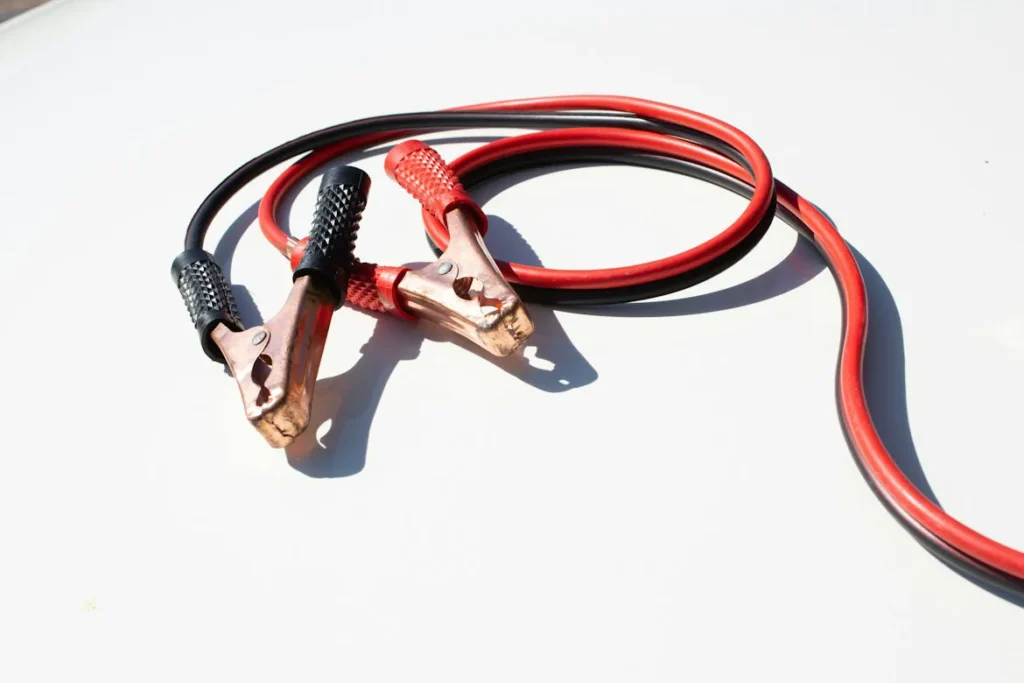
A charger should not be confused with a jump starter. A jump starter provides a short, powerful burst of electricity to help turn the engine over immediately. It is mainly intended for emergency use when a vehicle needs to be started quickly.
A battery charger works more slowly. Instead of delivering a brief surge, it steadily restores energy to the battery. Depending on the battery’s capacity, its condition, and the output of the charger, the charging process may take several hours or even overnight.
For example, a small maintenance charger may supply around one to two amps, while a more powerful charger may deliver five, eight, or ten amps. The lower-powered option will generally take longer, but it can be ideal for safely maintaining a battery that is not used regularly.
Some modern smart chargers can monitor the battery throughout the process. They may automatically adjust the charging current as the battery approaches full charge, reducing the risk of overcharging. Many can also switch to a maintenance mode once charging is complete.
Why Do Car Batteries Lose Their Charge?
A battery does not have to be old or damaged to become discharged. Even a relatively new battery can lose power if the vehicle is not driven enough.
Modern cars contain electrical systems that continue to draw a small amount of power after the engine has been switched off. Alarms, keyless-entry systems, tracking equipment, control modules, clocks, and infotainment settings may all use electricity in the background.
This small electrical demand is often called a parasitic draw. Under normal circumstances, it should not cause a problem because regular driving allows the alternator to recharge the battery. However, if the vehicle remains parked for several weeks, the gradual drain may become significant.
Short journeys can create a similar issue. Starting an engine requires a considerable amount of energy. If the vehicle is only driven for a few minutes, the alternator may not have enough time to replace all the energy used during starting.
Cold weather can also reduce a battery’s ability to provide power. At the same time, a cold engine may require more effort to turn over. This combination is one reason battery problems are often more noticeable during winter.
Other possible causes include leaving interior lights on, using accessories while the engine is off, or having an electrical fault in the vehicle. If a battery repeatedly becomes discharged despite regular driving and charging, the battery and charging system should be tested.
When Is a Battery Charger Useful?
You do not need to wait until the battery is completely flat before using a charger. In fact, avoiding a deep discharge may help protect the battery and make the vehicle more reliable.
A car battery charger can be particularly useful when:
- A vehicle is driven only occasionally
- Most journeys are short
- The car is stored for several weeks or months
- Interior lights or accessories have drained the battery
- The battery needs maintenance during periods of limited use
- Cold weather has reduced the battery’s available starting power
- A vehicle is being prepared for seasonal use
- The owner wants to recharge the battery after a jump-start
Classic cars, convertibles, sports cars, recreational vehicles, and weekend vehicles can benefit from regular battery maintenance. Motorcycles, lawn equipment, boats, and other battery-powered vehicles may also benefit, provided the charger is compatible with the battery’s voltage and type.
A charger can also be useful after a vehicle has been jump-started. Although driving may replenish some of the lost energy, a proper charging cycle can often restore the battery more thoroughly. However, if the battery is damaged or has reached the end of its service life, charging may only provide a temporary improvement.
Choosing the Right Charger
Not every charger is suitable for every battery. Before purchasing or connecting one, identify the battery’s voltage, chemistry, capacity, and charging requirements.
Many passenger vehicles use a 12-volt battery. However, smaller equipment, classic vehicles, motorcycles, commercial vehicles, and specialist applications may use different voltages. A charger set to the wrong voltage can damage the battery or the vehicle’s electrical system.
Battery construction also matters. Common automotive battery types include:
- Flooded lead-acid batteries: Traditional batteries containing liquid electrolyte
- AGM batteries: Absorbent Glass Mat batteries commonly used in vehicles with start-stop systems or higher electrical demands
- EFB batteries: Enhanced Flooded Batteries often fitted to entry-level start-stop vehicles
- Gel batteries: Batteries that use a gelled electrolyte and may require a specific charging profile
- Lithium batteries: Lightweight batteries used in some specialist, performance, or recreational applications
A charger should clearly state which battery types it supports. If a vehicle has an AGM, EFB, gel, or lithium battery, use a charger with an appropriate mode. Do not assume that a charger intended for a standard flooded lead-acid battery will automatically be suitable.
Understanding Charging Current
Charging current is usually measured in amps. A higher-amperage charger may recharge a compatible battery more quickly, while a lower-amperage charger can be useful for slow charging and long-term maintenance.
As a general example, a small two-amp charger will take much longer to recharge a large battery than a ten-amp charger. Charging time also depends on how deeply the battery has been discharged. A battery that is only slightly low may recover in a few hours, while a heavily discharged battery could require overnight charging or longer.
Faster is not always better. Excessive charging current can generate heat and may not be suitable for smaller batteries. Always follow the battery and charger manufacturers’ instructions rather than selecting the highest output available.
For most home users, a smart charger with selectable charging modes offers a practical balance between convenience and control.
The Advantages of a Smart Charger
A smart charger uses electronic controls to assess the battery and adjust the charging process automatically. Instead of supplying the same current continuously, it may move through several charging stages.
These stages can include battery analysis, soft-start charging, bulk charging, absorption, and maintenance. The exact process varies between models.
Once the battery is nearly full, the charger may reduce its output. When charging is complete, it may switch to a float or maintenance mode that monitors the battery and supplies power only when necessary.
This can be useful for vehicles placed in long-term storage. However, the charger must specifically state that it is suitable for extended connection. A basic charger without automatic control should not be left connected indefinitely.
Some smart chargers also include indicators for incorrect polarity, poor connections, damaged batteries, or charging faults. These features can make the charger easier and safer to use, especially for someone with limited mechanical experience.
How to Use a Car Battery Charger Safely
Before charging a battery, read the instructions supplied with the charger and consult the vehicle owner’s manual. Some manufacturers specify particular charging points, procedures, or precautions.
Park the vehicle in a dry, well-ventilated area, switch off the ignition, and remove unnecessary electrical loads. Check the battery for obvious damage, swelling, cracks, leaks, or signs of freezing. A visibly damaged or frozen battery should not be charged.
With the charger unplugged or switched off, connect the clamps according to the manufacturer’s instructions. The positive clamp is normally attached to the positive terminal. The negative connection may be made to the negative terminal or to a designated vehicle earth point, depending on the vehicle and charging procedure.
Make sure the clamps are secure and cannot touch each other. Select the correct voltage, battery type, and charging mode before starting the charger.
Keep flames, sparks, cigarettes, and other ignition sources away from the battery. Lead-acid batteries can release flammable gases during charging. Good ventilation helps prevent these gases from accumulating.
When charging is complete, switch off and unplug the charger before removing the connections. Disconnect the clamps in the order specified by the manufacturer.
If the battery becomes unusually hot, starts leaking, gives off a strong smell, or appears to swell, stop charging and move away from the area. Have the battery inspected by a qualified technician.
Also Read : CATL Explores Lithium-Air Battery With a Theoretical 1,243-Mile EV Range: Here Is the Catch
Common Charging Mistakes to Avoid
One of the most common mistakes is connecting the charger with the polarity reversed. Smart chargers may detect this and refuse to operate, but older equipment may not provide the same protection.
Other mistakes include selecting the wrong voltage, using an incompatible battery mode, charging a damaged battery, or leaving a basic charger connected for too long.
Do not assume that charging will repair every battery problem. A battery that repeatedly loses its charge may be old, internally damaged, or affected by a vehicle fault. The alternator may not be charging correctly, or an electrical component may be drawing power while the vehicle is parked.
Corroded, loose, or damaged battery terminals can also make a healthy battery appear weak. Cleaning and tightening the connections may help, but appropriate safety precautions should be followed.
If the battery fails to hold a charge after a complete charging cycle, arrange a professional battery and charging-system test.
Charger, Maintainer, or Jump Starter?
These tools serve related but different purposes.
A battery charger restores energy over several hours. It is best for planned charging and recovering a battery that has become partially discharged.
A battery maintainer monitors the battery and provides a small amount of power when required. It is designed primarily for vehicles kept in storage.
A jump starter supplies immediate starting power. It is useful during an emergency but does not fully recharge the battery.
Some products combine charging and maintenance functions. Portable power packs may also include a jump starter, USB charging ports, a work light, or an air compressor. These additional features can be helpful, but the product still needs enough power to suit the intended vehicle.
A Useful Addition to the Garage
A car battery charger is a simple piece of equipment, but it can be particularly valuable for vehicles that are not driven every day. Maintaining the battery’s charge can make occasional-use vehicles easier to start, reduce the risk of unnecessary deep discharges, and provide reassurance during periods of storage or cold weather.
The most appropriate charger will depend on the vehicle, battery technology, required charging speed, and whether long-term maintenance is needed. A smart charger with automatic controls is often a convenient choice for home use, but compatibility should always come first.
Check the battery’s voltage and type, choose an appropriate charging current, and follow both the vehicle and charger manufacturers’ instructions. Remember that charging cannot permanently restore a battery that is worn out or damaged.
With the correct equipment and a safe charging routine, you can keep your battery ready for use and reduce the chance of an unexpected no-start situation.