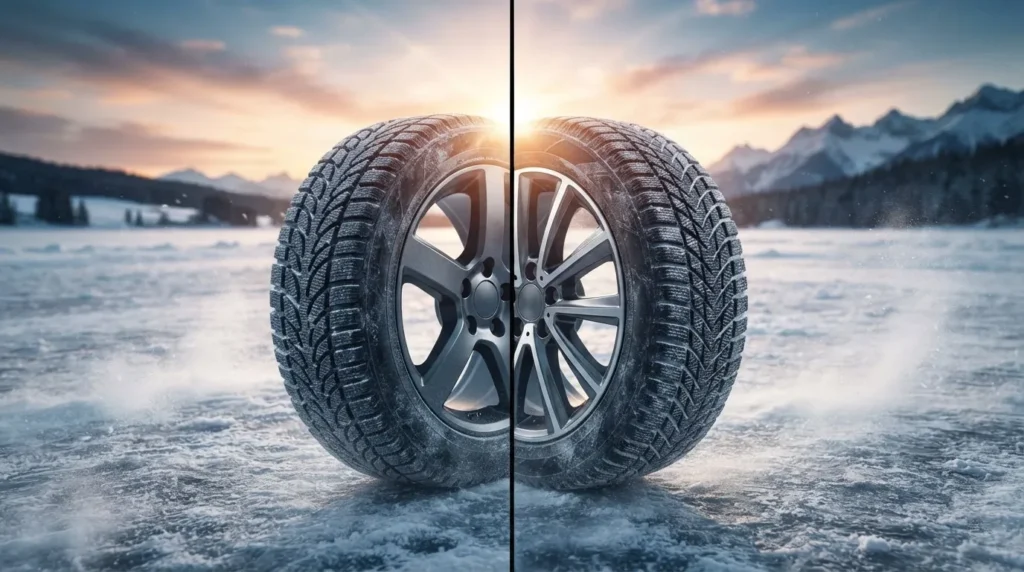

If you walk into Canadian Tire, Costco, or Discount Tire right now, nine out of ten counter reps will give you the same non-answer: “Both are premium, pick whichever is on sale.” But treating the Bridgestone Blizzak DM-V2 and the Michelin X-Ice Snow SUV as interchangeable is a costly mistake. In standard crossover sizes (like 225/65R17 or 235/60R18), the Bridgestone Blizzak DM-V2 CA $161.78 to CA $422.21 ($113.49 USD to $296.19 USD) per tire, while the Michelin X-Ice Snow SUV lists slightly higher at CA $204.99 ($143.79 USD).
While both carry the Three-Peak Mountain Snowflake (3PMSF) symbol, their rubber compounds solve completely different winter emergencies. One behaves like a snowblower in fresh powder but wears out prematurely; the other handles like an all-season on dry highways and refuses to die after four seasons.
Table of Contents
Autoakhbar Verdict Card
Buy the Bridgestone Blizzak DM-V2 If: You live in snow-belt regions (Alberta, rural Ontario, Upstate New York, Minnesota), regularly navigate unplowed residential hills, and prioritize maximum first-year braking bite over 5-year tread longevity.
Buy the Michelin X-Ice Snow SUV If: You do heavy 400-series highway commuting, face cleared slush or bare frozen tarmac 70% of the time, and want a winter tire that actually lasts 4 to 5 full seasons without feeling squishy.
The Biggest Compromise: Blizzak loses its magic bite once worn down past 50-55% (revealing standard base rubber). Michelin holds its grip compound to 2/32″ but has slightly less initial bite in bumper-deep powder.
Value Rating: Blizzak DM-V2: 8.6/10 | Michelin X-Ice Snow SUV: 9.2/10
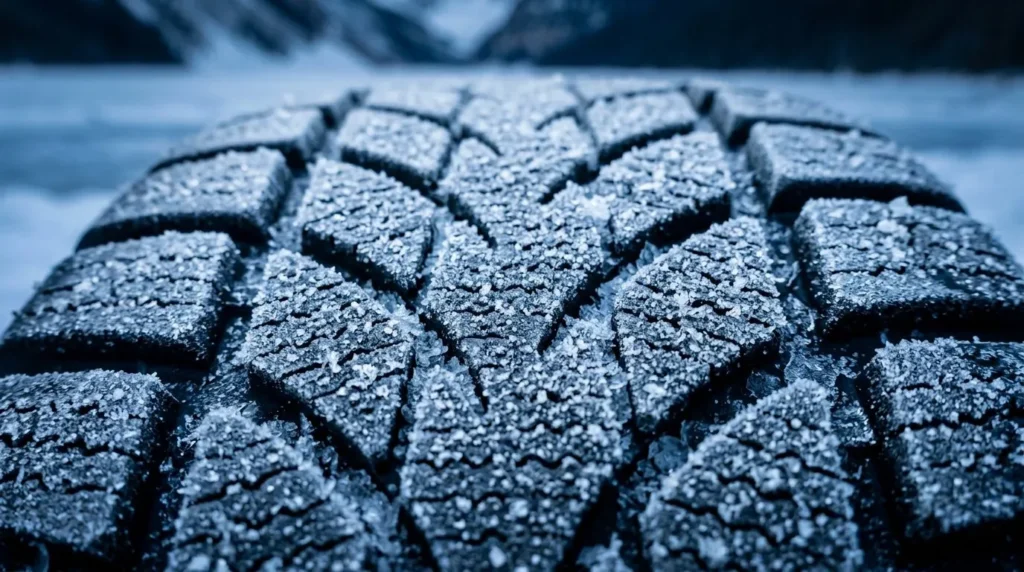
Head-to-Head Benchmarks: Tests vs Real-World Decay
Standard spec sheets only show new tire ratings. Here is how they stack up when real winter conditions hit your 4,500-lb crossover:
| Performance Category | Bridgestone Blizzak DM-V2 | Michelin X-Ice Snow SUV | Real-World Advantage |
|---|---|---|---|
| Average Price (17″–18″ SUV Sizes) | ~CA $225.99 to CA $422.21 per tire (~$158.52 USD to $296.15 USD at Discount Tire / axondistribution) | ~ CA$255.95to CA$318.95 per tire (~$179.51 to $223.70 USD. at Costco / Tire Rack) | Blizzak (Saves roughly $80–$120 on a full set of four) |
| Deep Snow & Incline Pull | Exceptional bite; acts like a studded paddle | Very good; cleans slush effectively | Blizzak (Clear edge in unplowed driveways) |
| Glare Ice Braking (50 to 0 km/h) | ~21.2 meters (stops with violent authority) | ~22.4 meters (smooth, controlled stop) | Blizzak by roughly half a car length |
| Highway Dry/Wet Stability | Squishy steering feel; wanders on warm days | Rigid tread blocks; drives like a touring tire | Michelin (Far superior high-speed road manners) |
| Tread Wear After 2 Seasons | Noticeable drop; micro-pore layer wears quickly | Retains square block edges and depth | Michelin (Documented to last 1-2 seasons longer) |
| Rolling Resistance (EV/Hybrid Range) | High drag; EV range drops by up to 18-22% | Low rolling resistance silica matrix | Michelin (Preserves 4-7% more battery range) |
| Manufacturer Treadlife Warranty | None (Industry standard for winter rubber) | 60,000 km / 40,000 miles limited warranty | Michelin (Rare peace of mind for winter tires) |
Section 1: The Deep Snow & Ice Reality Check
The secret behind Bridgestone’s reputation is its NanoPro-Tech Multicell compound. Under a microscope, the rubber contains millions of microscopic air pockets. When driving over ice, surface friction creates a microscopic film of water—the exact cause of hydroplaning on ice. The Blizzak’s micro-pores literally vacuum that moisture film away, allowing the jagged sipes to lock directly onto the frozen surface.
The Michelin X-Ice Snow takes an engineered approach using Fulgurite silica inclusions. Instead of sponges, it embeds rigid microscopic particles that scratch the surface like miniature micro-studs throughout the entire depth of the tread. In back-to-back testing on hard-packed snow, the Blizzak launches an AWD SUV with marginally less slip. However, in greasy highway slush and standing cold rain (0°C to 4°C), the X-Ice evacuates slush through its V-shaped channels with noticeably less steering chatter.
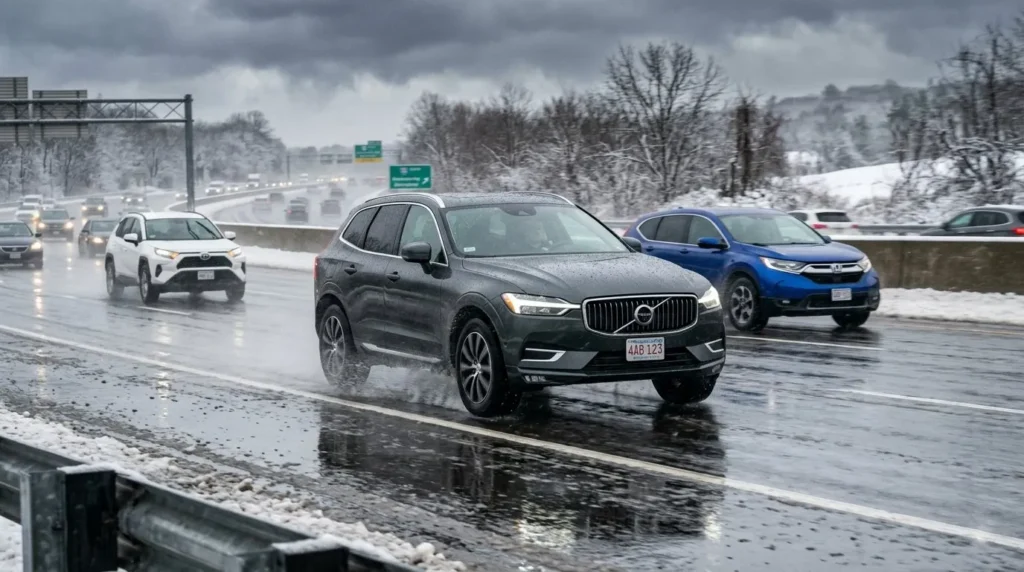
Section 2: What Reddit & Long-Term Drivers Warn You About
Step away from retailer five-star reviews, and recurring complaints on enthusiast forums (like r/AskACanadian and r/tires) highlight the ownership realities tire makers gloss over:
- The Blizzak “Season 3 Cliff”: The single biggest verified complaint about the Blizzak DM-V2 is compound degradation. Bridgestone’s super-soft multicell compound only makes up roughly the first 50-55% of the usable tread depth. Once you wear through that depth (often by year three for daily highway commuters), the remaining rubber switches to a standard winter compound, causing a noticeable drop in ice grip.
- The Michelin Slush Hydroplane: While the X-Ice Snow lasts noticeably longer, owners report that in heavy, soup-like March slush, its firmer contact patch can feel slightly lighter than the soft, aggressive bite of a fresh Blizzak.
- Cabin Drone & Wandering: If you mount Blizzaks in early October while temperatures are still hitting 12°C (54°F), the tire squirts and squishes under hard cornering. The Michelin tracks straight and maintains tight steering feedback on dry tarmac.
Canada’s Strict Winter Laws: Dates, Deadlines & Insurance Breaks
If you drive in Canada or cross the northern US border, timing is non-negotiable:
- Quebec Mandate: Winter tires bearing the 3PMSF icon are legally mandatory from December 1 to March 15. Vehicles registered in Quebec caught on regular M+S rubber face fines between $200 and $300 plus administrative fees.
- British Columbia Highways: From October 1 to April 30, designated interior highways (including the Coquihalla Highway) legally require winter-rated tires with a minimum remaining tread depth of 3.5 mm.
- Ontario Insurance Discount: While Ontario has no provincial tire mandate, all private auto insurance carriers are legally obligated to offer a 2% to 5% discount on your annual premium if you certify that you run four winter tires from November through April.
Also Read : Why Does Car Mileage Drop in Winter? The Real Truth for Petrol & Diesel Cars
Autoakhbar Final Take
If you live outside metropolitan snowplow routes, face unplowed morning hills, or live in deep snow-belt regions like northern Ontario or the Canadian prairies, buy the Bridgestone Blizzak DM-V2. Its first two seasons offer safety margins on pure ice that few studless tires can match.
For everyone else—especially city dwellers in Toronto, Montreal, Calgary, or northern US suburbs who spend 80% of their winter on plowed, salted highways—the Michelin X-Ice Snow SUV is the smarter financial purchase. It drives quieter, protects your fuel or EV battery efficiency, and will easily give you four to five seasons of consistent, predictable braking.
FAQ Blizzak DM-V2 vs Michelin X-Ice Snow SUV
Does the Blizzak DM-V2 wear out faster than the Michelin X-Ice Snow?
Yes. Real-world feedback consistently shows the Blizzak’s soft hydrophilic rubber wears 20-30% faster on bare highway pavement. Michelin backs the X-Ice Snow with a 60,000-km treadlife warranty, which is rare for dedicated winter rubber.
Are these tires legally approved for Quebec’s winter tire law?
Yes. Both the Blizzak DM-V2 and Michelin X-Ice Snow SUV feature the official Three-Peak Mountain Snowflake (3PMSF) symbol molded on the sidewall, making them 100% compliant with Quebec regulations.
Which tire is better for an Electric or Hybrid SUV?
The Michelin X-Ice Snow SUV is significantly better for EVs. Its lower rolling resistance compound preserves 4% to 7% more cold-weather battery range compared to the aggressive, high-drag tread of the Blizzak.