
Aptera Motors has spent years promising a car you can drive on sunlight. In 2026, that promise finally moved from prototypes to something that looks like a real factory process. But the same year also brought a sharp reminder: building a car is easy to announce and brutally expensive to finish. Here is where Aptera actually stands right now.
Table of Contents
What Is Aptera Motors?
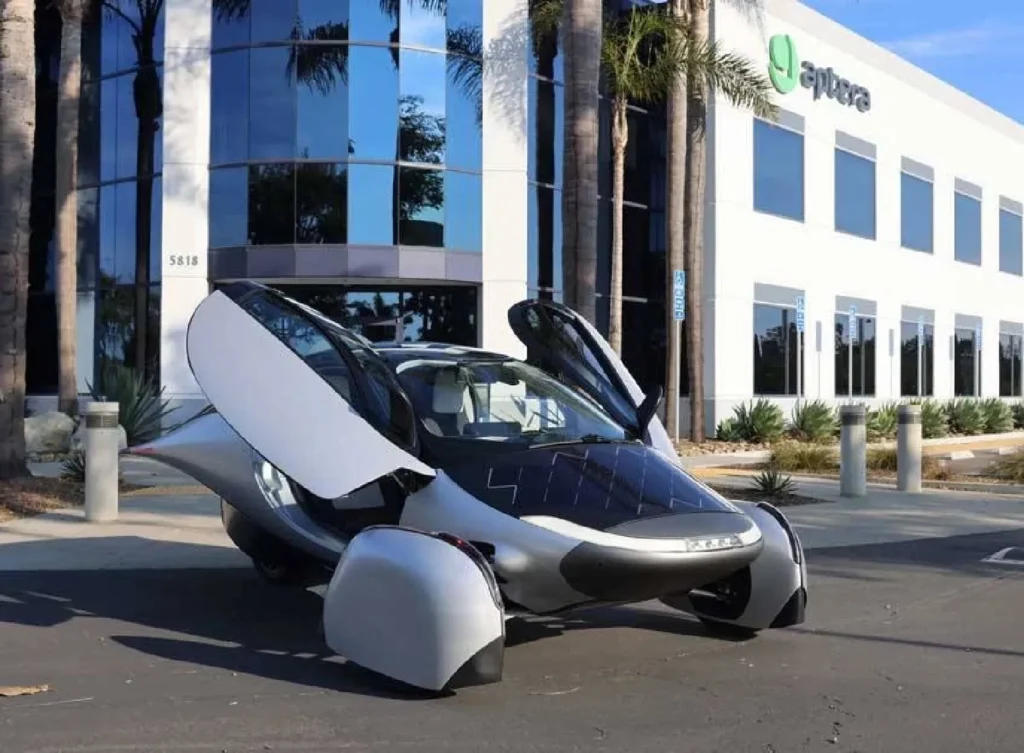
Aptera is a California-based “solar mobility” company headquartered in Carlsbad. Its flagship vehicle is an ultra-aerodynamic, solar-assisted electric vehicle designed around extreme efficiency rather than raw power. The company trades on Nasdaq under the ticker SEV, and it operates as a public benefit corporation.
From Prototype to Validation Line
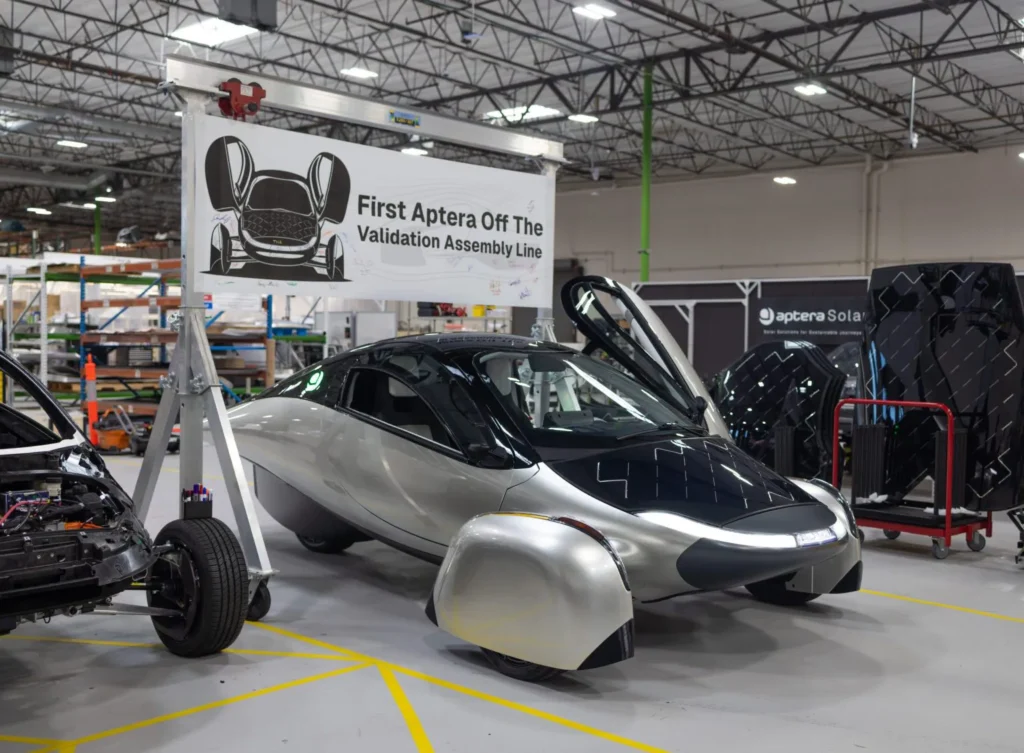
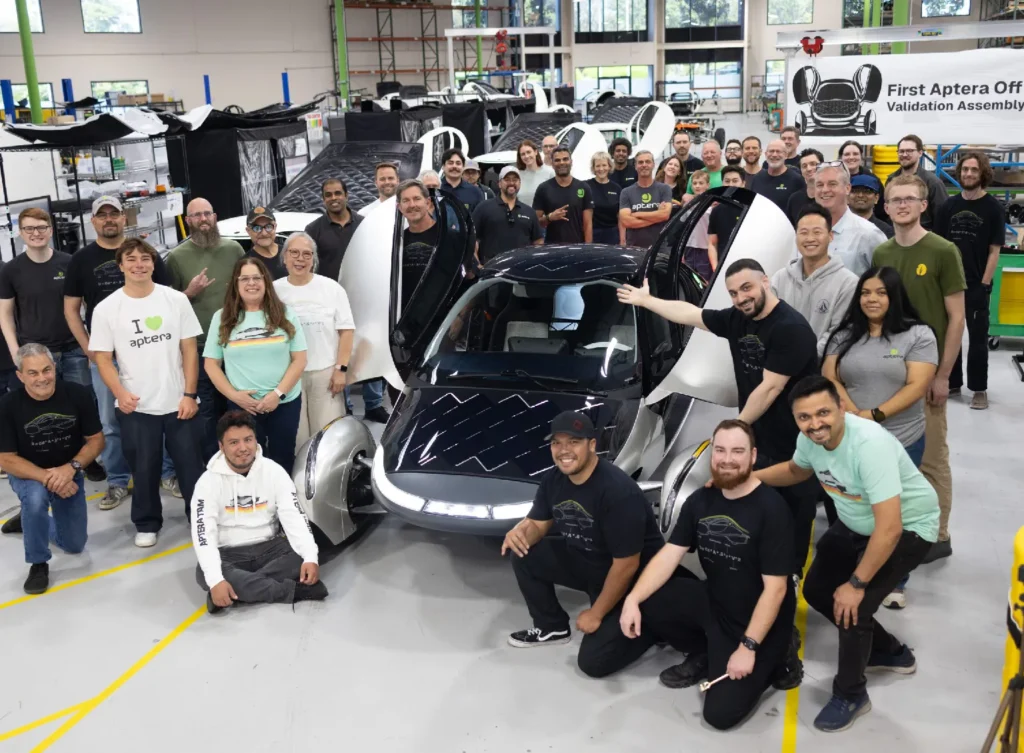
The biggest shift this year has been manufacturing progress. In March 2026, Aptera completed the first vehicle off its validation assembly line, a 14-station setup where technicians build cars in a repeatable sequence instead of hand-assembling each one. By mid-May, the company had driven the first five validation vehicles off that line, as noted in its first-quarter results filing.
These cars are not for sale. They are being used for thermal validation, brake testing and even destructive testing, all of which feed into regulatory self-certification and EPA certification.
Key 2026 Milestones
- EPA certificate: Aptera received an EPA Certificate of Conformity for its 2026 Launch Edition, according to its second-quarter results.
- First production parts ordered: On August 4, the company issued purchase orders for bodies and chassis for its first 40 production vehicles.
- Service network: A July partnership with RepairPal is meant to give future owners nationwide certified repair coverage.
- Manufacturing partner: Aptera signed a strategic agreement with Shanghai Launch Automotive Technology, which will handle manufacturing and contract engineering work.
- Solar claims tested: Independent testing by TÜV Rheinland measured more than 4 kWh of usable solar energy delivered to the battery on each of three test days.
- Legal cleanup: The long-running Zaptera litigation was dismissed with prejudice in April 2026.
The Money Problem
This is the part every reader should understand before getting excited. In its third-quarter 2026 results, Aptera reported a GAAP net loss of about $14.0 million and ended September with $9.2 million in cash, of which $4.1 million is refundable reservation money. The company has also warned that its recurring losses raise substantial doubt about its ability to continue as a going concern.
On October 1, Aptera lowered its estimate of the capital needed to start production to roughly $25 million, down from $40 to $45 million. Electrek reported that the stock still fell about 15% that day, leaving the company with a market value of around $69 million. Reaching a rate of 500 vehicles per month is estimated to need about $65 million in total.
Reservations, Timeline and What to Expect
Demand is not the issue. Aptera says it had more than 49,000 reservations as of September 30, 2026. The company plans to begin building its first 40 production vehicles by the end of 2026, with customer deliveries targeted for early 2027. Both targets depend on timely financing, and the vehicle still needs to clear FMVSS compliance before deliveries can start.
Also Read : Alpha Wolf Electric Truck: Retro Compact Pickup Still Waiting for Real Production in 2026
Risks Worth Knowing
- Cash is thin compared with what production requires, and the company relies on repeated fundraising.
- Aptera has disclosed material weaknesses in internal financial controls and an ongoing SEC investigation.
- No production revenue exists yet, so every date on the roadmap is a target, not a guarantee.
Aptera Motors FAQ: 10 Questions Everyone Is Asking
1. How much does the Aptera solar electric car cost?
The Launch Edition carries a target price of $40,000, and Aptera says the final purchase price will be announced before delivery. Earlier plans also outlined a cheaper 250-mile version with a target as low as $28,000, while longer-range versions cost more. Treat every number as a target, not a confirmed sticker price. Reserving a car currently takes a $100 deposit.
2. When will Aptera Motors start delivering cars to customers?
Aptera now points to early 2027 for first customer deliveries, and it says that date is subject to timely financing. The company plans to begin building its first 40 production vehicles by the end of 2026, and the car still has to complete FMVSS compliance before sales can begin. Earlier this year, the company had talked about June 2026 deliveries, so the schedule has already slipped once. With more than 49,000 reservations, the first 40 cars will cover only a tiny slice of the waiting list.
3. How many miles can Aptera travel on solar power alone?
Aptera claims its roughly 700-watt solar array can add up to 40 miles of range per day in ideal sunlight. A cheaper roof, hood and dashboard only setup is rated at about 22 miles per day. The company says that adds up to as much as 10,000 miles a year in sunny regions. Real results depend on your climate, season and whether the car is parked in shade. In its Q3 2026 update, Aptera also said TÜV Rheinland independently measured more than 4 kWh of usable solar energy delivered to the battery on each of three test days.
4. Is Aptera Motors still in business in 2026?
Yes. Aptera is listed on Nasdaq as SEV, it keeps reporting quarterly results, and it has a working validation line in Carlsbad. But it is financially fragile. At the end of September it held $9.2 million in cash, including $4.1 million of refundable reservation fees, and it has warned of substantial doubt about continuing as a going concern. Read the Q3 2026 results for the full picture.
5. Can Aptera charge itself without plugging into a charger?
Partly. The solar panels charge the battery whether the car is parked or moving. Aptera notes that the average American drives less than 40 miles a day, so in a sunny place the company says an owner could rarely or never need to plug in. In cloudy weather, winter, or on long trips, you will still need a wall outlet or a Level 2 charger.
6. Is the Aptera solar car safe in a crash?
Nobody can answer that with data yet. I could not find any official crash-test results for the production Aptera. What Aptera has shared is its design approach: a carbon fiber body structure (Carbon Fiber-SMC stamped under up to 5,000 tons of force), airbags among the systems under validation, and a stated plan to run safety and crash testing on production-intent builds. Until independent results appear, the safe answer is “promising on paper, unproven in public.”
7. Why does Aptera have only three wheels?
There are two reasons. First, it is an efficiency play: fewer wheels and a very slim, teardrop shape help Aptera chase a claimed drag coefficient of 0.13, which is what makes 40 miles of daily solar range possible. Second, it is a regulatory shortcut. Under US federal rules, a vehicle with not more than three wheels counts as a motorcycle, which means it is not held to the crash-test standards applied to cars (Green Car Reports explains the rules). That lowers cost and testing burden for a small startup, though it also means buyers should watch for voluntary crash results.
8. How long does it take to fully charge an Aptera?
The Launch Edition uses a 42 kWh battery and a 6.6 kW onboard charger, per Green Car Reports. On a 240V Level 2 charger it adds about 57 miles of range per hour, and on a normal 120V outlet about 13 miles per hour, or roughly 150 miles overnight. By my own math, that means about 7 hours for a full 400-mile charge on Level 2, and well over a day on a household outlet. Early spec reports said the Launch Edition would not launch with DC fast charging, so do not expect Supercharger-style top-ups.
9. Why has Aptera Motors delayed production?
Mostly money. Aptera originally planned deliveries in 2021, redesigned structural parts in 2022, and by late 2024 was chasing $60 million and calling its delivery timeline a “moving target”. Even after a $9 million public offering in January 2026, deliveries were still aimed at 2026, and Electrek reported on October 1 that they had moved to early 2027. On top of funding, the company still has to finish validation testing and the remaining regulatory approvals.
10. Is Aptera worth buying compared with Tesla?
For most buyers today, no, simply because a Tesla exists and an Aptera does not yet. For a specific kind of buyer, it is a fascinating bet. Here is how the two compare on paper:
| Aptera Launch Edition | Tesla Model 3 Standard | |
|---|---|---|
| Price | Target $40,000 (not final) | About $38,630 including fees |
| Range | About 400 miles (claimed), plus up to 40 solar miles per day | 321 miles EPA |
| Seats | Two | Five |
| Availability | Deliveries targeted for early 2027, subject to financing | On sale now |
| Fast charging | Not planned at launch | Supercharger network |
Aptera wins on efficiency and cargo-friendly practicality for one or two people with a short, sunny commute. Tesla wins on proven safety ratings, seating, fast charging, service, and the certainty of getting a car. The reservation money is also a consideration, since Aptera is a cash-strapped startup. If you reserve one, do it as a long-term bet, not as your only plan for a car.
Final Take
Aptera is closer to delivering a solar EV than it has ever been, with a working validation line, an EPA certificate and tens of thousands of reservations. But it is also racing against its own bank balance. If funding arrives on time, early 2027 could finally put real cars in real driveways. If not, the dream stays on the test track a little longer. Either way, it is one of the most important stories to watch in the EV space.