


New Delhi: Five years after its debut, the second-generation Lexus NX has received a significant mid-life update, and the biggest headline isn’t about styling — it’s about what’s under the hood. For 2027, the NX lineup drops its turbo-petrol-only variant entirely, leaving buyers to choose between two electrified powertrains.
Key Takeaways
- The 2027 Lexus NX facelift drops its turbo-petrol-only variant, going hybrid and plug-in hybrid only.
- The NX 450h+ plug-in hybrid’s battery grows from 18kWh to 23kWh, adding about 26km of WLTP electric range.
- The redesigned interior borrows heavily from the Lexus ES, with a bigger touchscreen and instrument display.
- Exterior updates include a sharper spindle grille and new double-‘L’ taillights.
- Chassis and suspension were retuned with testing at Toyota’s Shimoyama track and the Nürburgring.
Table of Contents
Hybrid Power, No Exceptions
The updated NX will be offered exclusively as the NX 350h regular hybrid or the NX 450h+ plug-in hybrid, with the previous non-hybrid NX 350 turbo variant discontinued. Both powertrains now use Lexus’s sixth-generation hybrid system, which relocates the power control unit and transaxle into a single housing borrowed conceptually from the brand’s dedicated EV models, trimming roughly 10 kg of weight and dropping the assembly’s height by around 10 cm for better packaging.
The plug-in hybrid NX 450h+ sees the largest change: its battery grows by 30 percent, from 18 kWh to 23 kWh, extending WLTP-rated electric-only range to about 100 km, an increase of roughly 26 km over the outgoing model. DC fast-charging support is also new for the plug-in variant, a first for a Lexus PHEV.
An Interior Borrowed From the ES
Inside, the changes are just as significant as under the skin. Lexus has redesigned the dashboard and center console with clear influence from the recently updated ES sedan, replacing the outgoing NX’s swooping design and heavy use of piano-black plastic with a more minimalist layout. A smaller steering wheel sits ahead of a larger 12.3-inch instrument display, up from 8.0 inches previously, and buyers get access to a 14-inch central touchscreen.
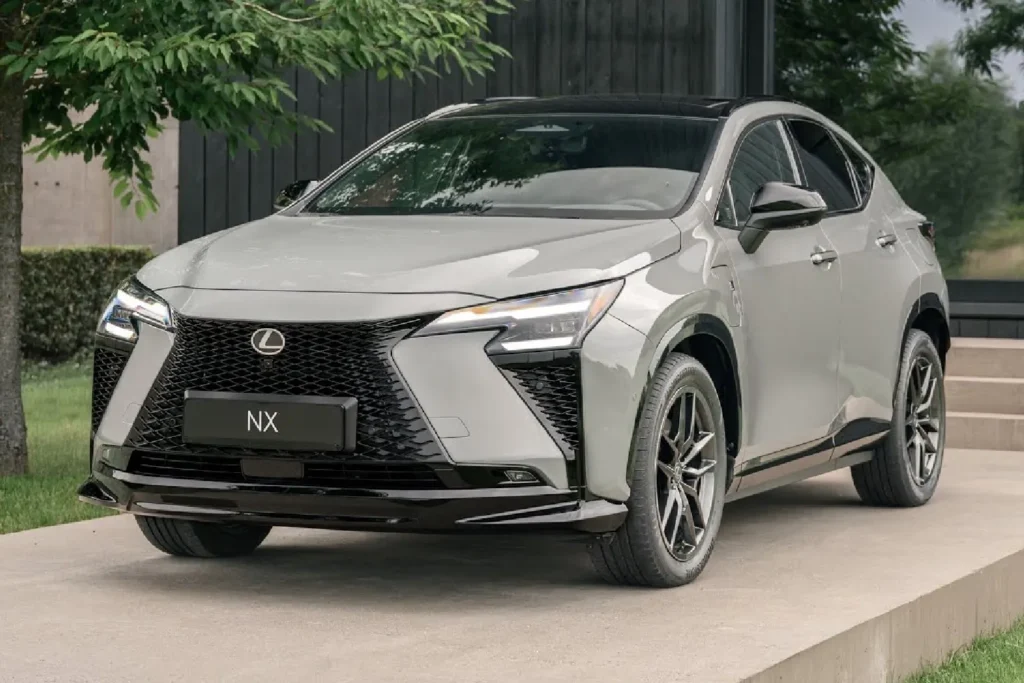
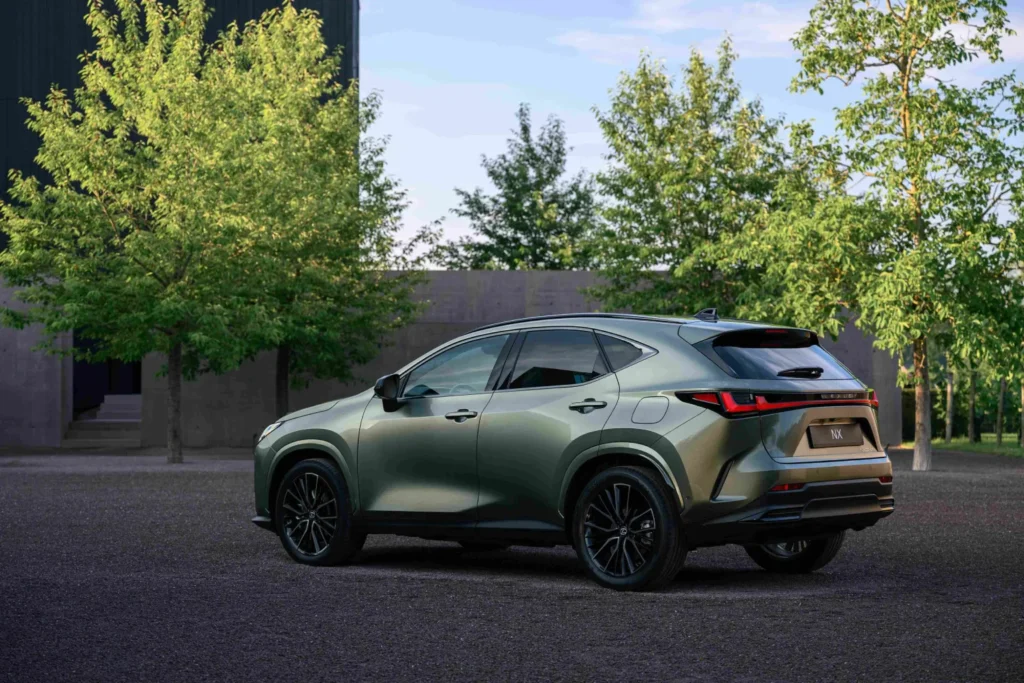
Externally, the NX gains a flatter, sharper spindle grille, restyled headlights with twin horizontal driving lights, and new taillights featuring a doubled-up “L” light signature. Chassis, suspension, steering, and braking have all been retuned, with development work carried out at Toyota’s Shimoyama test track as well as on the Nürburgring.
A Wider Industry Shift
Dropping the gas-only variant follows a pattern already seen with the closely related Toyota RAV4, which is no longer offered as a combustion-only model in the United States. In Australia, Lexus is going even further, cutting petrol-only variants of the RX350 and LS500 for that market as well, a sign that Lexus increasingly views hybrid power as its baseline rather than an option.
Also Read : The Mitsubishi Pajero Is Officially Coming Back to Take On the Toyota Land Cruiser Prado
AutoAkhbar Verdict
Going hybrid-only might sound like a limitation, but for Lexus, it barely feels like one. Hybrid variants already outsell the non-hybrid NX in most markets by a wide margin, and the bigger plug-in battery makes the 450h+ genuinely useful for daily electric-only commuting. This looks less like Lexus taking away a choice and more like the brand catching up to what most buyers were already picking anyway.
Source Name : Car and Driver
FAQ
Will the 2027 Lexus NX still be available with a gasoline-only engine?
No. The turbo-petrol-only NX 350 has been discontinued for 2027, leaving only the NX 350h hybrid and NX 450h+ plug-in hybrid.
How much electric-only range does the 2027 NX 450h+ get?
The plug-in hybrid’s battery grows from 18 kWh to 23 kWh, extending WLTP-rated electric-only range to about 100 km, up roughly 26 km from before.
What’s new inside the 2027 Lexus NX?
The cabin gets a redesigned dashboard influenced by the Lexus ES, a smaller steering wheel, a 12.3-inch instrument display, and a 14-inch central touchscreen.






Pingback: 2027 Ram Power Wagon Diesel Tested: First Drive | AutoAkhbar