
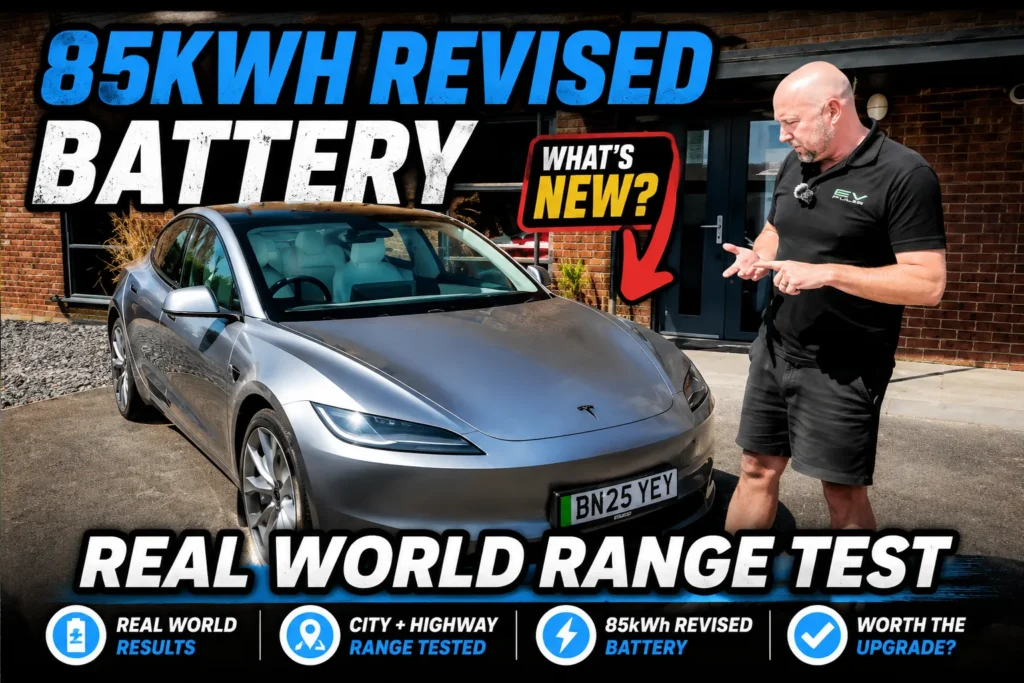

Quick take: A new range-test video asking “THE MOST RANGE YET?” about the 2026 Tesla Model 3 Long Range is trending on YouTube right now, and the timing makes sense — Tesla’s updated battery pack has genuinely pushed the Model 3’s numbers into new territory.
Key Takeaways
- Battery estimated at high-70s to low-80 kWh (Tesla doesn’t publish the figure)
- EPA range roughly 341-363 miles depending on trim
- WLTP-rated versions abroad have hit up to 445 miles
- Real-world highway tests have shown Model 3 variants beating EPA estimates by 20-30+ miles
- Efficiency around 25 kWh/100 miles, among the best of any EV sold today
Quick Answer: The updated 2026 Tesla Model 3 Long Range uses a roughly 78-82 kWh battery and carries an EPA estimate around 341-363 miles depending on trim, with independent real-world highway testing showing several Model 3 variants beating their official EPA numbers.
Table of Contents
What Changed With the 2026 Battery
Tesla has quietly been bumping Model 3 range across the board through battery and efficiency tweaks rather than a full redesign. The Long Range trim’s pack sits in the high-70s to low-80 kWh range (Tesla doesn’t publish exact figures), and recent updates have pushed the cheapest Long Range RWD variant’s rating up to roughly 343 miles, up from 322 miles before the change. Internationally, WLTP-rated versions of the Long Range have posted figures as high as 445 miles — the best a Model 3 has ever officially claimed.
How It’s Actually Performing in Real-World Tests
This is where it gets interesting. Independent highway range testing (the kind of 70-mph, drive-it-till-it-dies testing this trending video is doing) has repeatedly shown Model 3 variants beating their EPA sticker numbers:
- The Model 3 RWD hit 393 miles in one real-world test against a 363-mile EPA rating — an 8.3% beat
- An earlier Long Range AWD version cleared its 341-mile EPA estimate by more than 20 miles, hitting 365 miles
- The efficiency numbers are what make this possible: the Model 3 RWD is rated around 25 kWh per 100 miles, among the best of any EV currently sold
That consistency — beating the sticker instead of falling short of it — is a big part of why range tests like this one keep going viral. EV range anxiety is usually about a car underperforming its claimed number; the Model 3 has built a reputation for doing the opposite.
Also Read : Is the 2026 Jeep Compass Really a “Waste of Money”? Here’s What This Reviewer Found
Why This Matters for Buyers
If you’re cross-shopping EVs on road-trip usability, real-world range beating the EPA number is the number that actually matters, not the sticker. A Model 3 Long Range that’s realistically clearing 350-390+ highway miles on a charge closes a lot of the gap that used to make gas cars feel safer for long drives.
AutoAkhbar Verdict
Tesla’s incremental battery and efficiency updates keep quietly making the Model 3 Long Range one of the most road-trip-friendly EVs on sale, and this kind of independent range test is exactly how that gets proven — not through a marketing number, but through someone actually driving it dry.
FAQ Tesla Model 3
What’s the battery capacity in the 2026 Tesla Model 3 Long Range?
Tesla doesn’t publish exact figures, but the pack is generally estimated in the high-70s to low-80 kWh range.
What’s the EPA range on the 2026 Model 3 Long Range?
Around 341-363 miles depending on the specific trim (RWD vs AWD) and wheel size.
Does the Tesla Model 3 actually hit its advertised range?
Independent real-world highway tests have repeatedly shown Model 3 variants beating their EPA estimates, in some cases by 20-30 miles.
How does the Model 3 Long Range compare internationally?
Under the European WLTP test cycle, the Long Range has been rated as high as 445 miles, the best figure a Model 3 has posted.



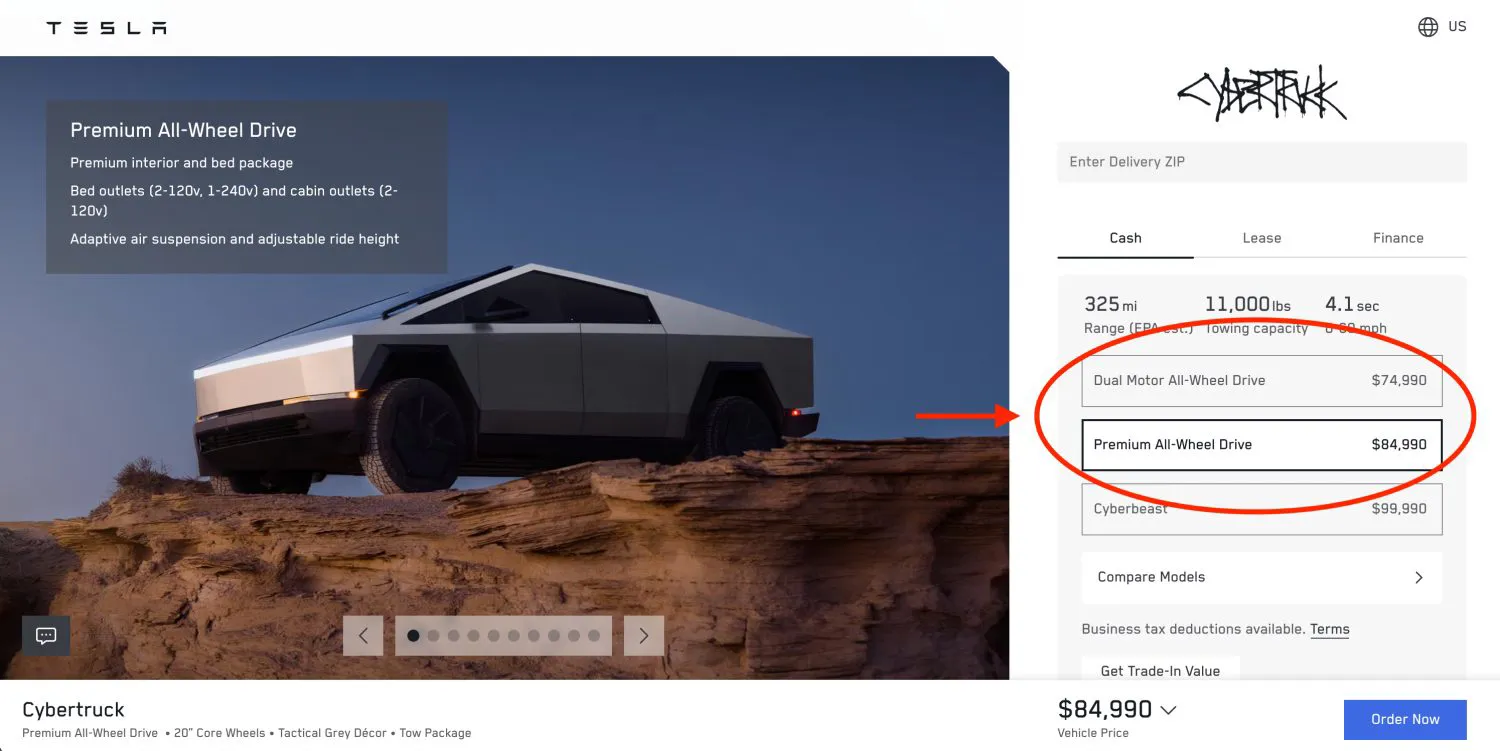

Pingback: Tesla Raises Cybertruck Prices by $5,000 Despite Weak Demand