
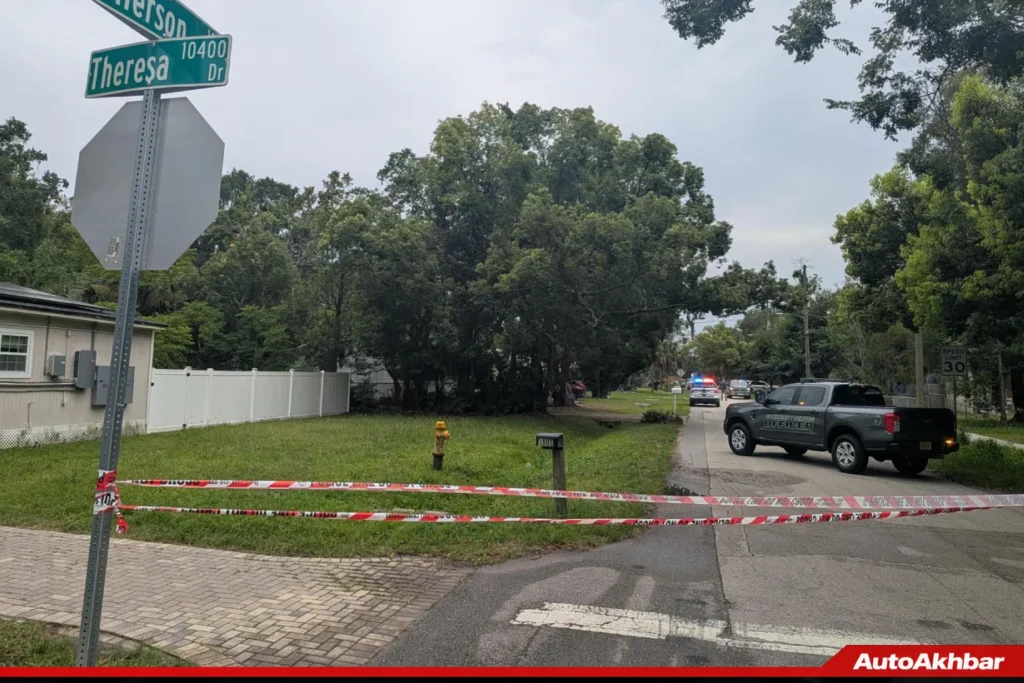
Quick Answer: A 20-year-old man was arrested on July 17, 2026, in Clay County, Florida, after a sheriff’s deputy recorded his vehicle traveling at 111 mph in a 45 mph zone on County Road 215 — an offense that qualifies as “super-speeding” under Florida law, which flags any driver going 50 mph or more over the limit, or above 100 mph regardless of the posted limit.
A routine morning traffic patrol in Clay County, Florida, turned into a headline-making arrest after a deputy’s radar unit registered a driver going more than double the posted speed limit.
Table of Contents
What Happened
According to a Clay County Sheriff’s Office arrest report, the incident occurred at approximately 8:54 a.m. on July 17 along County Road 215. A deputy conducting routine traffic enforcement used radar to record the driver’s speed at 111 mph in a posted 45 mph zone — a difference of 66 mph over the limit.
The driver, a 20-year-old man, was stopped and taken into custody shortly after. Per News4JAX policy on unresolved criminal cases, the individual’s name has not been released, as charges are often reduced or dismissed and anyone arrested is presumed innocent until proven guilty.
Why It Matters: Speeds this far above the posted limit fall into what US traffic authorities classify as “super-speeding” — typically defined as 80 mph or higher, or 50+ mph over the limit. These stops often carry harsher penalties, including mandatory court appearances, steep fines, and possible license suspension, rather than a simple citation.

How Radar Enforcement Works in Cases Like This
Traffic enforcement units use radar or lidar guns during routine patrols to measure vehicle speed in real time. When a reading significantly exceeds the posted limit — as in this case, more than 2.4 times the legal speed — officers are generally required to make a stop and, depending on state law, can escalate the citation to a criminal or “reckless driving” charge rather than a standard civil infraction.
Broader Context: Extreme Speeding Cases on the Rise
This arrest comes amid a string of similar high-speed cases reported by sheriff’s offices across the US in recent months, with law enforcement agencies increasingly highlighting extreme speeding arrests as part of public safety awareness efforts. Rural highways and county roads — often wider and less congested than urban streets — tend to see a disproportionate share of these “super-speeder” incidents, as drivers misjudge the risk on stretches that appear open and empty.
Read More : Fiat’s Australian Exit Nears: EV Imports Suspended as Passenger Car Sales Collapse 30%
What Happens Next
The case will proceed through Clay County’s court system. As with most such arrests, the final charges and any penalties will depend on the judicial process, and the report notes that outcomes in similar cases are not guaranteed to match the initial arrest charges.
Source Name : Clay County Sheriff’s Office arrest report, as reported by News4JAX/WJXT
FAQ
What speed qualifies as “super-speeding”?
While definitions vary by state, “super-speeding” generally refers to driving at 80 mph or above, or at least 50 mph over the posted speed limit — thresholds this Clay County case far exceeded at 111 mph in a 45 mph zone.
Where exactly did the incident occur?
The stop took place on County Road 215 in Clay County, Florida, at around 8:54 a.m. on July 17, 2026, during a deputy’s routine traffic enforcement patrol.
Was the driver identified?
The Clay County Sheriff’s Office report identifies the driver only as a 20-year-old man. Following News4JAX’s editorial policy, the outlet has not released his name, noting that charges can be dropped or reduced and that individuals are presumed innocent unless proven guilty.
What are the typical penalties for driving over 100 mph?
Penalties vary by jurisdiction but commonly include mandatory court appearances, significant fines, license suspension, and in some states a reckless driving charge rather than a standard speeding ticket, given the elevated risk such speeds pose to public safety.