
Quick answer: CATL, the world’s biggest EV battery maker, is reportedly exploring lithium-air batteries that could theoretically deliver more than 1,200 miles (about 2,000 km) of EV range. It is research-stage, not a product you can buy.
Table of Contents
What was reported
Digital Trends reported on November 8, 2026 that CATL is looking at lithium-air technology as a route to a potential 1,200-plus-mile EV range, with a catch attached. The 1,243-mile figure in headlines equals 2,000 km, and it is a theoretical target rather than a tested result.
Why lithium-air is exciting
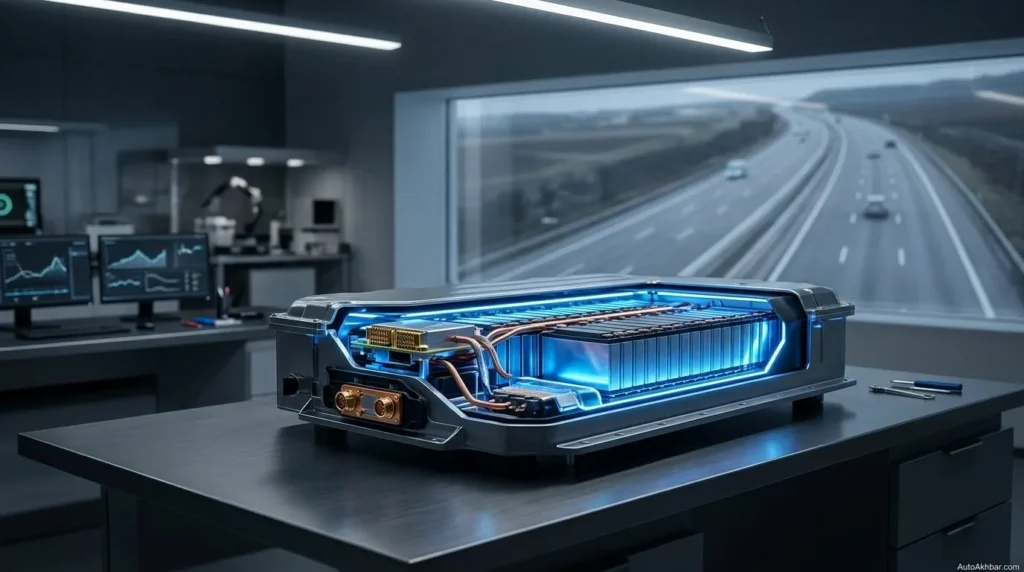
Lithium-air batteries use oxygen from the air as one reactant, so in theory they can store far more energy for their weight than today’s lithium-ion cells. That is why the idea keeps returning in battery research: more energy per kilogram means more range without a heavier pack.
Where CATL’s batteries are today
Current production technology is already impressive. CATL says its Qilin condensed battery enables a 1,500 km range for sedans and over 1,000 km for large SUVs, according to EV Magazine. That is a claimed figure, usually on a lenient test cycle, but it shows how far lithium-ion has come.
- Today: condensed lithium-ion Qilin, claimed 1,500 km in sedans
- Possible future: lithium-air, theoretical 2,000 km (1,243 miles)
- Status of lithium-air: exploratory, no production date
What is the catch?
Lithium-air has long struggled with practical hurdles. Based on general battery research, the usual problems are limited charge-discharge life, lower efficiency, and sensitivity to moisture and other gases in the air. We have not seen CATL publish a timeline or test data, so any road-ready date would be speculation.

Do we even need 1,200 miles?
Probably not for daily driving. Most drivers rarely cover even 300 miles in a day, so the bigger wins for buyers are faster charging, lower cost and longer battery life. Extreme range can still matter for trucks, aircraft and remote regions. Interestingly, 1,243 to 1,864 miles is the same range CATL’s chairman cited in 2024 for future electric aircraft powered by its condensed-matter battery, as reported by TechNode.
Also Read : OMODA X Revealed: 13 Questions Answered Before It Hits Roads
What to watch next
Look for peer-reviewed results, pilot cells, and any partner carmakers named. Until then, treat 1,243 miles as a research headline. Rivals such as BYD are also pushing range and charging speed, and AutoAkhbar.com will track the race.
Putting 1,243 miles in perspective
1,243 miles is 2,000 km. For Indian readers, that is well beyond the roughly 1,400 km road distance between Delhi and Mumbai, and it would be a leap even from CATL’s own claimed 1,500 km Qilin condensed battery. CATL’s first Qilin, announced in 2022, had an energy density of up to 255 Wh/kg, according to Auto123. Rival BYD says its Blade Battery 2.0, announced in March 2026, offers more than 1,000 km and charges from 10% to 97% in nine minutes, per EV Magazine. The competition is pushing everyone, which is why research like lithium-air gets attention even before it is ready.
Source: Digital Trends; EV Magazine; TechNode.
FAQ CATL lithium-air battery
Is CATL really building a 1,243-mile EV battery?
No. Reports describe lithium-air batteries as an exploratory technology with a theoretical range above 1,200 miles. There is no confirmed product or release date.
What is a lithium-air battery?
It is a battery that uses oxygen from the air as a reactant, which in theory allows much higher energy storage per kilogram than lithium-ion.
What range do CATL batteries offer today?
CATL says its Qilin condensed battery enables up to 1,500 km in sedans and more than 1,000 km in large SUVs, as a claimed figure.