
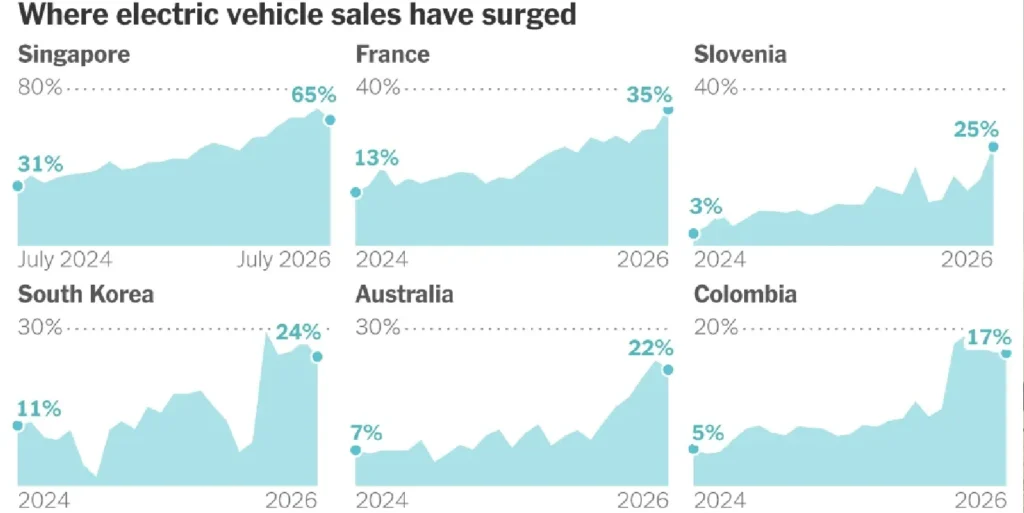

Rising fuel prices tied to Middle East tensions and the Strait of Hormuz disruption are accelerating global EV sales, with nearly 3 in 10 new cars in 2026 expected to run on electricity.
Fuel prices have been climbing for months as tensions in the Middle East disrupt oil supply routes through the Strait of Hormuz, and that price pain at the pump is doing something unexpected: pushing more buyers toward electric cars, not just in one country but across dozens of markets at once.
Table of Contents
What Reddit Users Are Discussing
Threads on r/cars and r/electricvehicles picked up a report describing how the oil disruption is reshaping global car-buying decisions. The overlap across both communities signals genuine reader interest, not a one-off news cycle.
The Real Question
Is this EV surge a temporary reaction to expensive petrol, or a lasting shift that will hold even if oil prices come back down?
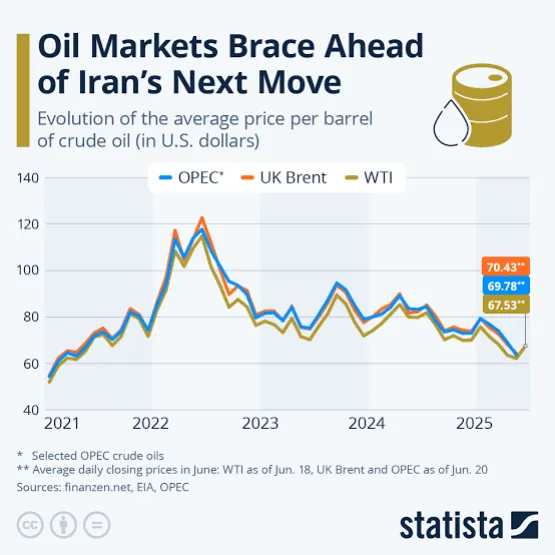
What We Know
The International Energy Agency now expects close to 29 percent of new cars sold worldwide in 2026 to be fully electric or plug-in hybrid, up from earlier forecasts and a sharp climb from just 4 percent in 2020. Quarterly EV sales globally rose roughly 35 percent year-on-year in the most recent quarter, and the agency’s full-year projection sits near 23 million EVs sold globally.
- South Africa’s EV sales reportedly more than quintupled in the first half of 2026 compared with a year earlier.
- Norway remains the outlier at the top, with plug-in vehicles making up the vast majority of new car sales there.
- China continues to account for a large share of the world’s EV volume, supported by aggressive domestic manufacturing.
- The United States is a partial exception — sales cooled this spring after the federal EV tax credit was phased out, even as fuel prices rose.
Analysts caution that EV demand was already growing before the oil shock. Battery costs have been falling for years, and that trend, not fuel prices alone, is what most researchers expect to keep EV adoption climbing over the long run.
Also Read : Is the 2026 Jeep Compass Really a “Waste of Money”? Here’s What This Reviewer Found
Why It Matters
For buyers weighing a new car right now, higher pump prices change the math on running costs, sometimes significantly, depending on local electricity rates and how long a person plans to keep the vehicle. It also matters for automakers and dealers, who are watching whether this is a durable demand shift worth building factory capacity around, or a spike that fades if the Strait of Hormuz situation resolves.
The Gulf Oil Shock Is Pushing E.V. Sales to New Heights Globally
by u/i_marketing in cars
AutoAkhbar Verdict
The fuel-price spike is a real accelerant, but it is layered on top of a trend that was already underway. Buyers should treat today’s high petrol prices as one more data point, not the sole reason to switch — the bigger, steadier driver remains falling battery costs and expanding model choice.
FAQ
Will EV sales fall back if oil prices drop?
Some slowdown is possible in the short term if fuel costs ease, but most analysts expect the underlying growth trend to continue as EVs become cheaper to produce.
Which markets are seeing the biggest EV growth right now?
Reports point to strong gains in South Africa, several Asia-Pacific markets outside China, and continued dominance in Norway and China.
Is the US following the same trend?
Not entirely — US EV sales actually dipped this spring after a federal tax credit expired, even as global sales accelerated.




Pingback: Mechanical vs. Electric Fuel Pump: Key Differences Explained