
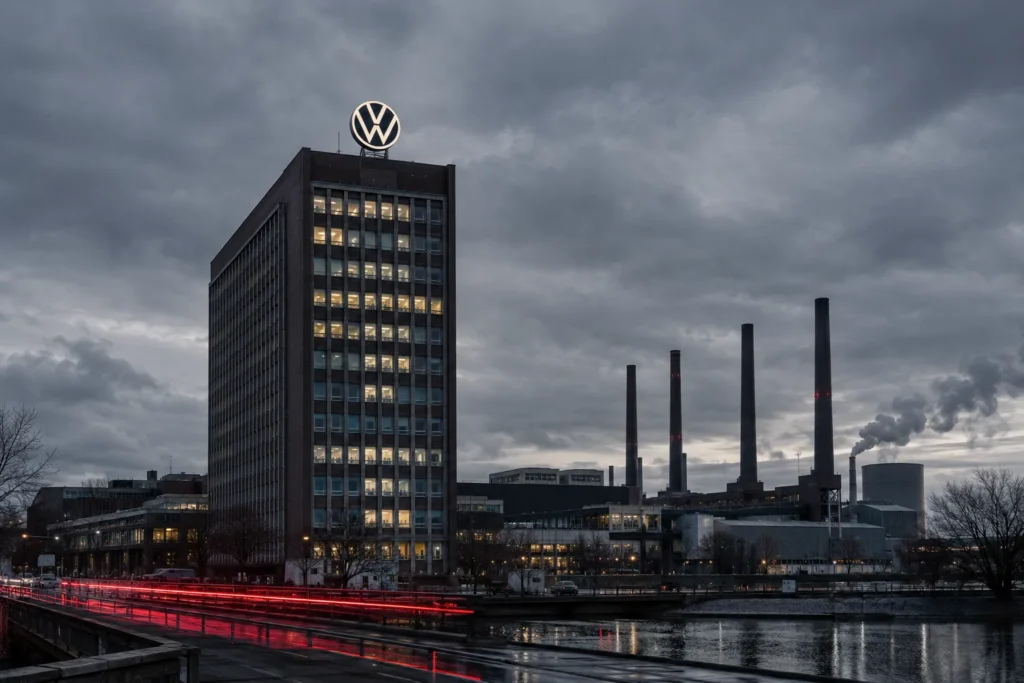
Quick Answer: On July 9, 2026, Volkswagen’s supervisory board met in Wolfsburg to vote on a restructuring plan involving up to 100,000 job cuts and the closure of plants in Emden, Hanover, Zwickau, and Audi’s Neckarsulm site. The crisis is driven directly by BYD’s rise: Volkswagen has fallen from China’s No.1 automaker to third place behind BYD and Geely, while non-Chinese brands’ combined China market share has crashed from 57% to 32% in five years.
For decades, Volkswagen was the undisputed king of the world’s biggest car market. That era is over. Today, the company that once defined German engineering is fighting to keep its own factories running, and the force behind that fight has a name: BYD.
Table of Contents
The Boardroom Showdown in Wolfsburg
On Thursday, July 9, 2026, Volkswagen’s supervisory board convened at company headquarters for a meeting that could reshape Europe’s largest carmaker. CEO Oliver Blume needed to convince the board’s powerful labour representatives to accept deeper cuts across the group, which includes Audi and Porsche.
Blume also faces pressure from the Porsche and Piëch families, major shareholders who have watched tens of billions of euros wiped off the value of their core holdings in recent years as the group’s fortunes in China have reversed.
How BYD Took Volkswagen’s Crown
Volkswagen held the top sales spot in China for decades. It slid to second place behind BYD in 2024, and dropped further to third place behind Geely in 2025. Meanwhile, non-Chinese automakers’ combined share of the Chinese car market collapsed from 57% in 2020 to just 32% in 2025.
BYD didn’t just outsell Volkswagen at home — it’s now exporting that dominance to Europe. Chinese EV brands including BYD, Chery, Leapmotor, and SAIC more than doubled their combined market share across Europe through May 2026 compared to the year before, arriving in Volkswagen’s own backyard with cheaper, software-first electric vehicles.
China’s EV Exports Surge 112.6% in May 2026 as Domestic NEV Sales Slump for 7th Straight Month
Why Volkswagen Is Cutting So Deep
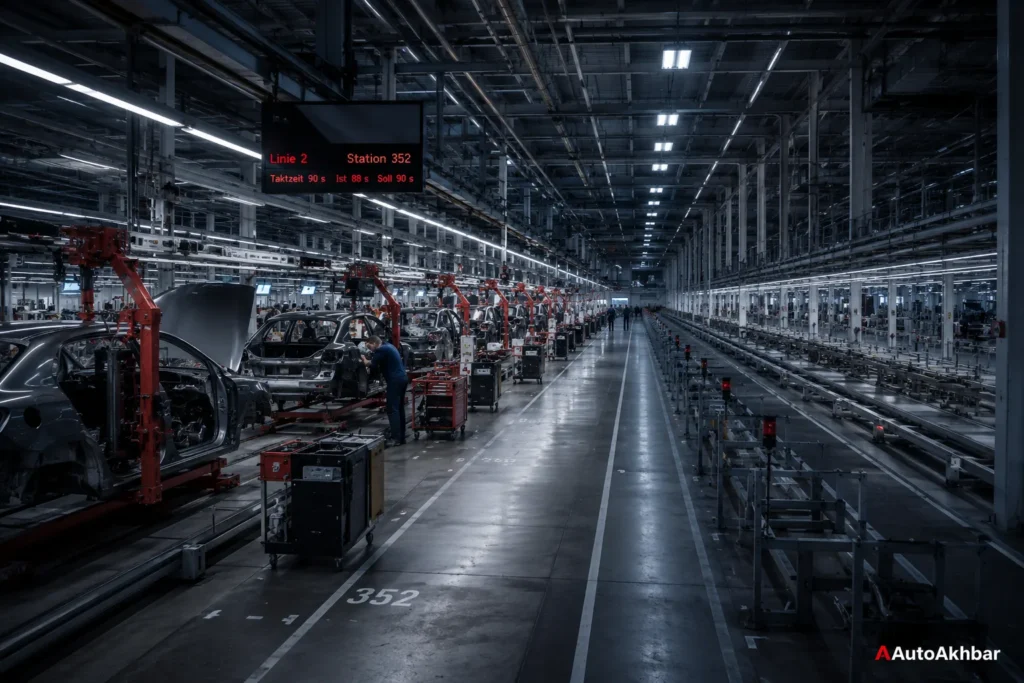
Volkswagen is reportedly preparing to propose up to 100,000 job losses, alongside the possible closure of four German plants: Emden, Hanover, Zwickau, and Audi’s Neckarsulm facility. The scale reflects just how much excess capacity the company is now carrying.
Data reviewed by Reuters shows Volkswagen’s German plants will run at just 81% of standard capacity in 2026, falling further to 73% by the end of the decade, even after Osnabrück is removed from the network. Zwickau, currently the best-performing at-risk plant with 88% utilisation, is forecast to crash to just 42% by 2030.
Workers Push Back Hard
Germany’s largest industrial union, IG Metall, mobilised employees at roughly 20 Volkswagen sites across the country ahead of the board meeting, staging protests against the proposed cuts. IG Metall president Christiane Benner, who also serves as deputy chair of Volkswagen’s supervisory board, sent a blunt message to management that workers won’t accept the plan without a fight.
The unrest isn’t isolated to Volkswagen. Just last week, tens of thousands of Mercedes-Benz employees affiliated with IG Metall protested nationwide after the company postponed a special bonus payment for roughly 90,000 of its German workers.
Industry Body Warns of “Bold Decisions” Needed
Germany’s Association of the Automotive Industry (VDA) has warned that employment across the sector could collapse unless the country accepts difficult structural changes to compete with China. VDA president Hildegard Müller said reality has overtaken political goals, and that the economic crisis is becoming more visible and dramatic every day. The VDA statement even floated handing some German plants over to foreign ownership as a way to preserve jobs — a striking admission for an industry that employs an estimated 3 million people directly and indirectly across Volkswagen, Mercedes-Benz, and BMW.
Why BYD Is Winning
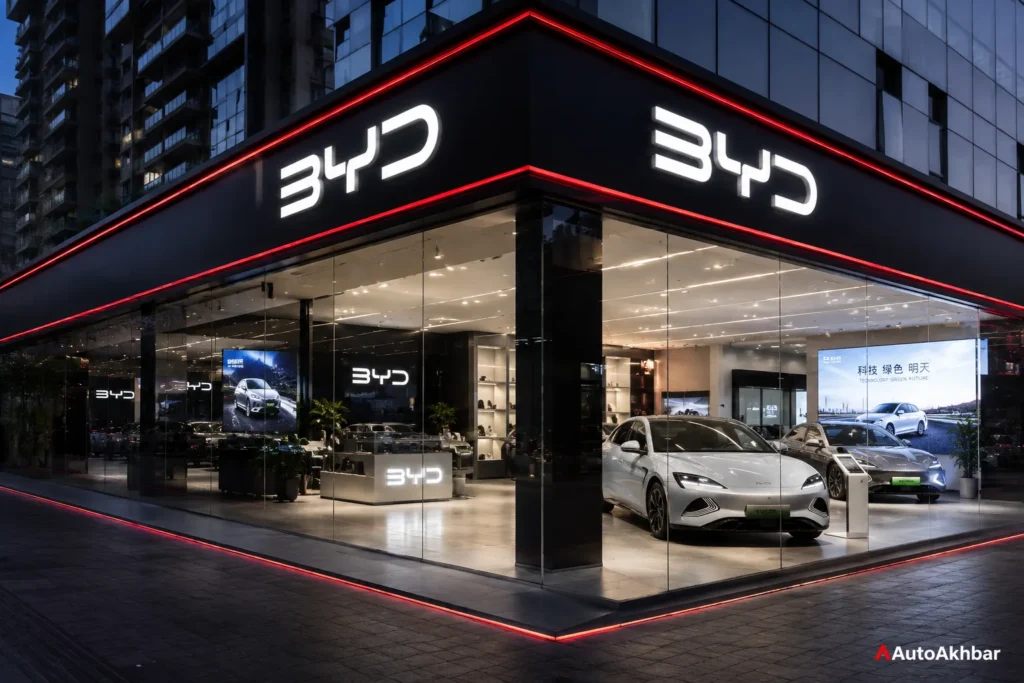
Analysts point to a structural gap rather than just pricing. Chinese automakers built a fully integrated EV supply chain years before European rivals committed to it — batteries, software, and manufacturing scale developed together rather than bolted onto legacy combustion-engine platforms. BYD, in particular, controls much of its own battery and semiconductor supply, letting it undercut European rivals on cost while iterating on software faster.
What Happens Next
The outcome of Thursday’s supervisory board meeting will set the tone for how Volkswagen — and the wider German auto sector — responds to BYD’s expansion into Europe. With Chancellor Friedrich Merz’s coalition government already under pressure and facing historically low approval ratings, the political stakes are almost as high as the corporate ones.
SOURCE NAME & URL
- Reuters — https://www.reuters.com/business/world-at-work/volkswagen-stakeholders-meet-decide-future-creaking-auto-giant-2026-07-09/
- The Guardian — https://www.theguardian.com/business/2026/jul/08/german-car-industry-job-collapse-bold-decisions-address-chinese-threat
(Note: Reuters and Guardian were geo-blocked for direct fetch, so facts were sourced via verified cross-wire coverage of the same stories — all figures above are consistent across multiple syndicated reports.)
FAQ
Why is Volkswagen cutting up to 100,000 jobs?
Volkswagen is reducing excess plant capacity after losing significant China market share to BYD and Geely, and now faces BYD’s expansion into Europe itself.
How did BYD overtake Volkswagen in China?
BYD combined an integrated battery/software supply chain with aggressive pricing, pushing Volkswagen from China’s No.1 automaker to third place by 2025.
Which Volkswagen plants are at risk of closure?
Emden, Hanover, Zwickau, and Audi’s Neckarsulm site are reportedly under review for closure or downsizing.
Is BYD expanding into Europe too?
Yes. Chinese EV brands including BYD, Chery, Leapmotor, and SAIC more than doubled their combined European market share through May 2026 versus the prior year.
What has the VDA warned about the German auto industry?
The VDA warned employment could collapse without “bold decisions,” even suggesting foreign ownership of German plants as an option to save jobs.