
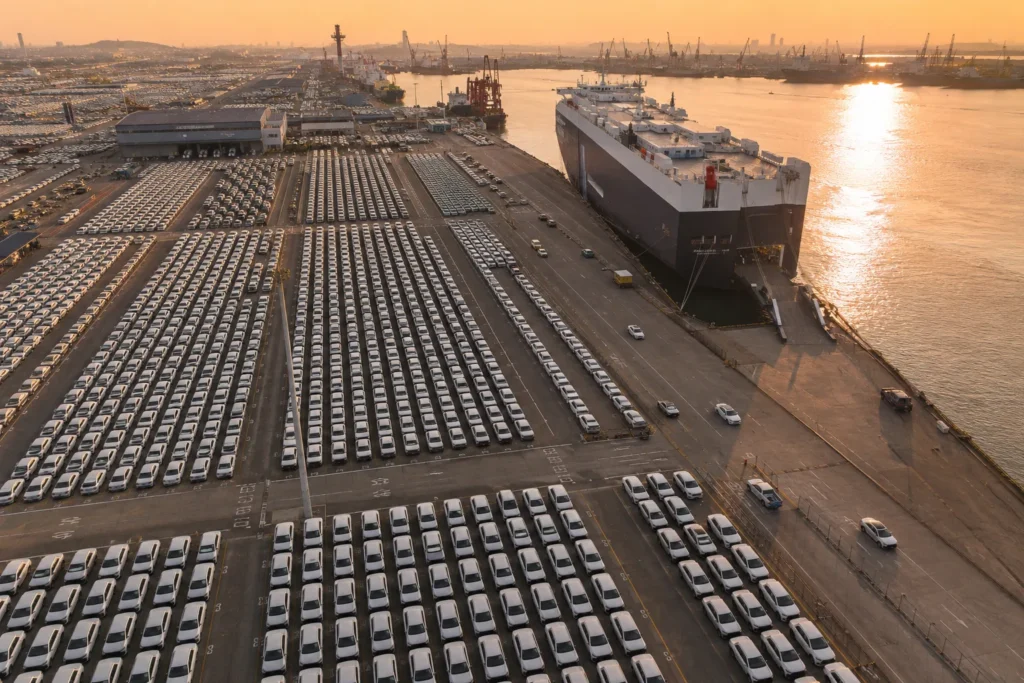
What does a country do when its factories produce more electric cars than its own people can buy? It ships them out — by the hundreds of thousands.
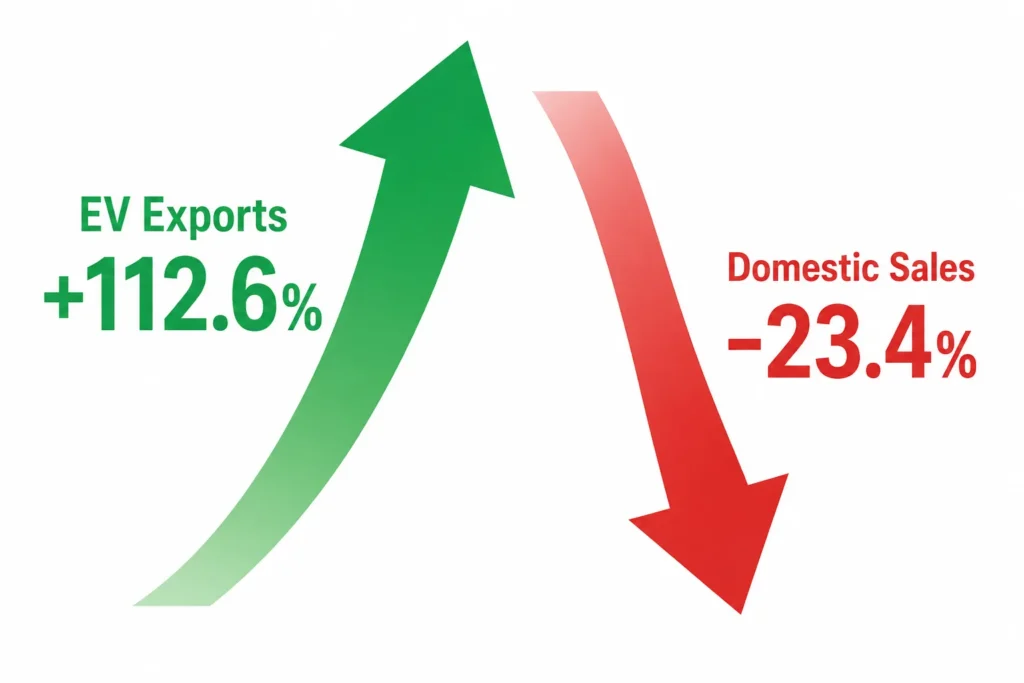
China’s new energy vehicle (NEV) exports hit a record-breaking milestone in May 2026, with passenger car shipments surging 112.6% year-on-year to 4,24,000 units — even as the country’s domestic NEV market contracted sharply for the seventh month in a row.
Table of Contents
Exports Skyrocket, But the Home Market Is Struggling
According to data from the China Passenger Car Association (CPCA), domestic NEV passenger car sales fell 23.4% in May 2026 compared to the same period last year. This marks the longest sustained slump in China’s domestic EV market since the sector’s rapid rise in the early 2020s.
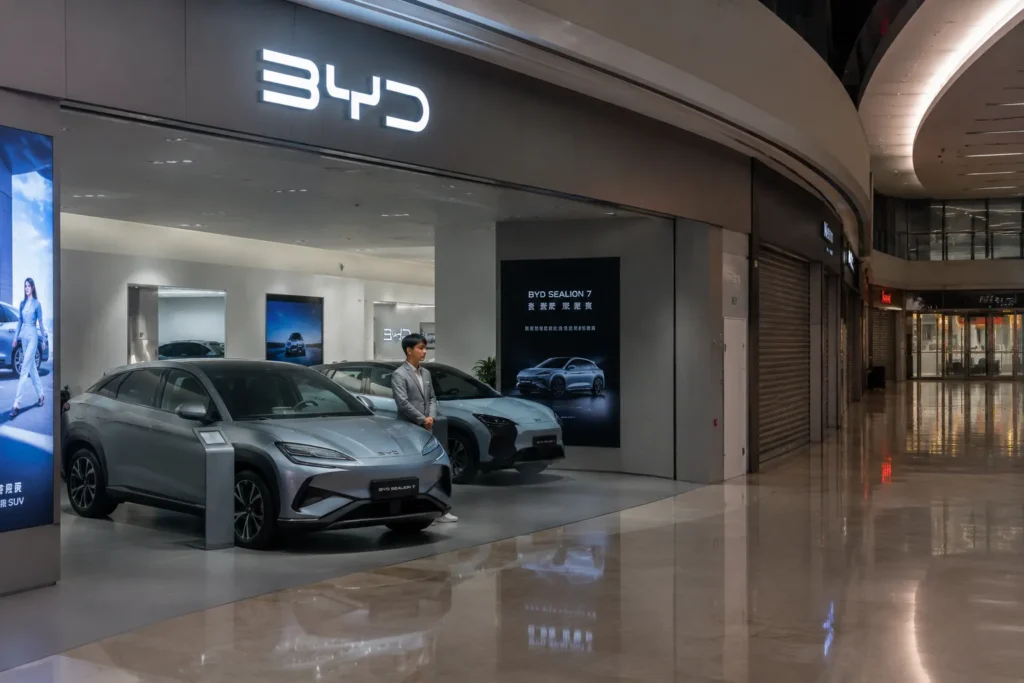
Analysts attribute the slowdown to market saturation in tier-1 and tier-2 cities, reduced government subsidies, and cautious consumer sentiment amid broader economic pressure. With showrooms sitting on unsold inventory, Chinese OEMs have pivoted hard toward international markets.
Where Are These EVs Going?
The bulk of China’s exported NEVs are heading to three major regions:
- Europe — despite ongoing tariff investigations by the EU, demand for affordable Chinese EVs remains strong in smaller markets like Belgium, Spain, and Eastern Europe.
- Southeast Asia — Thailand, Indonesia, and Vietnam are emerging as key battlegrounds, with BYD and SAIC leading the charge.
- Latin America — Brazil, Chile, and Mexico are seeing growing Chinese EV presence, particularly in the SUV and budget hatchback segments.
What This Means for the Global Auto Industry
The export surge is a double-edged sword. For Chinese automakers, it is a lifeline — allowing them to maintain production volumes and factory utilisation even as domestic demand falters. For global automakers — including legacy European brands, Japanese OEMs, and emerging Indian players — it represents a serious competitive threat at the affordable end of the EV market.
India, which has been cautious about Chinese auto investment, has so far been insulated from this wave. However, indirect pressure through third-country markets and component pricing could still ripple through the Indian supply chain.
Key Numbers at a Glance
- NEV export volume (May 2026): 4,24,000 units
- Export growth YoY: +112.6%
- Domestic NEV sales decline (May 2026): -23.4%
- Consecutive months of domestic decline: 7
The Road Ahead
For China’s EV industry, the export boom is both an opportunity and a warning sign. If domestic demand does not recover, the reliance on overseas markets — many of which are already erecting tariff walls — could prove fragile. The coming months will be a critical test of whether Chinese NEV makers can build sustainable global businesses, or whether this export wave is simply an overflow valve for a market under pressure.
Source : China Passenger Car Association (CPCA)
FAQ China’s EV Exports
Why are China’s EV exports rising so sharply?
Chinese automakers are facing weak domestic demand due to market saturation and reduced subsidies. To maintain production levels, they are aggressively exporting NEVs to Europe, Southeast Asia, and Latin America, where demand for affordable EVs is still growing.
Why are domestic NEV sales falling in China?
The fall is attributed to a combination of factors: subsidy rollbacks, saturation in major urban markets, slowing economic growth, and increased consumer caution. May 2026 marked the seventh consecutive month of year-on-year decline.
Which Chinese EV brands are leading exports?
BYD remains the dominant player, followed by SAIC (MG brand), Chery, and Geely. These brands have established dealership and service networks in key export markets, particularly in Europe and Southeast Asia.
Does this affect India’s auto market?
India currently has restrictions on Chinese auto investments, limiting direct impact. However, Indian manufacturers exporting to third-party markets like Southeast Asia and the Middle East may face increased price pressure from Chinese competitors.
What is an NEV (New Energy Vehicle)?
NEV is China’s official classification for vehicles powered by alternative energy sources. It includes battery electric vehicles (BEVs), plug-in hybrid electric vehicles (PHEVs), and fuel cell vehicles (FCVs). The category is broader than pure EVs.