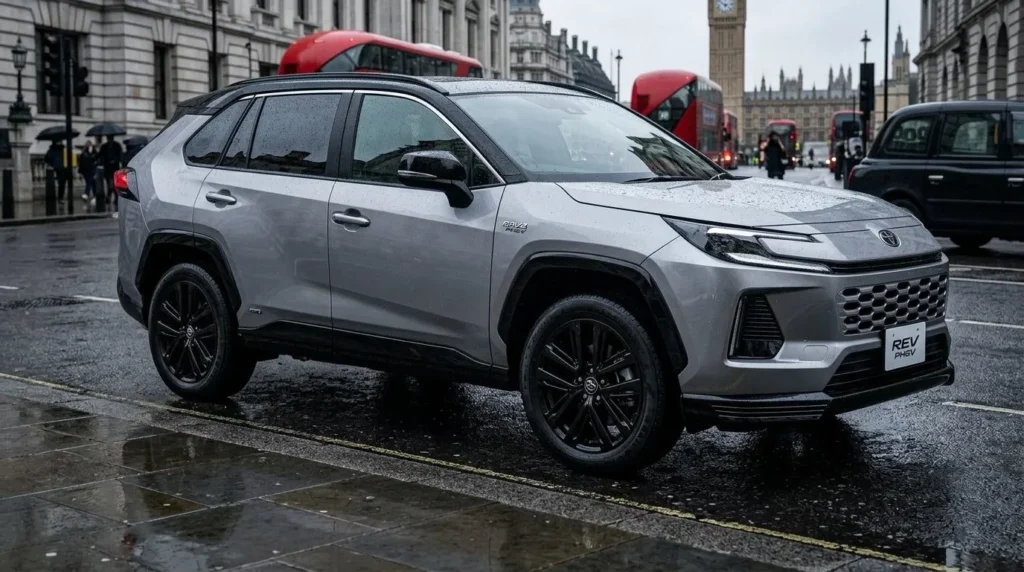

Toyota, a brand renowned for its robust and durable machines, stands today under a cloud of question marks. £44,000? Isn’t that just too much?
The price tag of the newly launched Toyota RAV4 in the UK—starting at over £44,000—is a massive shock not just for new buyers, but for Toyota’s most loyal customers as well. A car that once comfortably fit into the budget of an everyday family has now stepped straight into BMW and Audi territory, forcing even seasoned buyers to think twice.
To make matters worse, Toyota has axed the standard self-charging hybrid in the UK market, forcing buyers exclusively into the Plug-in Hybrid (PHEV) variant. On paper, it packs 302 horsepower and over 40 miles of electric-only range. In reality, buyers on owner forums and review threads are asking a blunt question: Has Toyota priced itself out of the market?
Table of Contents
Autoakhbar Quick Verdict
- 🚗 Target Buyer: Company car fleet drivers qualifying for low Benefit-in-Kind (BiK) tax rates who have dedicated home wallbox charging.
- ❌ Who Should Skip: Private buyers spending their own savings without home charging, or anyone expecting a luxurious cabin for £45,000.
- ⚠️ The Big Compromise: Crossing the UK £40,000 ceiling triggers the £440/year “Expensive Car Supplement” from years two through six.
- ⭐ Value Index: 6.2 / 10 (Rock-solid hybrid engineering let down by aggressive pricing and scratchy plastics).
The £40,000 “Luxury Tax” Trap
The public is already struggling with rising fuel prices and overall inflation, and now, adding this Luxury Tax on top of it will become a major headache. Under UK rules, the Expensive Car Supplement is slapped on cars costing over £40,000.
Since the price of the new RAV4 PHEV exceeds £44,000, an additional tax of £440 will be imposed on the owner on top of the normal road tax—and that too consecutively for five long years (from years two through six of ownership). That adds an extra £2,200 straight out of pocket simply for wearing a Toyota badge. For decades, family buyers chose a RAV4 specifically to keep annual running costs low; paying a penalty tax designed for luxury executive cars feels entirely out of place.
Also Read : BYD Han L in the USA: Why This 810-Horsepower, 436-Mile Sedan You Can’t Legally Buy
Real-World Specs vs. Market Realities
| Parameter | Toyota RAV4 PHEV | Kia Sportage PHEV | MG HS PHEV |
|---|---|---|---|
| Starting Price | £44,140+ | £40,595 | £31,495 |
| Luxury VED Tax Hit? | Yes (+£440/yr) | Depends on trim | No (Zero penalty) |
| Powertrain / Gearbox | 2.5L e-CVT (302 bhp) | 1.6T 6-Speed Auto (261 bhp) | 1.5T 2-Speed EDU (303 bhp) |
| Claimed EV Range | 46 Miles | 43 Miles | 75 Miles |
The PHEV Dilemma: What if You Can’t Charge at Home?
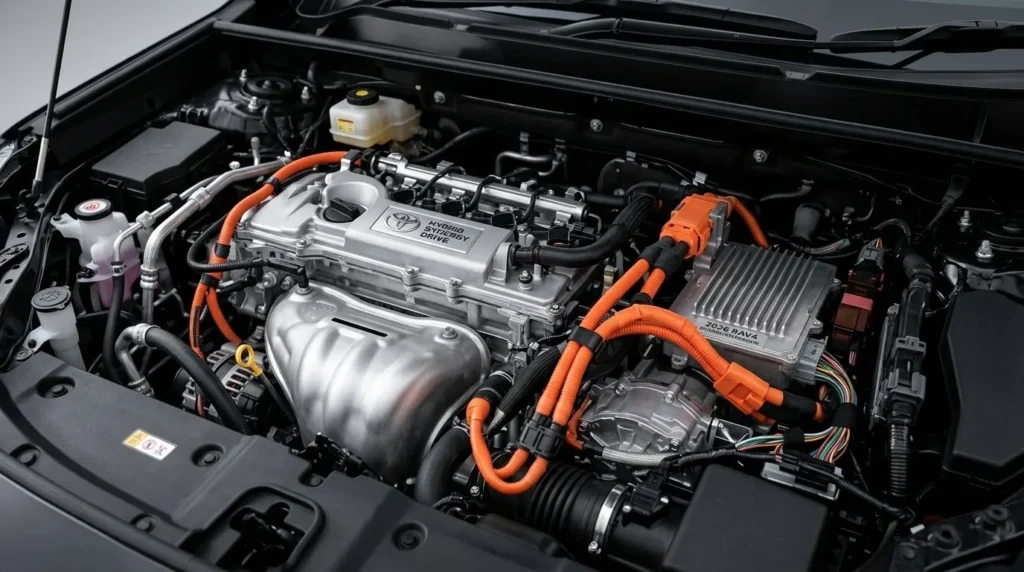
Toyota’s choice to eliminate the self-charging hybrid in the UK is frustrating for everyday urban drivers. A plug-in hybrid makes financial sense only when plugged in nightly on cheap off-peak domestic electricity. If you live in an apartment, rely on on-street parking, or don’t have a home charger, you are essentially driving an overweight petrol crossover carrying a heavy 18.1 kWh battery.
Furthermore, the RAV4 PHEV does not offer DC rapid charging—it relies strictly on slower AC charging. Pulling up to a motorway service station for a quick top-up is impractical. Once the battery runs flat, the 2.5-litre petrol engine works hard through the e-CVT gearbox, leading to noticeable engine drone under heavy acceleration and uninspiring fuel economy.
Cabin Quality: Does It Feel Like £45,000?
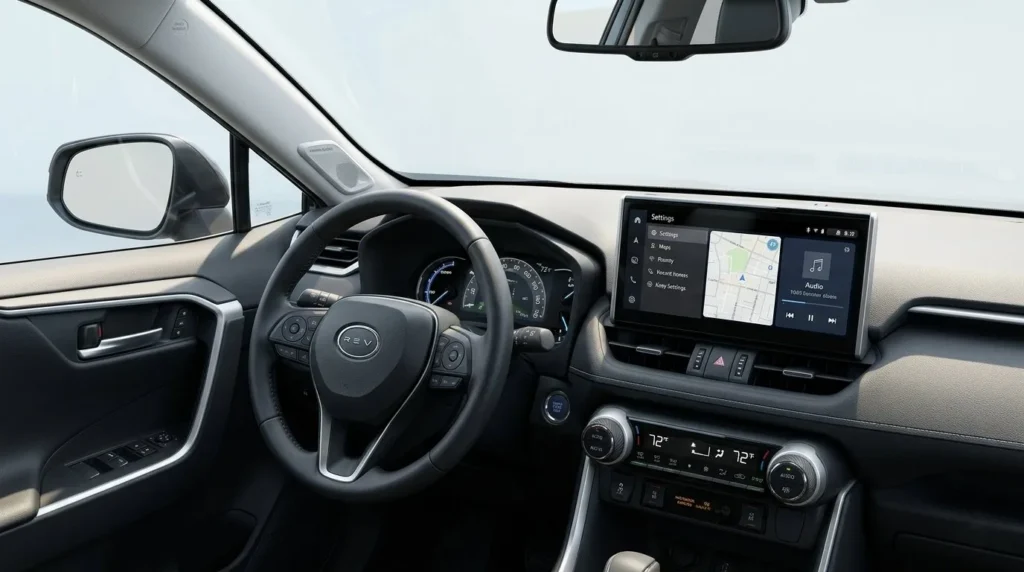
Step inside, and the gap between the window sticker and perceived quality becomes hard to ignore. To Toyota’s credit, practical physical knobs for climate control remain, and driving visibility is stellar. However, the lower dashboard, centre console, and door cards are dominated by scratchy, hollow plastics.
While the 10.5-inch multimedia screen is responsive, the graphics feel dated compared to the curved panoramic screens found in the Kia Sportage or Hyundai Tucson. Rear passengers receive minimal luxury—plain seat backs, hard plastics, and limited amenities that feel more like a work fleet vehicle than a near-£50k family cruiser.
The Deal-Breakers: What Showrooms Won’t Tell You
- The 12V Auxiliary Battery Drain: One of the most recurring complaints across Toyota owner forums is the 12V auxiliary battery draining flat if the car sits parked for 10 to 14 days. Even if your 18 kWh main traction battery is 100% full, a flat 12V battery will completely immobilize the vehicle, leaving you stranded with a car that won’t boot up.
- Compromised Boot Floor: Packing the bulky PHEV onboard charging hardware raises the boot floor, cutting into total cargo volume and leaving awkward space for bulky charging cables.
- Fierce Chinese Competition: Value rivals like the MG HS PHEV offer up to 75 miles of electric range for over £12,000 less, leaving Toyota’s pricing looking increasingly vulnerable.
Autoakhbar Bottom Line
Look, the bottom line is that there are two very distinct scenarios here:
- Scenario 1: You are a company car driver with a home charger.
If you qualify for low Benefit-in-Kind (BiK) company tax brackets and can plug in every night on a cheap off-peak home tariff, the numbers still work in your favour. You get Toyota’s bulletproof mechanical hybrid reliability, low company tax liabilities, and the peace of mind of a 10-year Relax warranty. For this specific fleet buyer, it remains a dependable, safe tool for the job. - Scenario 2: You are a private buyer spending your own hard-earned cash.
This is where the math completely falls apart. Between the £44,000+ upfront invoice, five straight years of the £440 luxury car tax penalty, and a cabin lined with scratchy plastics, Toyota is asking premium executive money for an ordinary family experience. Without a home driveway to charge nightly, you are essentially driving an overweight petrol car with an expensive battery onboard.
Unless Toyota decides to bring back the more affordable self-charging hybrid variant to the UK, private buyers will find far more value, better tech, and zero luxury-tax penalties in alternatives like the Kia Sportage or the MG HS PHEV.
Frequently Asked Questions
Why did Toyota drop the standard hybrid RAV4 in the UK?
Toyota streamlined its UK lineup toward PHEVs to meet stringent manufacturer fleet emission targets (ZEV mandate) and cater to fleet drivers wanting lower company car taxation.
Does the Toyota RAV4 PHEV incur the £40,000 luxury car tax?
Yes. Because its list price starts above £44,000, owners must pay the £440/year Expensive Car Supplement from years two through six of vehicle registration.
Can you charge the 2026 Toyota RAV4 at rapid motorway chargers?
No. The RAV4 PHEV only supports standard Type 2 AC charging (up to 6.6 kW). It does not support DC rapid charging, making public motorway top-ups slow and impractical.