
Over the past few weeks, one name has kept popping up in the Indian automotive corner of the internet — Blinq RYDE. A starting price of ₹4.50 lakh, a claimed 250 km range, and a battery swap that supposedly takes just 5 minutes is an attractive enough combination that comparison threads have sprung up on social media, pitting Blinq RYDE against names like Yakuza Karishma and Sundak EV.
But weighing these three names on the same scale would be a mistake — because the more you research them, the clearer it becomes that only one of them actually has an ARAI-claimed range, a confirmed launch date, and two verified variants. What’s written online about the other two is, frankly, confused even on its own terms. This article looks at all three on their own merit, with sources attached.
Table of Contents
Blinq Mobility: Company Background
The company behind Blinq RYDE is Blinq Mobility, a Gurugram-based EV startup. The company was founded in June 2024 and formally incorporated in October 2024. Blinq describes itself as India’s first 4-wheeler battery-swapping EV startup, and its entire business model rests on one idea — if two-wheeler EVs can swap batteries, why can’t a purpose-built four-wheeler?
The company’s first pre-seed round raised ₹4.3 crore, led by 8i Ventures, with participation from IIMA Ventures, AIC Banasthali, and a group of angel investors. It later closed a seed round as well, taking total funding to roughly $480K–488K.
The core of the business model is Battery as a Service (BaaS) — the upfront cost of the car is kept low because the battery follows a separate ownership model, and the customer effectively pays for swaps rather than owning the full pack outright. That’s a large part of why Blinq has been able to price its car so aggressively.
Founder Details
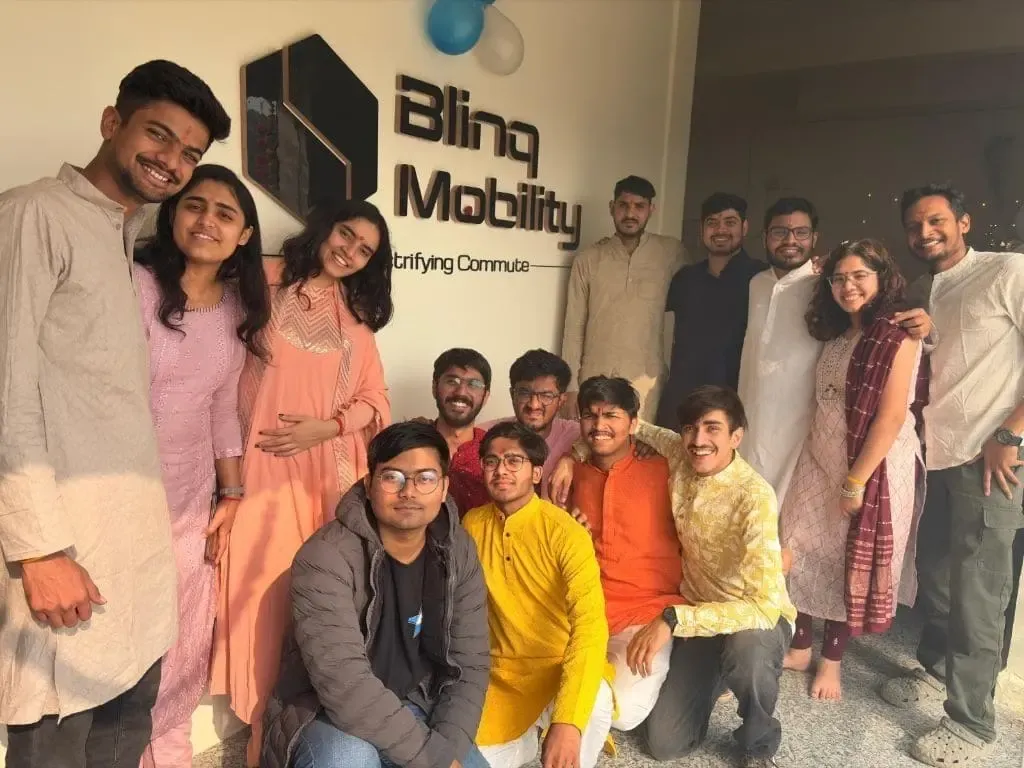
The most interesting part of Blinq Mobility is its founding team. This isn’t a random startup — all the founders come from IIT Delhi’s Formula Student (AXLR8R) racing team, where they designed and built electric racecars together.
- Nikesh Bisht — Co-founder and CEO. He worked on Formula Student EV race cars at IIT Delhi and later ran an EV-components company after college, which gave him a close view of the industry’s pain points.
- Ankit Kumar — Co-founder and CTO. An IIT Delhi graduate and former Tesla engineer, where he worked on the Cybertruck and Robotaxi projects.
- Abhilasha Marmat — Co-founder and CTO, focused on alternate battery chemistries and EV electronics.
- Yashdeep Singh — Co-founder and CPO (Chief Product Officer).
- Sushmita Patil — Co-founder and COO, responsible for designing automated battery-swapping stations that bring charging downtime down to roughly three minutes.
The whole team shares the same background — engineering-first, racing-tested, with hands-on experience in battery systems — which lends real credibility to a hardware-heavy problem like battery swapping.
Blinq RYDE: Specifications
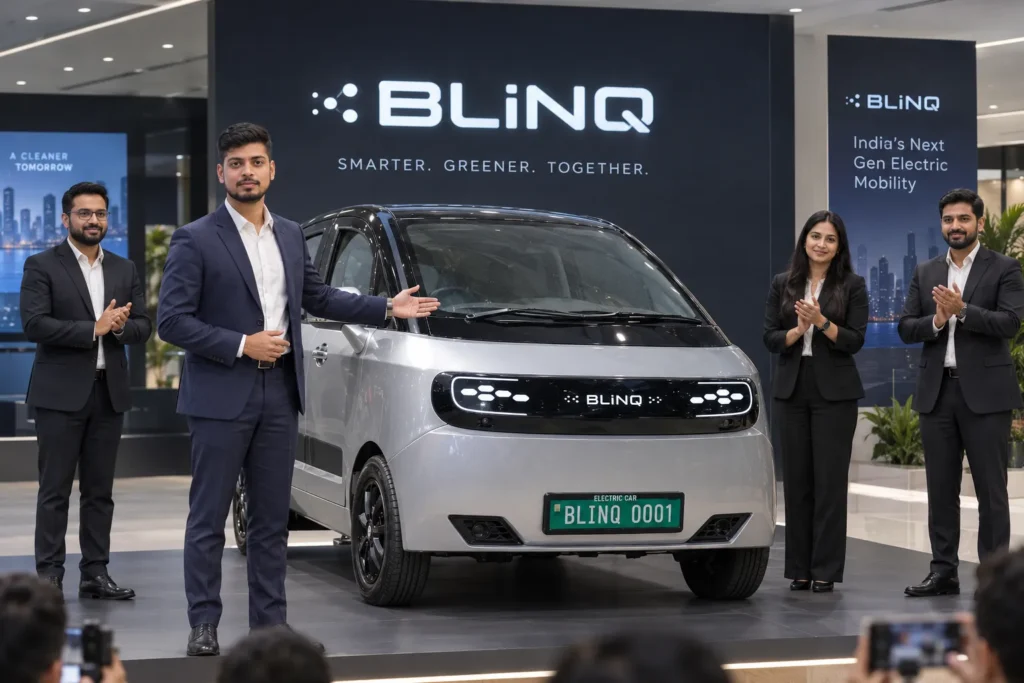
Blinq RYDE launched on 3 March 2026 and is available in two variants — Family and Fleets.
| Spec | Detail |
|---|---|
| Body Type | 5-seater electric hatchback / micro EV |
| Ex-showroom Price | ₹4.50 lakh (Family) – ₹5 lakh (Fleets) |
| Claimed Range | 250 km (MIDC/ARAI figure) |
| Battery Swap Time | Under 5 minutes (under the BaaS model) |
| Charging Options | DC fast charging plus regular home charging |
| Battery Protection | IP67 rated for dust and water |
| Transmission | Automatic |
| Safety | Front disc brakes, ABS, EBD, rear parking sensors, reverse camera, seatbelt reminder, high-speed alert |
| Features | Touchscreen infotainment (Bluetooth + navigation), digital driver display, power windows, keyless entry, automatic climate control, regenerative braking |
| Exterior | LED DRLs, closed-off front grille, aerodynamic styling, 10 colour options |
| Running Cost Claim | Roughly 60% lower than petrol/diesel vehicles |
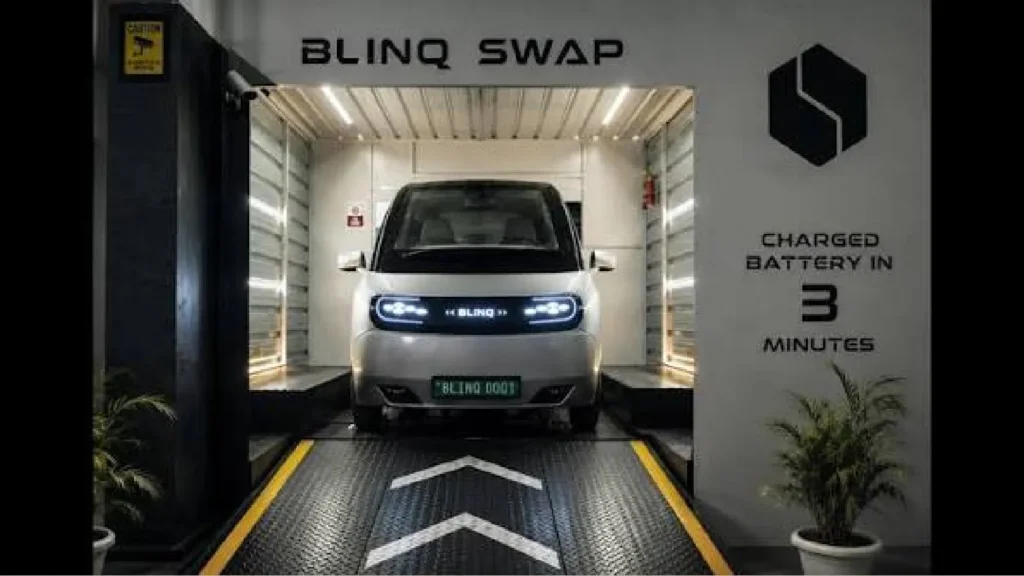
All these specs have been cross-verified against News24’s launch coverage and ZigWheels’ specification listing. The battery-swap demo itself was shown by the company at a dedicated swap facility in Gurugram, where the car parks on a specialised ramp and a rotary controller activates a dedicated Swap (S) mode.
Rational Comparison: Blinq RYDE vs Yakuza Karishma vs Sundak EV
This is the real point of this article — because the three names sit at very different levels of category, credibility, and confirmation. Putting them straight into one table would be misleading without context first.
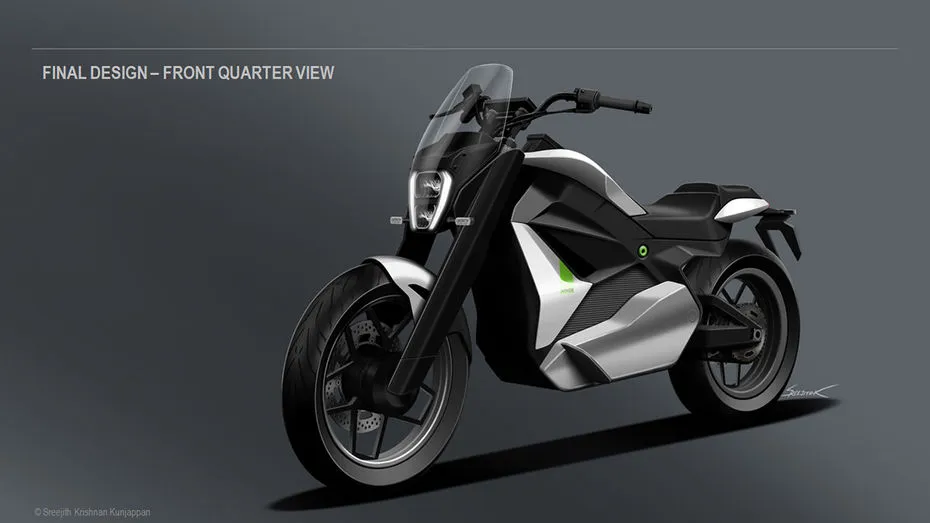
Yakuza Karishma — A Real, Buyable Micro EV (But a Different League)
Yakuza E-Vehicles isn’t a new name — the company was founded by Nirmala Rani in Sirsa, Haryana, in November 2019, and it operates under Maa Luxmi E-Vehicles Pvt. Ltd. It started with electric scooters, and in 2023 launched its first budget car — Karishma.
Karishma is a small, 3-seater low-speed vehicle priced between ₹1.75–1.90 lakh, with a 60V/45Ah lead-acid battery and a 1250W motor. Honesty matters here — there’s real inconsistency online about its range. Some sources claim 50–60 km of range, others claim up to 150 km, and even the top speed is quoted anywhere between 25–50 km/h. That inconsistency itself tells you this vehicle hasn’t gone through a standardised, ARAI-certified test cycle — it’s a low-speed, neighbourhood-use vehicle, not a highway-capable full EV.
Bottom line: comparing Karishma to Blinq RYDE is a bit like comparing a quadricycle to a hatchback. Both are electric, but the category, safety testing, and use-case are entirely different.
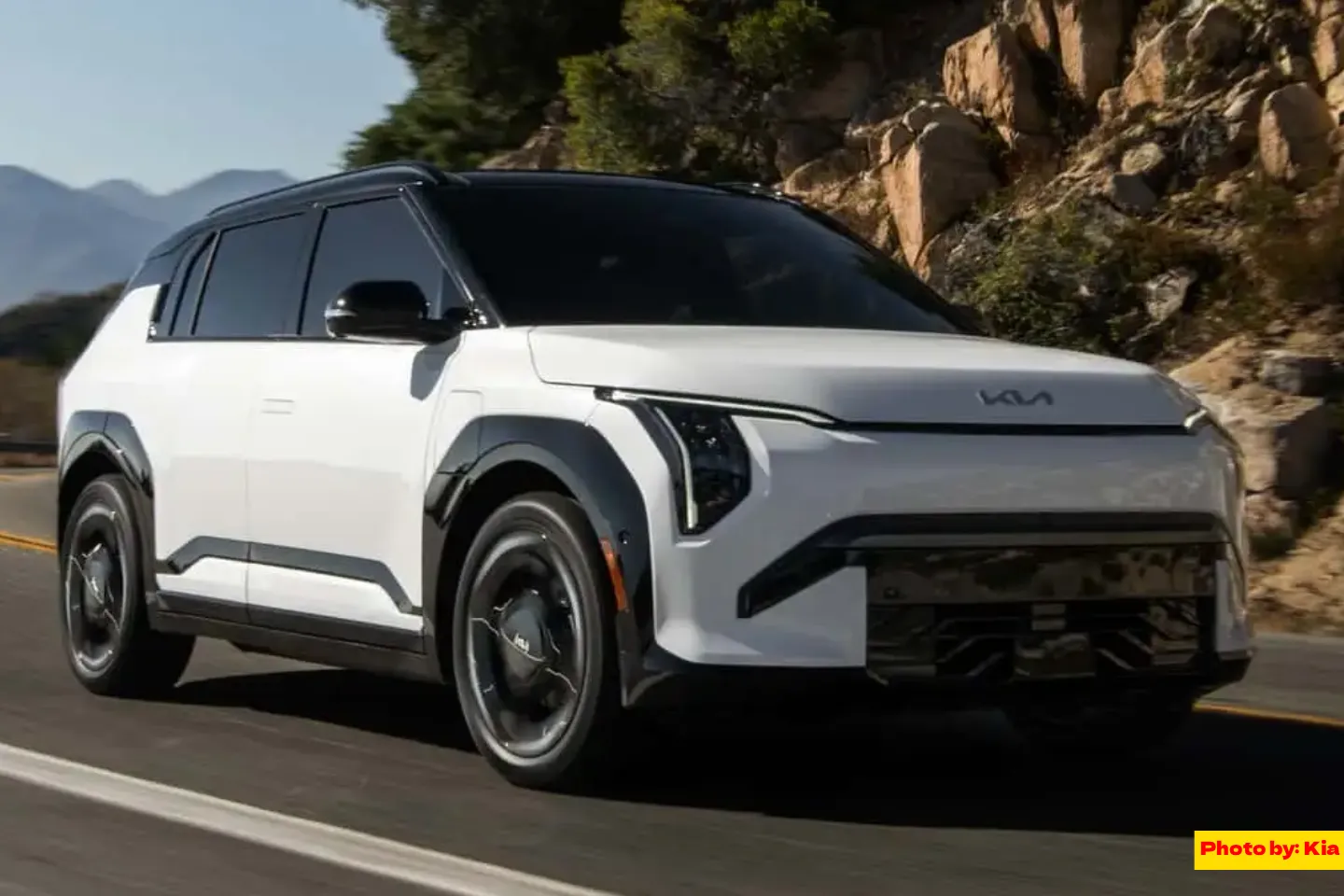
Sundak EV — One Name, A Lot of Confusion
This is where the most caution is needed. EV Sundak is a real, registered company — it operates under Sundak Solar Solutions Pvt. Ltd., headquartered in Greater Noida, Uttar Pradesh — but its core business is electric two-wheelers, not cars.
Plenty of different stories are floating around online under the name “Sundak EV Car,” and their numbers don’t agree with each other at all:
- One source claims a 300–350 km range and a ₹15–18 lakh price range
- Another source puts the price at ₹5.5–7.5 lakh and the range at 200 km
- A third source claims a price of just ₹97,000 with an 80–100 km range
A single vehicle being quoted anywhere from ₹97,000 to ₹18 lakh is itself a strong signal that “Sundak EV Car” is not yet a confirmed, officially launched product. Most of this content reads like low-effort, aggregator-style articles copying each other while plugging in different numbers. Until Sundak confirms official specs via its own company website or ARAI homologation, treating these numbers as fact would be a mistake.
Comparison Table (Confirmed vs Unconfirmed)
| Parameter | Blinq RYDE | Yakuza Karishma | “Sundak EV Car” |
|---|---|---|---|
| Status | Launched (3 Mar 2026), buyable | Launched (2023), buyable | Unconfirmed / speculative |
| Category | 5-seater electric hatchback | 3-seater low-speed micro EV | Unclear (claims range from 2-wheeler-adjacent to premium hatchback) |
| Price | ₹4.50–5 lakh (confirmed) | ₹1.75–1.90 lakh (confirmed) | ₹97,000 to ₹18 lakh (contradictory across sources) |
| Range | 250 km (ARAI/MIDC claimed) | 50–150 km (sources disagree) | 80–350 km (sources disagree) |
| Charging/Refuel | Battery swap under 5 min + DC fast charging | 6–7 hr plug-in charging | Unverified |
| Safety Certification | ABS, EBD, reverse camera confirmed | Low-speed vehicle norms only | Unverified |
Social Media Buzz
Blinq RYDE’s battery-swap demo video has been widely discussed in enthusiast circles. On the Team-BHP forum, the technology was called a “good concept,” particularly the Battery-as-a-Service billing model, which several users felt made real sense since customers pay only for usage rather than the entire battery.
A comparison trend is visible too — CarDekho lists Blinq RYDE in direct comparison with the Maruti Alto Tour H1, which shows people are viewing it as a genuine entry-level car alternative rather than just an EV gimmick. That positioning is a big reason its clips and specs keep getting shared across automotive Twitter/X and YouTube comment sections.
Author’s Verdict — A Strict, Rational Opinion
Having looked at all three names, the straightforward conclusion is this: Blinq RYDE is by far the most “verifiable” product of the three — it has a confirmed launch date, two priced variants, consistent specs across multiple independent sources (CarDekho, ZigWheels, News24), and a demonstrated technology. Its biggest risk is that it’s an early-stage startup — the battery-swap network’s scale is still unproven, and a new brand carries zero track record on service or resale.
Yakuza Karishma is honest within its own category — a cheap, low-speed neighbourhood EV, as long as expectations are set correctly. Mistaking it for a highway car would be the wrong call.
And “Sundak EV Car” — until an official, ARAI-verified spec sheet shows up, it shouldn’t factor into any buying decision right now. It might look interesting as a curiosity, but the numbers contradict each other on their own.
FAQs
What is the price of the Blinq RYDE?
The Blinq RYDE comes in two variants — Family at ₹4.50 lakh and Fleets at ₹5 lakh, both ex-showroom.
Who founded Blinq RYDE?
Blinq Mobility’s co-founders all come from IIT Delhi’s Formula racing team — Nikesh Bisht (CEO), Ankit Kumar (CTO), Abhilasha Marmat (CTO), Yashdeep Singh (CPO), and Sushmita Patil (COO).
Has the Sundak EV car launched in India?
No. Sundak’s two-wheelers are real and available, but the “Sundak EV Car” (four-wheeler) has not been officially confirmed or launched yet — the numbers available online don’t agree with each other.
Can the Yakuza Karishma be driven on highways?
No, it’s a low-speed micro EV designed for shorter city or neighbourhood commutes, not highway use.