
AutoAkhbar Explains: Every car needs a way to move fuel from the tank to the engine at the right pressure, and for decades that job had one clear answer. Today, it depends heavily on what’s under the hood.
Key Takeaways
- Mechanical fuel pumps are camshaft-driven and produce roughly 4-10 psi, enough for carbureted engines.
- Electric fuel pumps use an electric motor to deliver the higher pressure fuel injection requires.
- Fuel injection replaced carburetors in most new cars by the mid-1990s, making electric pumps the default.
- Mechanical pumps still suit carbureted classic-car builds; electric pumps dominate modern and performance applications.
Quick Answer: Mechanical fuel pumps are engine-driven, simple, and used mainly in older carbureted vehicles, while electric fuel pumps use an electric motor to deliver the higher pressure required by modern fuel-injected engines, which is why they’ve been the industry standard since the mid-1990s.
Table of Contents
How a Mechanical Fuel Pump Works
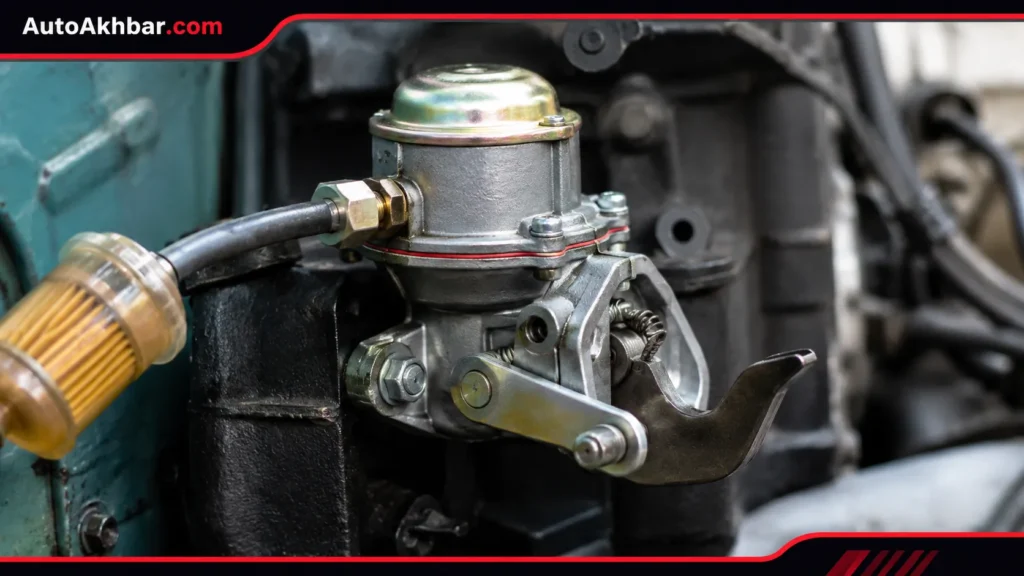
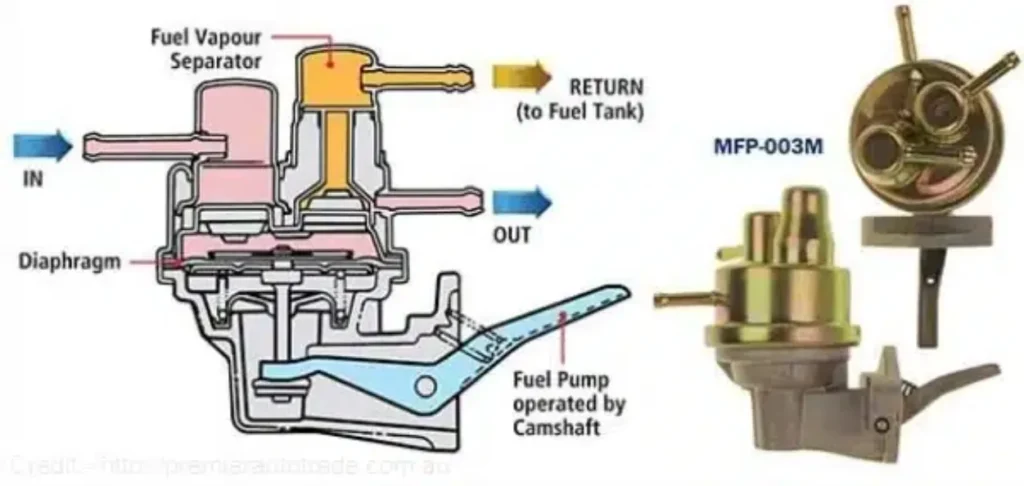
A mechanical fuel pump mounts to the side of the engine and is driven directly by a lobe on the camshaft. As the engine turns, that lobe moves a lever connected to a diaphragm inside the pump, creating suction that pulls fuel from the tank toward the carburetor. It’s a purely mechanical process, with no electrical components involved, and it typically produces around 4 to 10 psi of fuel pressure — plenty for a carbureted engine, but far short of what fuel injection needs.
These pumps were the standard setup in nearly every car built before the late 1980s, when carburetors gave way to fuel injection across most of the industry.
How an Electric Fuel Pump Works
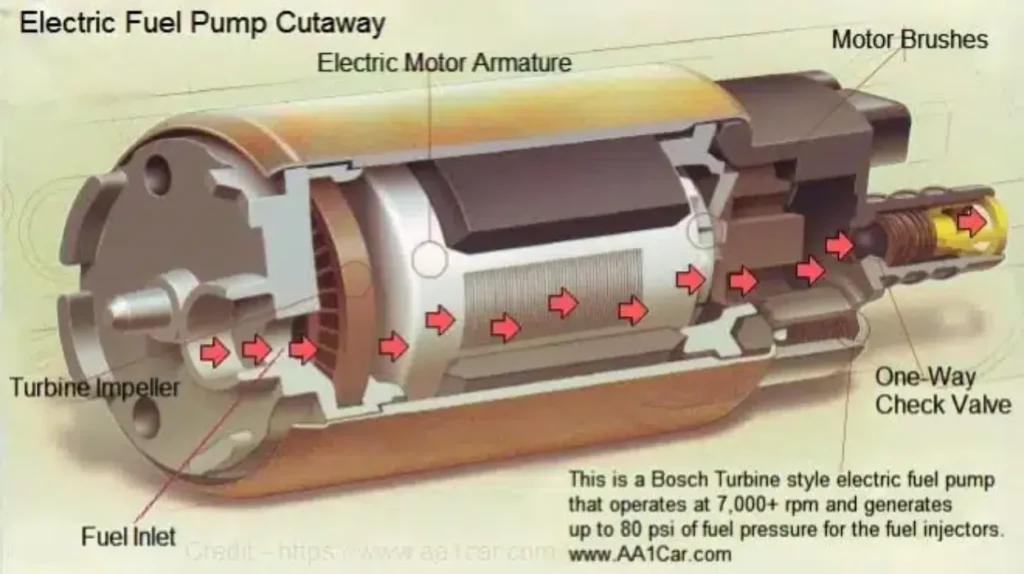
An electric fuel pump swaps the camshaft-driven mechanism for an electric motor, usually mounted inside or very close to the fuel tank. Rather than relying on engine rotation, it’s powered by the vehicle’s electrical system and controlled by the engine computer, which can switch it on and off independently of engine speed. That design lets electric pumps generate significantly higher and more consistent pressure, exactly what fuel-injection systems require to atomize fuel properly.
Why Fuel Injection Made Electric Pumps the Default
By the mid-1990s, fuel injection had replaced carburetors in nearly every new car, and mechanical pumps simply couldn’t keep up with the pressure demands of injectors. Electric pumps became the default not because mechanical pumps got worse, but because the fuel-delivery job itself changed. Today, mechanical fuel pumps are largely considered obsolete for daily-driven vehicles, even though they remain simple, quiet, and cheap to maintain when paired with a carburetor.
Also Read : Oil Prices Are Fueling a Global EV Boom — Here’s Why It Matters
Where Each Pump Still Makes Sense
Mechanical pumps still have a role in classic car restorations and carbureted builds, where their simplicity, low cost, and lack of wiring are genuine advantages. Electric pumps, meanwhile, dominate not just because modern engines require them, but because performance and motorsport builds value the ability to fine-tune fuel pressure using regulators and return systems — useful for turbocharged or high-horsepower applications where fuel delivery has to stay consistent under hard driving.
The trade-off is installation complexity: electric pumps need careful wiring and, in tank-mounted setups, rely on a steady fuel supply to help keep the pump cool, since running a tank low too often can lead to overheating.
AutoAkhbar Verdict
There’s no universal “better” pump — it comes down to what the engine actually needs. If you’re running a carburetor on a classic build, a mechanical pump remains a perfectly reasonable, low-maintenance choice. If your car has fuel injection, which covers virtually every vehicle sold today, an electric pump isn’t optional; it’s the only setup that can supply the pressure your engine demands.
Source Name : Jalopnik
FAQ Mechanical vs. Electric Fuel Pump
What is the main difference between a mechanical and electric fuel pump?
A mechanical fuel pump is driven by the engine’s camshaft and produces lower pressure suited to carbureted engines, while an electric fuel pump uses an electric motor to generate the higher, more consistent pressure fuel-injected engines require.
Do modern cars use mechanical or electric fuel pumps?
Modern fuel-injected cars use electric fuel pumps almost exclusively, since fuel injection requires more pressure than a mechanical pump can produce.
Are mechanical fuel pumps obsolete?
For daily-driven, fuel-injected vehicles, mechanical fuel pumps are considered obsolete, though they’re still used in carbureted classic cars and restorations.
Why do performance builds often use electric fuel pumps?
Electric fuel pumps allow precise control of fuel pressure when paired with regulators and return systems, which is valuable for turbocharged or high-horsepower engines that need consistent fuel delivery.