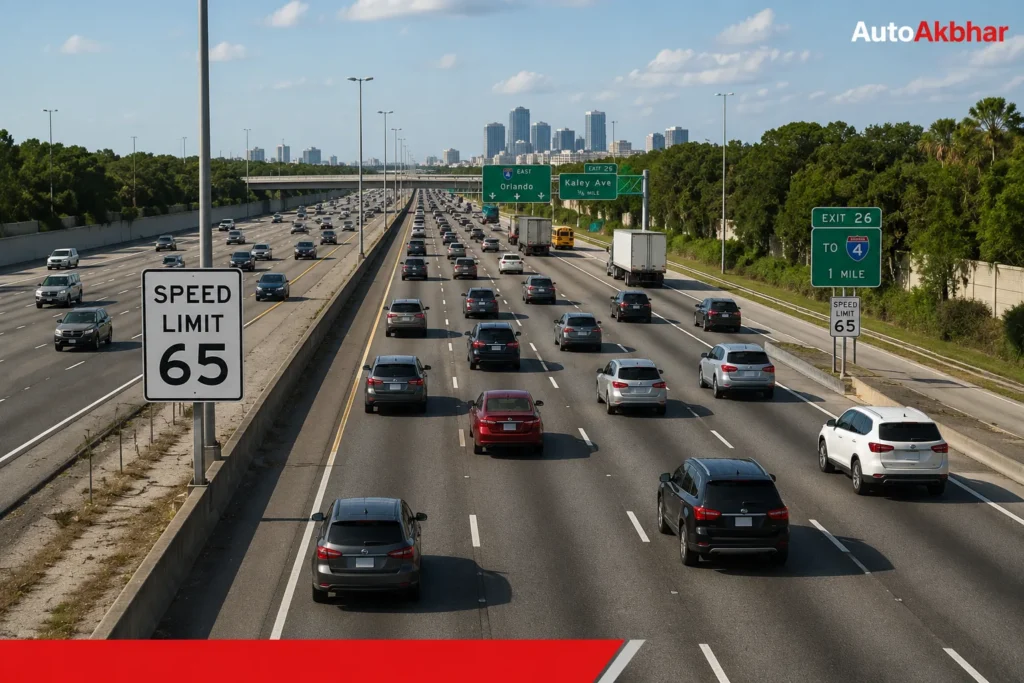

The 85th percentile rule has decided US speed limits for decades, but federal guidance now says it should never be the only factor. Here’s why the old formula is falling short.
Quick Answer: The 85th percentile rule sets a road’s speed limit near the speed at or below which 85% of drivers naturally travel. Federal regulators, including the FHWA, now say this method ignores pedestrians, cyclists, and crash data, and should only be one factor among several rather than the sole basis for setting limits.
For nearly a century, American traffic engineers have leaned on a simple idea: watch how fast people actually drive on a stretch of road, and set the speed limit close to that natural pace. This is the 85th percentile rule, and it has quietly shaped speed limits across the United States since the 1930s.
Table of Contents
What Is The 85th Percentile Rule?
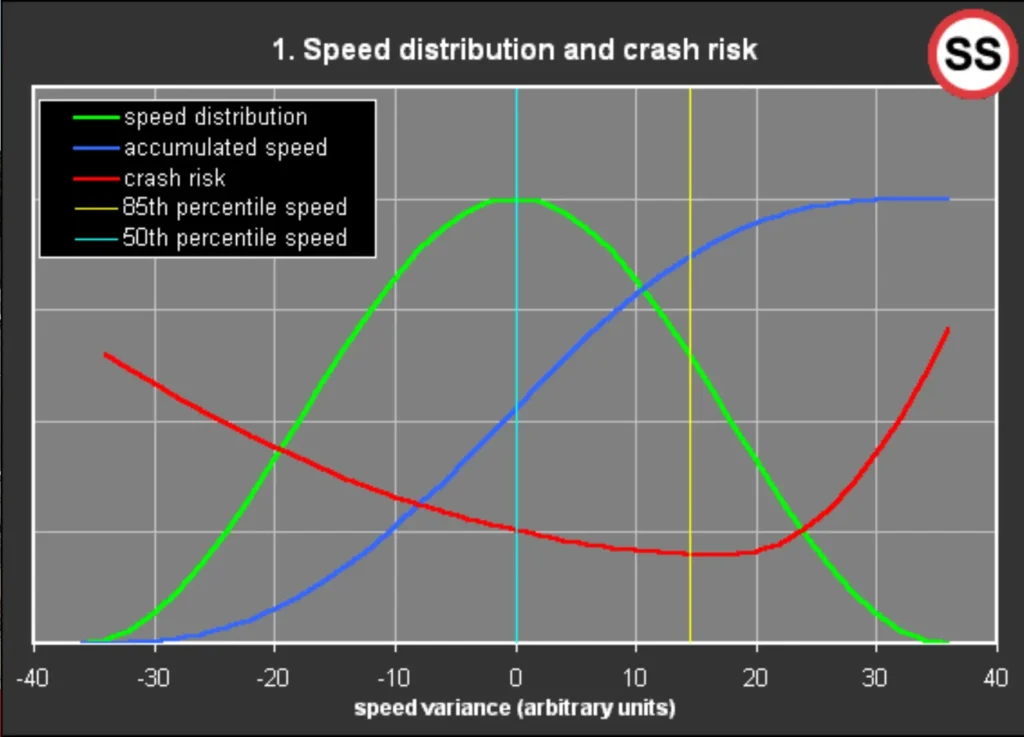
The 85th percentile speed is the speed at or below which 85% of vehicles travel on a given road under free-flowing conditions. Traffic engineers have historically used this figure, rounded to the nearest 5 mph, as the recommended speed limit for that stretch of road.
The logic traces back to a 1937 hypothesis: the safest speed on a road is the one most drivers naturally choose, and if more than 15% of drivers exceed that speed, a higher limit is probably still safe. For decades, this became the default method used across North America.
Also Read : Here’s What Each Brake Caliper Color Means On Nissan Vehicles
Why Regulators Are Moving Away From It
Researchers found the 85th percentile approach creates a feedback loop: raising a speed limit encourages faster driving, which then pushes the measured 85th percentile speed even higher. It also does not account for pedestrians, cyclists, or crash history.
The Federal Highway Administration’s updated Speed Limit Setting Handbook now instructs engineers to weigh crash history, pedestrian and cyclist activity, road development, and traffic flow alongside the 85th percentile figure rather than relying on it exclusively. Rounding speed data in 5 mph increments compounds the issue, since a measured 45 mph 85th percentile speed can push a posted limit up to 50 mph, nudging average traffic speeds higher still.
What’s Replacing It
Alternative frameworks such as the “City Limits” guidance from the National Association of City Transportation Officials weigh factors like activity level and conflict density, giving more importance to non-motorized road users than the old speed-only formula.
Pedestrian fatalities in the US have risen sharply over the past decade, and safety advocates argue that a formula built purely around driver comfort was never designed to account for that vulnerability. Cities are increasingly layering in crash data, land use, and intersection density before locking in a number for the sign.
Source URL: Jalopnik.
FAQ 85th Percentile Rule
What is the 85th percentile speed?
It is the speed at or below which 85% of vehicles travel on a road segment under free-flowing traffic conditions.
Is the 85th percentile rule still used today?
Yes, but federal guidance now treats it as one input among several rather than the deciding factor, especially in areas with pedestrians and cyclists.
Why does the 85th percentile rule raise speed limits over time?
Because increasing the limit encourages drivers to go faster, which then raises the measured 85th percentile speed again, creating an upward cycle.