Introduction
Whenever you see a green number plate on the road, remember — that’s not just an electric vehicle (EV), it’s a sign of the future. The Indian EV market is expanding faster than ever, and so is the opportunity to make money from it.
With government backing, growing consumer demand, and increasing awareness about sustainability, the electric two-wheeler and car charging ecosystem has become a goldmine for new entrepreneurs. Let’s break down exactly how you can start your own EV charging station business in 2025.
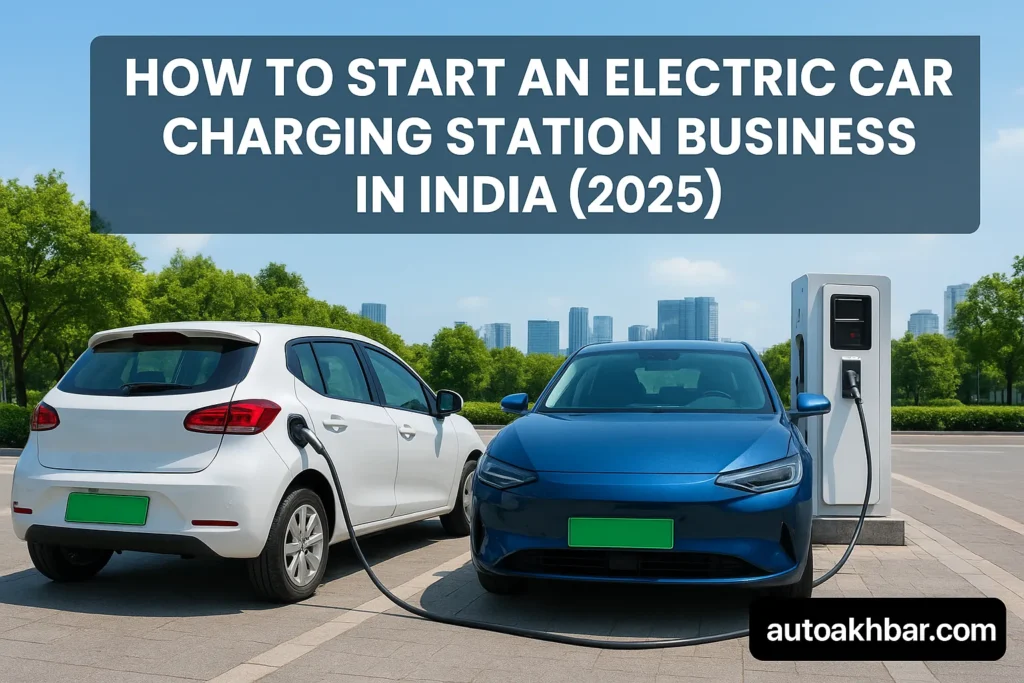
Table of Contents
1. Why EV Charging Is a Lucrative Business Opportunity
In FY 2031, India’s electric two-wheeler market is projected to reach 22 million units per year, up from just 1.5 million EVs sold in 2023 — a 50 % year-over-year growth.
The EV charging infrastructure market itself was valued at USD 588.6 million (₹ 58 crore) in 2023 and is expected to touch USD 5.6 billion (₹ 5,600 crore) by 2030. In short — this is a multi-billion-dollar opportunity waiting for smart investors. (Source)
2. Good News — No License Required
Unlike most businesses, you don’t need a government license to set up an EV charging station. The Ministry of Power clarified this back in 2018.
However, you do need to follow official technical and safety guidelines, such as:
- Applying for a separate electric connection.
- Ensuring safety measures and equipment compliance.
- Maintaining minimum distance norms — every 3 km in cities, every 25 km on highways, and every 100 km for heavy-duty vehicle stations.
You can read the official MoP guidelines on powermin.gov.in
3. Investment Required: ₹1 Lakh to ₹50 Lakh
Your startup cost depends on the scale and franchise model you choose.
| Brand / Franchise | Approx. Investment |
|---|---|
| Tata Power | ₹ 30 – 40 lakh |
| Delta Electronics | ₹ 5 – 10 lakh |
| MATEK Mobility | ₹ 6 – 8 lakh |
| Exicom Power Systems | ₹ 10 – 15 lakh |
| Okaya EV | ₹ 8 – 12 lakh |
| Charge My Gaadi / ChargePlus Zone | ₹ 5 – 20 lakh |
💡 Tip: Contact each company directly to understand franchise fees, support, and ROI before finalizing.
4. Ideal Location for Maximum Profit
Visibility is everything. Pick a spot where EV owners naturally stop:
- Shopping malls and parking lots
- Highways and toll plazas
- Airports, hotels, and public spaces
- Restaurants or motels on busy routes
A small station with two chargers needs just 10 × 10 ft space, while a large AC + DC setup may require 2,500 – 3,000 sq ft in high-traffic cities like Delhi, Mumbai, Gurgaon, Chennai, or Hyderabad.
5. Choose the Right Chargers & Power Setup
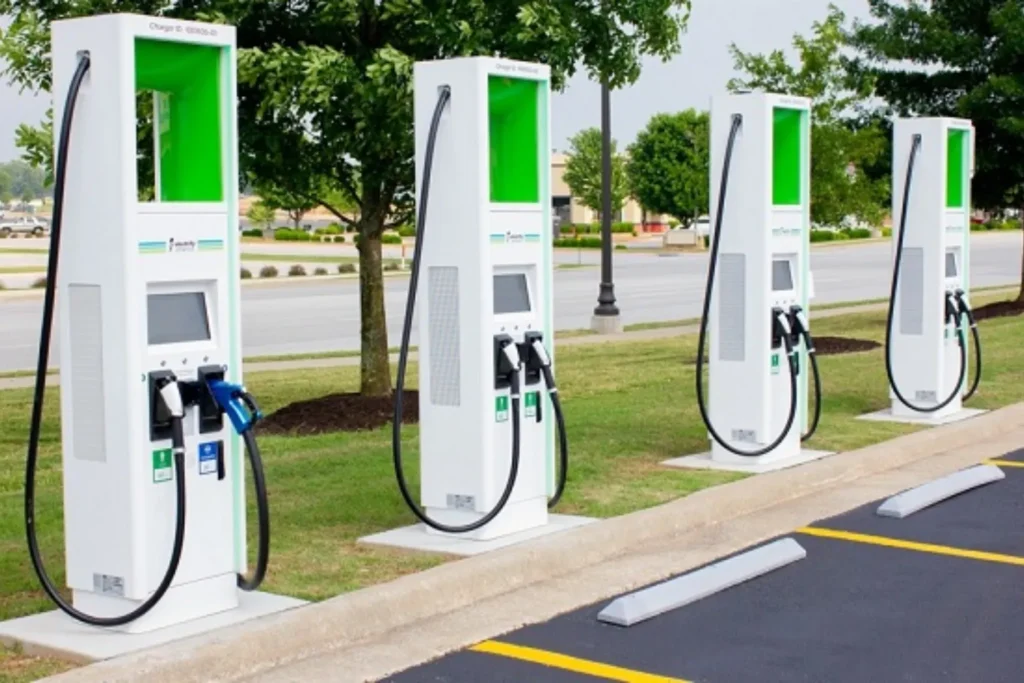
A professional EV station should support 2-, 3- and 4-wheelers.
Charger types:
- AC & DC Chargers (Slow + Fast Charging)
- On-board & Off-board Pantograph Systems for buses
- Power capacity options:
- < 3.7 kW
- 3.7 – 22 kW
- 22 kW
For reliable operation, get a commercial power connection and a backup source (diesel genset or solar system). A hybrid solar setup also cuts long-term costs.
₹34,000 Electric Scooter That Needs No License or Registration?
6. Team, Staffing & Customer Experience
Even a small 2-charger station should have at least two operators working in 8-hour shifts.
Optional add-ons to boost customer satisfaction:
- Car cleaning service while charging
- Free air filling station
- Small waiting lounge with refreshments
7. Legal, Safety & Infrastructure Checklist
Before starting:
- Conduct local market research — count EVs in your area.
- Secure proper lease/ownership papers for the site.
- Keep fire extinguishers with valid expiry dates.
- Ensure easy access for emergency vehicles.
- Maintain dedicated parking for charging customers.
Safety isn’t optional — with occasional EV fire incidents, compliance is non-negotiable.
Is EV charging station a viable business now?
by u/realneofrommatrix in CarsIndia
8. Bank Loans & Government Subsidies
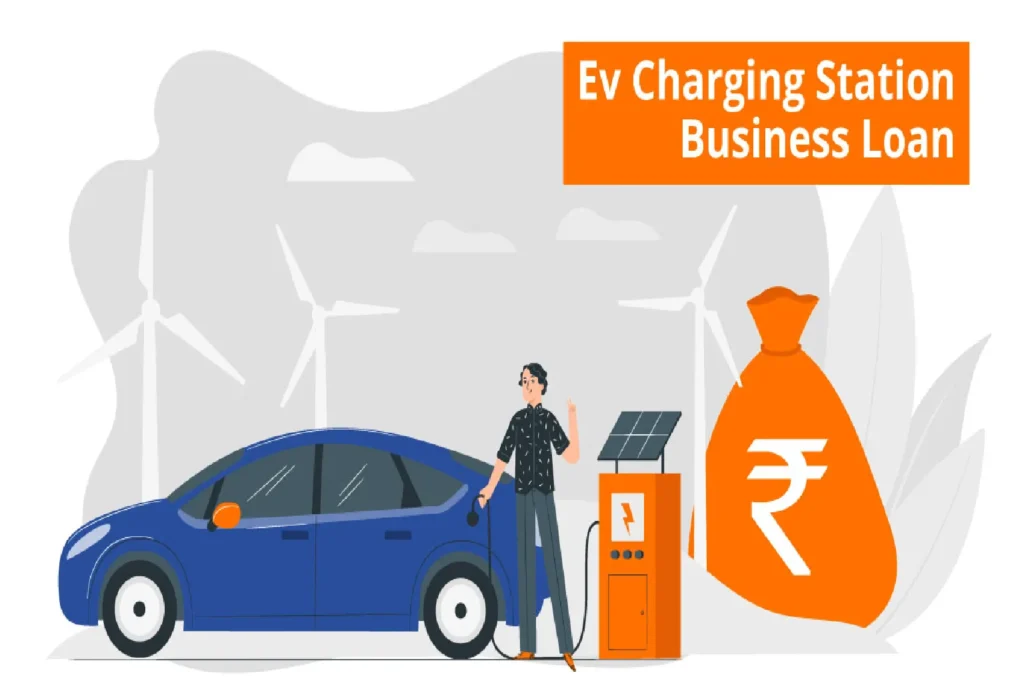
Don’t let capital stop you. You can easily get business loans for EV infrastructure projects.
Also, take advantage of India’s FAME II Scheme (Faster Adoption and Manufacturing of Hybrid & Electric Vehicles), which offers:
- ₹ 10,000 subsidy for slow chargers
- ₹ 1 lakh subsidy for fast chargers
Check updates on the Department of Heavy Industries portal.
9. Current Market Snapshot (2024 Data)
As per the Ministry of Power, India had 12,146 public EV charging stations operational by February 2024.
- Maharashtra – 3,089 stations (highest)
- Delhi – 1,186 stations
- Karnataka – 1,041 stations
The largest EV charging station in India is at Gurugram Sector 86, with 121 charging points for four-wheelers.
10. Final Thoughts
Electric vehicles aren’t just the future — they’re the present opportunity. Setting up an EV charging station in 2025 isn’t just about sustainability; it’s a profitable business with long-term growth.
So, do your research, pick the right partner, ensure safety compliance, and get started. Who knows — your next business venture might just power the nation’s EV revolution.
FAQ Charging Station Business in India
What is the Tata Power EV charging station franchise cost in India?
Tata Power doesn’t have a fixed franchise “buy-in” cost — instead, it follows a partnership or host model. Typically, investors should budget ₹10 lakh–₹25 lakh depending on location, charger capacity (DC fast vs AC slow), and land availability. Tata Power provides the tech, backend software, and maintenance support, while the franchisee invests in civil setup and electricity connection.
👉 Official site: Tata Power EZ Charge Partner Program
How to apply online for a Tata Power EV charging station franchise?
You can apply directly via the Tata Power EZ Charge portal.
🔗 Application link: CHECK OUT HERE
Steps:
Visit the official link.
Fill in your business and land details.
Tata Power team will contact you for feasibility checks.
After site inspection and agreement, installation begins.
What is the Adani EV charging station franchise cost?
Adani Total Energies is scaling up EV charging infrastructure but currently offers B2B partnership models instead of open franchising. Estimated investment starts from ₹15 lakh to ₹30 lakh depending on charger type (CCS2 or GB/T). Adani provides branding, backend integration, and maintenance under a revenue-sharing model.
👉 Official site: Adani Total Energies Mobility Ltd.
How to get a Jio-bp Pulse EV charging station franchise, and what’s the cost?
The Jio-bp Pulse program offers franchise partnerships for commercial and retail setups. Initial investment ranges from ₹12 lakh–₹35 lakh, depending on the number of charging guns and power output (30–60 kW). Franchisees earn per kWh commission, plus potential revenue from food court or retail co-location.
👉 Apply at https://www.jiobp.com → “Business Opportunities” section.
What is the expected profit margin in the EV charging station business?
Profit depends on daily vehicle load and charger utilization. On average:
Revenue: ₹15–₹25 per kWh sold
Daily volume: 100–200 kWh (in urban areas)
Monthly profit: ₹60,000–₹1.2 lakh (for 30–60 kW fast chargers)
ROI usually comes within 2.5–3 years in Tier 1 cities and 4–5 years in Tier 2 towns, if the location has consistent EV traffic.
(Source: Ministry of Power, NITI Aayog reports, and industry estimates 2025.)