India has been talking about electric scooters for years. But your 150cc motorcycle? Nobody’s touched that yet. Until now.
Meet Avore Electric — a brand-new Made-in-India electric motorcycle from Ahmedabad-based Samarth E-Mobility. Officially launched on June 2, 2026, Avore isn’t another startup throwing a battery inside a steel frame and calling it innovation. These people spent three full years building everything from scratch — the motor, the battery, the BMS, even the software. The result is a motorcycle they’re calling “Intelligence Beyond Motion.” Bold claim. Let’s break it down properly.
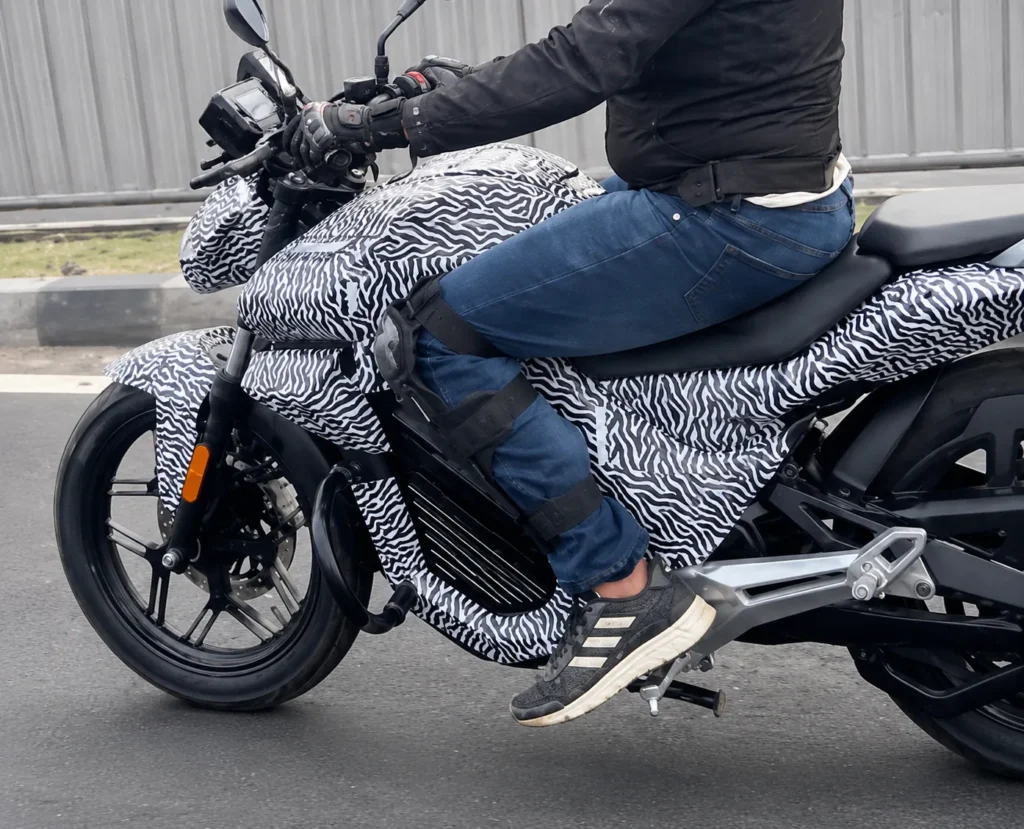
Table of Contents
What is Avore Electric Motorcycle?
Avore Electric is India’s first fully in-house engineered electric motorcycle brand, developed by Samarth E-Mobility (Ahmedabad). It targets the 125cc–200cc commuter segment with a 5 kWh IP67-rated battery, a rare-earth-free 10.5 kW motor, and over 110 proprietary technology patents. Official launch is expected later in 2026.
⚡ Avore Electric Motorcycle — Quick Facts (2026)
- Brand: Avore Electric (by Samarth E-Mobility Pvt. Ltd.)
- Headquarters: Ahmedabad, Gujarat
- Brand Launch: June 2, 2026
- Motor: 10.5 kW rare-earth-free motor, 72V architecture, ~95% efficiency
- Battery: 5 kWh, IP67-rated, four-way thermal management
- Target Segment: 125cc–200cc petrol motorcycle replacement
- Key Tech: AVORE Source stack + AVR Platform + AVORE Sense AI suite
- Patents Filed: 110+
- Expected Price: Not officially announced yet
- Competitors: Revolt RV400, Tork Kratos R, Oben Rorr
The Story Behind Avore — Why This Brand Exists
Here’s something worth thinking about. India’s motorcycle segment is massive — we’re talking crores of 125cc to 200cc bikes on the road. Bajaj Pulsar, Honda SP 125, TVS Apache, Hero Xtreme — these are the bikes that dominate our streets. Yet in 2026, not a single mainstream electric motorcycle directly competes in this space at an accessible price point.
Revolt tried with the RV400. Tork has the Kratos. But penetration is still thin. Samarth E-Mobility noticed this gap and decided to go all-in — not with outsourced parts and a rebadged Chinese platform, but by building everything in-house over three years. That’s the founding story of Avore.
Their philosophy: “True intelligence cannot be assembled from off-the-shelf components; it must be engineered from the ground up.”
That mindset shapes every technical decision the company has made.
Avore’s In-House Technology Stack — What Makes It Actually Different
Most EV startups in India — and globally — source components from third parties. Battery cells from Korea or China, motor controllers from Taiwan, BMS chips from established suppliers. There’s nothing wrong with that approach. It gets products to market faster. But it limits how well hardware and software work together.
Avore is doing the opposite. The company claims to have internally developed more than nine critical vehicle systems. Here’s what that includes:
AVORE Source — The Technology Stack
Think of AVORE Source as the operating brain of the motorcycle. It covers all software, firmware, and AI-driven functions that run on the bike. It’s what enables over-the-air updates, real-time diagnostics, and intelligent battery management — all working in sync because they were all designed together.
AVR Platform — The Physical Architecture
The AVR platform is the purpose-built physical chassis and electrical architecture that underpins every Avore motorcycle. Unlike generic platforms adapted from petrol bikes, the AVR platform was designed from day one for electric two-wheeler dynamics — weight distribution, cable routing, thermal zones, and software integration points are all baked in.
AVORE Sense — Rider Assistance AI
This is Avore’s intelligent rider assistance software suite. While full details haven’t been published, AVORE Sense is expected to include ride analytics, navigation, contextual alerts, and AI-based adaptations based on riding style and conditions. It’s the interface layer between the rider and the machine’s intelligence.
The Motor — Rare Earth Free, 95% Efficient
This one is genuinely interesting. Most electric motors rely on rare-earth magnets — primarily from China — to achieve high efficiency and compact size. Avore claims their 10.5 kW motor runs on a 72V architecture without rare-earth materials, while still achieving up to 95% efficiency. If this holds in real-world testing, it would be a significant engineering achievement and a step toward supply-chain independence for Indian EV manufacturing.
For reference, 10.5 kW translates to roughly 14 bhp — comfortably in line with what a 150–180cc petrol motorcycle produces.
The Battery — 5 kWh, IP67, Thermal Control
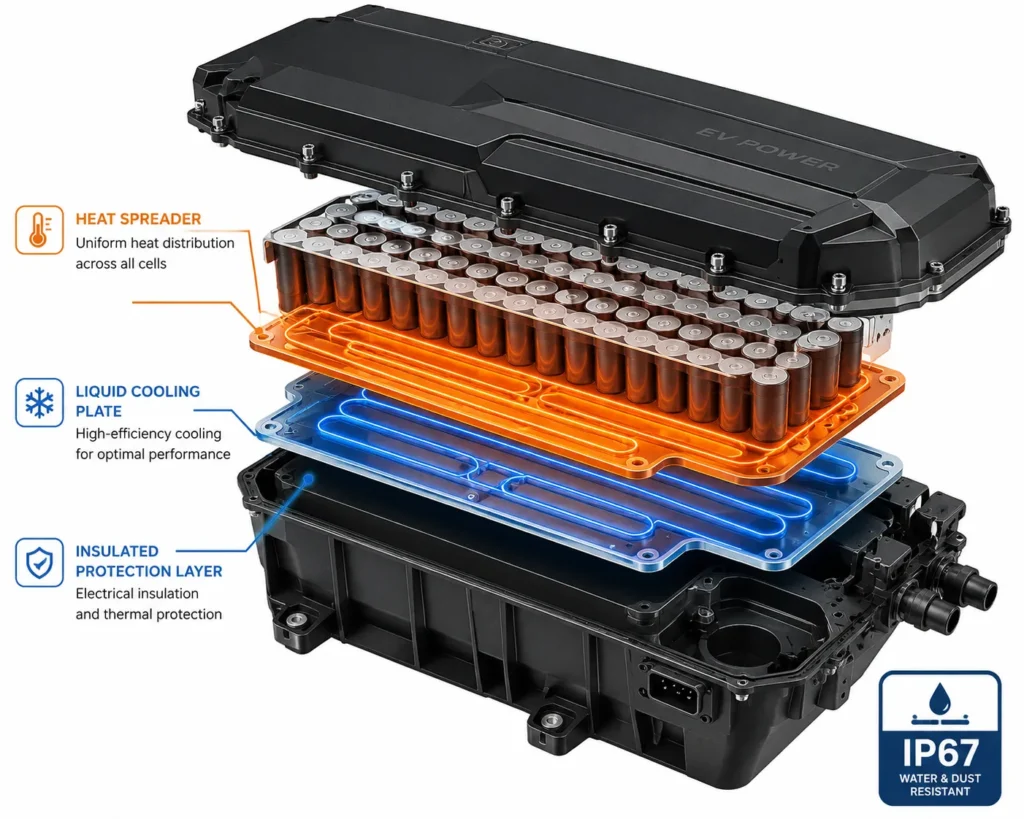
The 5 kWh battery pack is rated IP67, meaning it’s fully dust-tight and can survive submersion in water up to 1 metre for 30 minutes. For Indian riding conditions — monsoons, flooded roads, dusty highways — this matters a lot more than spec sheets suggest.
What’s more notable is the patented four-way thermal management system. Battery degradation in India is heavily accelerated by heat. Rajasthan summers, traffic jams, charging under direct sun — batteries take a beating. Avore’s four-way thermal management claims to actively regulate battery temperature across all conditions, protecting long-term range and battery health.
The BMS (Battery Management System) is also AI-driven, allowing it to adapt charging patterns based on temperature, usage history, and predicted ride cycles.
Design — What We Know From Spy Shots
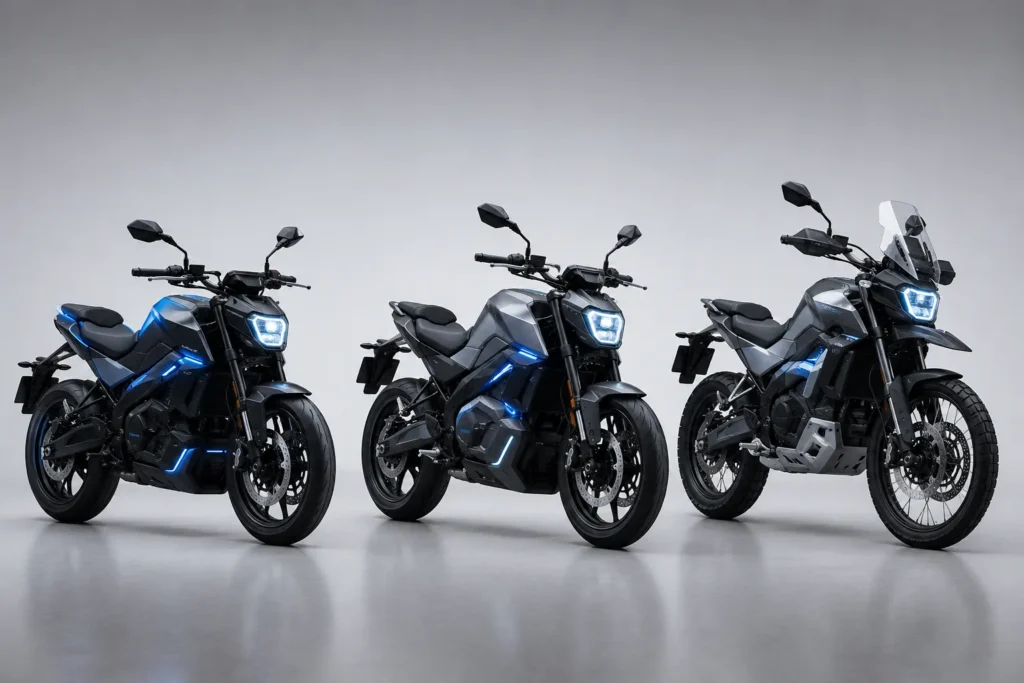
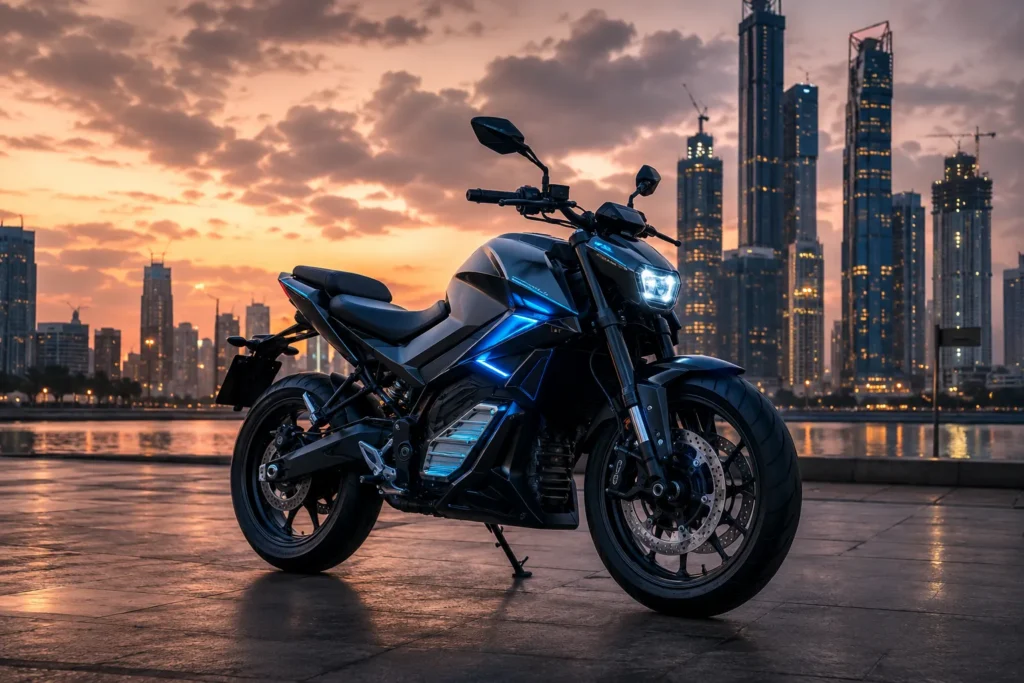
Avore hasn’t officially revealed the final production motorcycle yet. But spy shots from testing in Ahmedabad gave us a clear picture. The bike follows a streetfighter-inspired design — muscular, conventional, and upright. It deliberately avoids the futuristic EV aesthetic that many electric bikes use, which often puts off mainstream buyers.
- All-LED lighting system
- Fully digital instrument cluster
- Alloy wheels
- Disc brakes front and rear
- Telescopic front forks
- Rear monoshock
- Split-seat arrangement
- Sculpted tank section (housing battery, likely)
The design intent is clear: attract buyers coming from a Pulsar 150, Apache 160, or Honda SP 125 — people who want a motorcycle that looks like a motorcycle, not a concept vehicle.
Avore Electric Price in India — What to Expect
No official price has been announced yet. But we can make a reasonable estimate based on the segment Avore is targeting and the technology it’s packing.
For context:
| Model | Battery | Claimed Range | Price (approx.) |
|---|---|---|---|
| Revolt RV400 BRZ | 3.24 kWh | ~150 km | ₹1.38 – 1.45 Lakh |
| Tork Kratos R | 4 kWh | ~120 km | ₹1.35 – 1.50 Lakh |
| Oben Rorr | 4.4 kWh | ~187 km | ₹1.49 – 1.60 Lakh |
| Avore Electric | 5 kWh | TBA | Expected ₹1.40 – 1.75 Lakh |
Given the 5 kWh battery, in-house technology, and the premium engineering claims, Avore will likely be priced between ₹1.40 lakh and ₹1.75 lakh after FAME subsidy (if applicable). Pricing it above ₹1.8 lakh without a strong dealer network would be a tough sell in a market where the Revolt RV400 exists.
AutoAkhbar will update this section the moment official pricing is announced. Browse all electric bikes on AutoAkhbar →
Avore Electric Range — Our Estimate
With a 5 kWh battery and a 10.5 kW motor on a 72V architecture, what kind of real-world range can you expect?
Here’s a rough calculation:
- Battery capacity: 5 kWh
- Assumed consumption: ~30–35 Wh/km (realistic for a 14 bhp motorcycle in mixed city-highway riding)
- Estimated range: ~140–165 km per charge
This is comparable to the Oben Rorr’s claimed range and meaningfully better than the Tork Kratos R. If Avore’s thermal management does what it claims and prevents battery degradation over time, the real-world range at 2 years of ownership could also be significantly better retained versus competitors.
For daily commuters covering 40–60 km per day, a full charge every 2–3 days at home on a standard 15A socket is entirely practical.
Avore vs Petrol Bike — The Real-World Cost Math
This is the question every potential buyer actually wants answered. Can Avore replace your 150cc petrol bike, and does it make financial sense?
| Parameter | 150cc Petrol Bike | Avore Electric (Est.) |
|---|---|---|
| Fuel / Charging Cost per 100 km | ~₹120–150 | ~₹15–25 |
| Annual Service Cost | ₹4,000–8,000 | ~₹1,500–3,000 (est.) |
| Engine Oil Changes | Every 3,000 km | None |
| Daily Charging Cost (40 km) | ₹50–60 | ₹6–10 |
| Savings Per Month (1,200 km avg) | — | ~₹1,500–1,800 |
At ₹1,500–₹1,800 monthly savings, an Avore priced at ₹1.50 lakh (post-subsidy) would break even versus a ₹1.20 lakh petrol bike in roughly 2.5–3 years. After that, every month is pure savings.
This is exactly why the 150cc segment is the biggest opportunity in Indian EV adoption — the daily rider doing office commutes has the most to gain financially.
Why Vertical Integration Actually Matters Here
A lot of EV startups talk about technology. Very few build it. Here’s why Avore’s in-house approach matters for you as a buyer:
OTA Updates: When AVORE Source pushes a software update, it improves hardware that was designed to receive it. A motor controller written independently from the BMS can’t be optimised the same way after the fact. When it’s all built together, updates can genuinely improve your bike’s range, efficiency, and features over time — not just fix bugs.
Service Diagnostics: Because Avore built its own vehicle OS and display cluster, a technician (or the app) can pull granular fault data that generic tools can’t access on outsourced-component bikes.
Supply Chain Control: The rare-earth-free motor is a direct response to rare-earth supply chain vulnerabilities. This is smart long-term thinking.
Warranty Support: When a company owns its technology stack end-to-end, accountability for failures is clearer. There’s no “that’s the battery supplier’s problem.”
When Will Avore Launch in India?
The brand was unveiled on June 2, 2026 — but that was a brand launch, not a product launch. The actual motorcycle reveal, pricing, and bookings are expected in the coming months of 2026, with product delivery potentially in late 2026 or early 2027.
Avore has confirmed that product announcements, campaign reveals, and dealer network details are coming soon. The spy shots of the test mule suggest the motorcycle is in advanced pre-production stages and is not far from showroom-ready.
We’re keeping a close eye on this. Bookmark this page — AutoAkhbar will update the moment the official launch happens.
Avore Electric vs Revolt RV400 vs Tork Kratos R — Quick Comparison
| Feature | Avore Electric | Revolt RV400 BRZ | Tork Kratos R |
|---|---|---|---|
| Motor Power | 10.5 kW (14 bhp) | 3 kW (cont.) / 6 kW (peak) | 9 kW |
| Battery | 5 kWh IP67 | 3.24 kWh | 4 kWh |
| Thermal Mgmt | Four-way (patented) | Liquid cooled (motor) | Active cooling |
| In-house tech | Yes (9+ systems) | Partial | Partial |
| OTA Updates | Yes (AVORE Source) | Yes | Yes |
| AI BMS | Yes | No | No |
| Rare-earth free motor | Yes | No | No |
| Price | TBA (~₹1.40–1.75L est.) | ₹1.38–1.45L | ₹1.35–1.50L |
On paper, Avore has a stronger tech foundation than both. The real question is how this translates to real-world riding experience, dealer support, and long-term reliability — areas where only time and customer ownership data will tell the full story.
👉 Read more: Revolt RV400 Full Review on AutoAkhbar
Our Take — Is Avore Worth Waiting For?
Honestly? Yes, if you’re not in an urgent rush to buy an electric motorcycle right now.
The depth of in-house engineering, the rare-earth-free motor, the IP67 battery with four-way thermal management, and 110+ patents are not the kind of things a startup puts together to just look good on a website. This is three years of actual engineering work, not a PowerPoint promise.
What’s still unknown is the price, real-world range, build quality, and service network — the four things that will ultimately determine success in the Indian market. Samarth E-Mobility is a relatively new name. Building a motorcycle well is hard; building a brand and service network is harder.
But if the motorcycle delivers on even 75% of what the brand promises at a competitive price point, Avore could genuinely shake up the electric motorcycle space in India. The Revolt RV400 and Tork Kratos R have proven there’s a buyer for serious electric motorcycles in India. Avore wants to widen that market — and it has the technical credentials to try.
We’re watching this very closely at AutoAkhbar. Stay tuned.
More EV Reads on AutoAkhbar
- Best Electric Bikes in India 2026 — Full List & Prices
- Electric vs Petrol Bike in India — Which Makes More Sense in 2026?
- Tork Kratos R Review — The Electric Motorcycle That Means Business
Frequently Asked Questions — Avore Electric Motorcycle
What is the price of Avore Electric Motorcycle in India?
Avore has not officially announced the price yet. Based on the segment (125cc–200cc) and technology, AutoAkhbar estimates the price will fall between ₹1.40 lakh and ₹1.75 lakh (ex-showroom) after applicable FAME subsidy. Official pricing is expected when the product is formally launched in late 2026.
What is the range of Avore Electric Motorcycle?
Avore has not disclosed official range figures yet. With a 5 kWh battery and 10.5 kW motor, AutoAkhbar estimates a realistic range of 140–165 km per charge in mixed city-highway riding conditions. Real-world range will depend on rider weight, speed, terrain, and temperature.
Who makes the Avore Electric Motorcycle?
Avore Electric is made by Samarth E-Mobility Pvt. Ltd., an Ahmedabad-based Indian EV company. The brand was officially launched on June 2, 2026 under the tagline “Intelligence Beyond Motion.” The company has a dedicated R&D facility in Ahmedabad and a team of over 100 engineers.
Can Avore replace a 150cc petrol motorcycle?
Avore is specifically engineered to be a direct alternative to 125cc–200cc petrol motorcycles. With 14 bhp motor output, an estimated 140–165 km range, and significantly lower running costs (approximately ₹15–25 per 100 km vs ₹120–150 for petrol), it is a viable daily commuter replacement for most Indian riding patterns. The main unknowns remain final price, build quality, and service network reach.
What is AVORE Source and the AVR Platform?
AVORE Source is Avore Electric’s proprietary in-house technology stack — covering all software, firmware, AI systems, and the vehicle operating system. The AVR Platform is the purpose-built physical and electrical architecture on which all Avore motorcycles are built. Together, they allow full hardware-software integration, OTA updates, and advanced diagnostics — all designed and owned by Samarth E-Mobility.
When will Avore Electric Motorcycle launch in India?
The Avore brand launched on June 2, 2026. The first production motorcycle is expected to be officially revealed with pricing in the coming months of 2026, with deliveries potentially beginning in late 2026 or early 2027. Product announcements are confirmed by the company for the near term.
Is the Avore battery IP67 rated?
Yes. The Avore Electric motorcycle’s 5 kWh battery pack carries an IP67 rating, meaning it is completely protected against dust ingress and can withstand immersion in up to 1 metre of water for 30 minutes. This is particularly important for Indian riding conditions involving monsoon rains and flooded urban roads.