
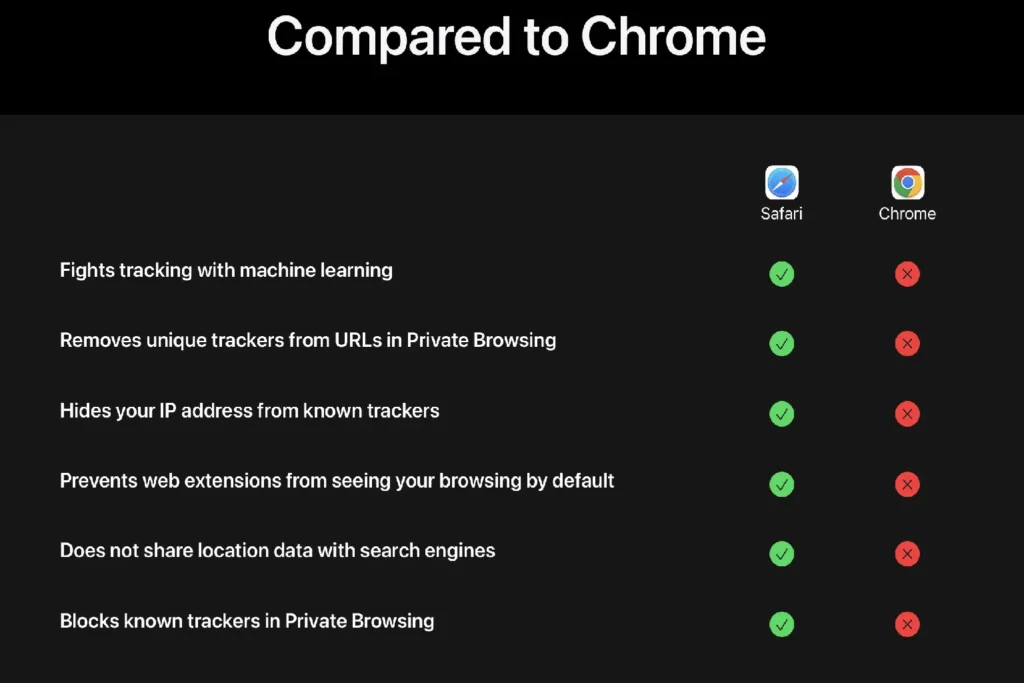
Apple is once again flexing its privacy game, this time directly positioning Safari as a safer choice than Chrome for iPhone users. According to Apple’s updated privacy page, Safari is built to block some of the most advanced tracking methods used today.
What’s the big privacy issue?
Websites now use device fingerprinting to track users. This method doesn’t need cookies. Instead, it collects details like:
- Installed fonts
- Browser plugins
- Device settings
This creates a unique “fingerprint” that follows you across websites without you even knowing.
Why Apple says Safari is better than Chrome
Apple’s comparison shows Safari offers stronger protections by default:
- Safari hides your IP address from trackers
- It blocks known trackers in Private Browsing mode
- It limits how much data extensions can access
On the other hand, Chrome:
- Doesn’t block all fingerprinting by default
- Requires users to manually tweak privacy settings
- Shares some usage data with Google
What about browsers on iPhone?
On iOS, all browsers (including Chrome and Firefox) are forced to use Apple’s WebKit engine. That means they share a basic privacy foundation.
But Safari still works tighter with Apple’s on-device privacy system, making it feel more secure inside the Apple ecosystem.
What privacy-focused users prefer
People who really care about privacy usually lean towards:
- Safari
- Firefox
because of stronger built-in defenses against tracking.
Bottom line
Apple is clearly pushing the message:
If privacy matters on your iPhone, Safari is the better pick over Chrome.