

I’ll be honest with you — when I first wrote about the Sundak Electric Car last year, I was working off early buzz, concept visuals, and projected specs. It got traction, people loved the idea of a stylish Indian EV under ₹18 lakh, and the comments section lit up with excitement. But then something happened: readers started asking questions I couldn’t fully answer. “Is this car actually confirmed?” “Where’s the official announcement?” “Who exactly is Sundak?”
Those questions deserve real answers. So this is not just a refresh of that old blog. This is a complete, ground-up, honest deep-dive into everything we know — and everything we don’t — about the Sundak EV car in India. If you’re genuinely considering this vehicle or just curious about the hype, this is the article you need to read before believing anything else online.


Table of Contents
Who Is Sundak? The Brand Background You Need to Know
Before talking about specs and price, let’s talk about the company — because this is where almost every other blog fails.
EV Sundak is a real, registered Indian company. It operates as a venture under Sundak Solar Solutions Pvt. Ltd., headquartered at Plot No. 103, Ecotech 6, Greater Noida, Uttar Pradesh. The company is ISO 9001 and ISO 14001 certified and holds ICAT/ARAI approval — which means their products have gone through India’s official vehicle testing certification process.
Here’s the important clarification though: EV Sundak’s currently certified and commercially available products are electric two-wheelers (scooters) — models like the Keagle, Younger, and Mars. These are legitimate, ICAT-approved electric scooters with 1000W motors, lead-acid and lithium-ion compatibility, and ranges in the 60–80 km bracket. You can actually buy them today.
The four-wheeled Sundak EV car — the compact electric vehicle with claimed 300–350 km range that went viral online — is a different, upcoming product that has not yet received an official confirmed launch date, official pricing, or a confirmed production-ready specification sheet as of April 2026. Most specs floating around (including in my earlier article) are based on projections, estimated positioning, and early-stage leaks — not an official press release or government homologation filings.
Why does this matter for you? Because there’s a big difference between “a company that makes EVs” and “a company that has launched a specific car.” Sundak is genuinely building toward a four-wheeler product, and the buzz around it is not fake — but treat claimed numbers as estimates, not guarantees, until an official launch event happens.
Yakuza Mini Electric Car – India’s $2099 EV Shocking the World (2025 Review)

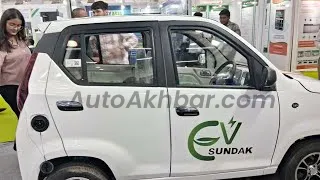
The Sundak EV Car: What We Expect (And What We’re Being Honest About)
Based on aggregated reports, the Sundak four-wheeled electric car is being developed as a compact urban EV targeting India’s ₹14–18 lakh price segment. Here’s a transparent breakdown of what’s being projected:
Exterior & Design
The car is expected to follow a compact crossover/hatchback silhouette — aerodynamic body lines, LED headlamps, alloy wheels, and a modern front grille treatment. The design language appears inspired by global entry-level EVs. Think functional and clean rather than flashy.
Powertrain & Performance
Multiple sources project a single electric motor setup delivering instant torque — ideal for city stop-and-go conditions. Drive modes including Eco, Normal, and Sport are expected. For an urban commuter EV in this price range, 0–60 km/h response will likely be peppy, even if outright top speed is capped around 130–140 km/h.
Claimed Range & Charging
The most-cited specs project 300–350 km of range on a full charge with DC fast charging bringing the battery from 0–80% in approximately 45–50 minutes. A home AC charger (7.4 kW) would take around 6–8 hours for a full charge.
Honest note: These range figures are projected/claimed numbers. Until ARAI/MIDC certification data is published and real-world tests are done, treat them as best-case estimates. For context, Autocar India’s real-world tests consistently show EVs delivering 70–85% of claimed range in actual mixed driving conditions.
Battery Technology: What Sundak’s EV Could Use
This is a topic no one else is covering properly, so let me give it the attention it deserves.
The Indian affordable EV segment in 2026 is dominated by two main battery chemistries:
1. NMC (Nickel Manganese Cobalt) Lithium-Ion — Higher energy density, longer range per kg of battery weight. Used by older Nexon EV variants and MG ZS EV. Faster degradation over charge cycles compared to LFP.
2. LFP (Lithium Iron Phosphate) — Lower energy density but dramatically more stable, longer cycle life (2,000+ charge cycles vs ~1,000 for NMC), and far safer thermally. Tata’s newer EVs (Punch EV 2026, updated Nexon EV) have shifted to LFP. BYD has built its entire empire on this chemistry.
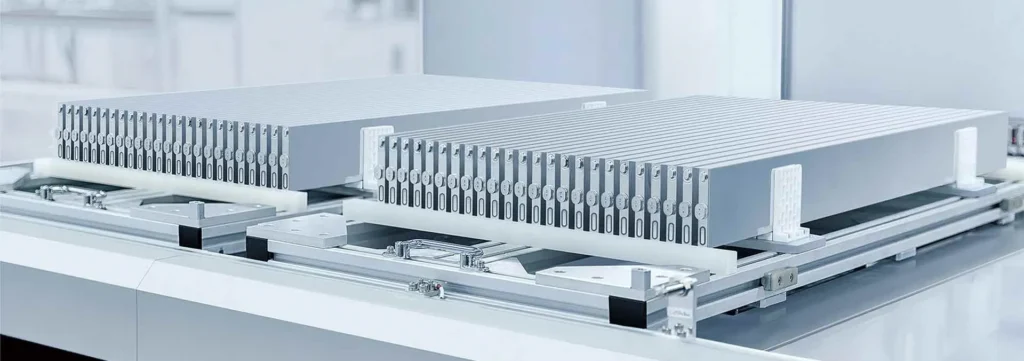
Based on the price point Sundak is targeting (sub-₹18 lakh) and the industry trend, the Sundak EV car is most likely to use LFP chemistry — possibly in a standard lithium-ion configuration. An advanced BMS (Battery Management System) is projected to manage cell balancing, thermal regulation, and regenerative braking inputs.
What a smart BMS does (and why it matters more than raw kWh numbers): A well-tuned BMS prevents overcharging, manages heat during fast charging, and ensures cells degrade evenly. The difference between a 40 kWh pack with a great BMS and a 45 kWh pack with a mediocre BMS can easily be 50–70 km of real-world range and 2–3 years of battery lifespan. This is where established players like Tata (with their IP67-rated packs) have a proven edge over newer entrants.
Battery warranty expectation: Industry standard for new Indian EV entrants is 3 years for the vehicle and 8 years/160,000 km for the battery pack. Sundak is expected to follow this pattern.
Does the Sundak EV Actually Compete With Other Indian EVs?
This is the question everyone’s asking, so let me answer it properly with numbers — not hype.
Here’s how the projected Sundak EV stacks up against cars that are actually on sale right now in April 2026:
| Parameter | Sundak EV (Projected) | Tata Punch EV | Tata Nexon EV | MG Windsor EV |
|---|---|---|---|---|
| Price (ex-showroom) | ~₹14.99–17.99L | ₹9.69–12.59L | ₹12.49–17.49L | ₹14–18.50L |
| Battery | ~40 kWh (est.) | 30 kWh / 40 kWh LFP | 30 kWh / 45 kWh | 38 kWh / 52.9 kWh |
| Claimed Range | 300–350 km | 275–355 km | 325–489 km | 332–449 km |
| Real-world Range | Not tested yet | 260–340 km (tested) | 308–350 km (tested) | 308–327 km (tested) |
| Fast Charge (0–80%) | ~45–50 min | ~56 min (DC) | ~58 min (DC) | ~60 min (DC) |
| ADAS | Projected | Level 1 | Level 2 (top variant) | Level 2 (Windsor Pro) |
| Brand Reliability | Unproven in 4W | Established | Established | Established |
| Service Network | TBD | Pan-India Tata | Pan-India Tata | ~500 MG outlets |
Looking at this table honestly, here’s my take:
On paper, Sundak’s projected specs are competitive. A 300 km+ range EV at ₹15 lakh would be genuinely attractive. The Tata Punch EV starts cheaper but its real-world range on the base 30 kWh pack hovers around 260–275 km. The Nexon EV at ₹12.49 lakh is the closest price match in terms of value.
In reality, the battle will be won or lost on three factors Sundak hasn’t proven yet:
1. Real-world tested range vs claimed range. The gap between ARAI claims and actual driving is significant for every Indian EV. Autocar India’s tests showed the Nexon EV delivering 350 km real-world range vs 489 km claimed — a 28% gap. Until Sundak gets independently tested, those 350 km claims deserve healthy skepticism.
2. After-sales service network. This is where Tata and MG are genuinely unbeatable right now. Tata has thousands of service points across India. MG has around 500 dedicated outlets. A new entrant launching in top-15 cities initially will leave buyers in Tier 2 and Tier 3 cities without reliable service — and that’s a dealbreaker for many families making a ₹15+ lakh decision.
3. Software and OTA updates. Modern EVs are essentially smartphones on wheels. MG Windsor’s UI polish and Tata’s connected car experience (with Harman audio, Alexa, etc. in the 2026 Nexon EV) set a high bar. Sundak’s software ecosystem is completely unknown.
Bottom line: If Sundak launches with the projected specs at the projected price AND backs it with a reasonable service network, it will be genuinely competitive. But “competitive on paper” and “ready to buy” are two very different things.
Common Myths About Sundak EV — Debunked
I’ve seen a lot of misinformation circulating, so let me address it directly:
Myth 1: “Sundak EV car costs only ₹97,000” This is false. The ₹97,000 figure floating around online refers to Sundak’s electric scooters/mini two-wheelers, not a four-wheeled car. Any website quoting sub-₹1 lakh pricing for a Sundak four-wheeler is either confused or misleading you. A real compact EV with 300 km range and a lithium battery pack physically cannot be built and sold profitably under ₹10 lakh in India in 2026.
Myth 2: “Sundak EV is already available for booking” As of April 2026, no official booking portal or confirmed dealership network has been announced by EV Sundak for a four-wheeled car product. Any “booking” links you may find are from third-party aggregators or speculative content.
Myth 3: “Sundak’s ADAS is comparable to Tata or Hyundai” ADAS is a complex, software-intensive system that requires thousands of hours of real-world Indian road training data. The projected inclusion of ADAS features in Sundak EV is based on design intent — whether it will match Level 2 implementations from Tata or Hyundai at launch is genuinely unknown.
Myth 4: “Sundak EV will get FAME subsidies” India’s FAME II scheme ended in March 2024. The PM E-Drive scheme replaced it. Whether Sundak’s four-wheeler will qualify depends on meeting specific localization and price-cap requirements, which haven’t been confirmed.
Should You Wait for Sundak EV? My Honest Recommendation
Here’s where I’ll give you my personal take, not just a spec dump.
If you need a car in the next 3–6 months: Don’t wait. The Tata Nexon EV at ₹12.49 lakh is one of the most proven affordable EVs in India. The MG Windsor EV at ₹14 lakh offers a genuinely premium cabin experience for the money. Both are real, available, tested, and backed by service networks. You can read our full breakdown of the best electric cars in India on AutoAkhbar before making your decision.
If you’re buying in late 2026 or early 2027: Watch this space closely. If Sundak delivers on even 80% of their projected specs at the ₹15 lakh price point with a usable service network, it will be a genuinely exciting option. The Indian EV market rewards new entrants who execute well — MG Windsor’s rapid rise from zero to India’s top-selling EV in under a year proves that.
For EV two-wheeler buyers today: EV Sundak’s scooters are ICAT-approved and available right now. The Keagle, Mars, and Younger models are worth exploring if you’re looking for an affordable electric two-wheeler. You can read more on electric two-wheelers in India on AutoAkhbar for a full comparison.

The Bigger Picture: Why Sundak EV Matters Even Now
India’s EV transition is not just a Tata-Mahindra-MG story. The health of the market depends on new, homegrown challengers pushing the incumbents to offer more at lower prices. When Sundak (or any genuine new entrant) announces a competitive product, it forces Tata to price the Nexon more aggressively, pushes MG to improve their service experience, and creates real choice for the buyer.
EV Sundak’s background as a scooter manufacturer with ICAT certification and in-house R&D gives them a legitimate technological foundation. Their solar energy parent company (Sundak Solar Solutions) also hints at potential integration of solar-assisted charging in future products — a genuinely interesting differentiator for the Indian market.
The company isn’t a ghost or a clickbait creation. It’s a real Greater Noida-based manufacturer with real certifications. The question is whether they can make the leap from two-wheelers to four-wheelers — a leap that requires not just engineering, but manufacturing scale, dealer investment, and post-sale trust. That’s hard. Most companies that attempt it either take 3–5 years longer than projected or quietly shelve the product.
I’ll be watching closely, and so should you.
FAQ
Is Sundak EV car officially launched in India?
No. As of April 2026, the Sundak four-wheeled EV car has not officially launched. Official pricing, confirmed specs, and a booking portal have not been released by the company.
What battery does Sundak EV use?
No official battery specification has been confirmed. Based on market positioning and price targets, LFP lithium-ion chemistry with a capacity around 38–45 kWh is most likely. An intelligent BMS with regenerative braking support is expected.
How does Sundak EV compare to Tata Nexon EV?
Industry estimates place the Sundak four-wheeled EV between ₹14.99–17.99 lakh (ex-showroom) depending on variant. These are projections, not confirmed prices. The ₹97,000 figures circulating online refer to Sundak’s electric scooters.
What is the real price of Sundak EV?
Industry estimates place the Sundak four-wheeled EV between ₹14.99–17.99 lakh (ex-showroom) depending on variant. These are projections, not confirmed prices. The ₹97,000 figures circulating online refer to Sundak’s electric scooters.
Will Sundak EV be eligible for government subsidies?
Under India’s current PM E-Drive scheme (which replaced FAME II), eligibility depends on price caps, localization percentages, and FAME certification. No confirmation from Sundak has been made on this.
Where can I track Sundak EV updates?
Bookmark our AutoAkhbar Electric Vehicles section — we’ll update this page as official announcements are made. You can also check the official EV Sundak website.
Liked this article? Found something wrong or have a different experience with Sundak EV? Drop a comment below — I personally read every one. And if you’re in the market for an EV right now, check out our AutoAkhbar EV section for the most up-to-date buying guides.
— Anshu Uday Sabharwal, AutoAkhbar.com


Than Sundak ev 🚗
Pingback: Sundak Nero EV Car: इंडिया की सस्ती और स्टाइलिश इलेक्ट्रिक कार - Newsupply24
I love this car
I want book sundek ev low cost as per your guidance
Please contact 9679230811
Car leni hai ye ev sundak wali
you will buy this in 2026
Pingback: Sundak Electric Mini Truck 2026 – 600 Kg Load, 250 Km Range